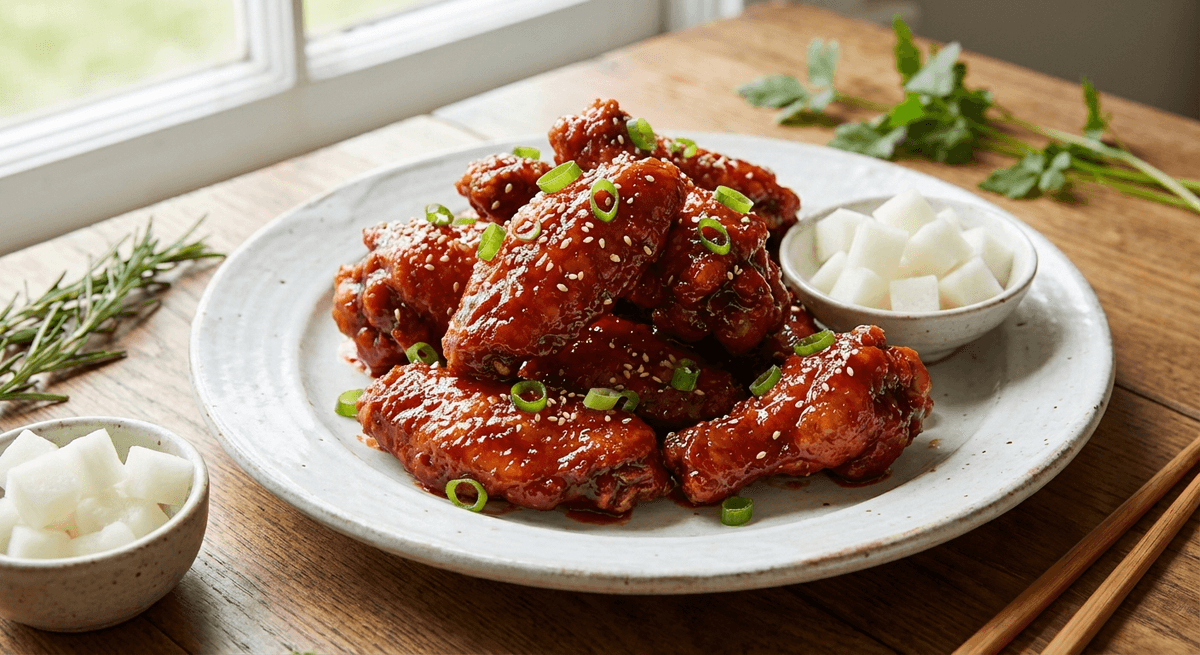
If you’ve ever been to a tailgate at Aloha Stadium, back when it was still standing, you know that the parking lot spread was half the reason people showed up. Coolers full of beer, folding tables bending under aluminum trays, and somewhere in that beautiful chaos, somebody’s aunty or uncle had a batch of fried chicken that stopped you in your tracks. That’s where I first had Korean fried chicken wings done local style, not at a restaurant, not from a recipe, but from a Styrofoam plate handed to me by a guy in a Warriors jersey who said, “Try ‘um, brah. Gotta eat ‘um fast before they gone.”
He wasn’t wrong. They were gone in minutes. Shatteringly crispy, impossibly sticky, sweet and spicy and salty all at once. The kind of wings where you eat one and immediately reach for the next, barely pausing to breathe. I asked him what made them so crispy, and he just smiled and said two words: “double fry.” That was the moment I started chasing the perfect Korean fried chicken wing, and after years of frying, glazing, and testing on every friend and family member who’d let me, I think I’ve finally nailed it.
Korean flavors run deep in Hawaii’s food culture. Korean plantation workers arrived on the islands in the early 1900s, and they brought with them a culinary tradition that wove itself permanently into the fabric of how we eat here. Kimchi sits on the table next to poi. Kalbi is as much a part of a local barbecue as teriyaki chicken. And Korean fried chicken? That’s become the ultimate pupu, the dish that disappears first at every party, every gathering, every game day spread. These wings are my love letter to that tradition.
What Makes Korean Fried Chicken Wings Special
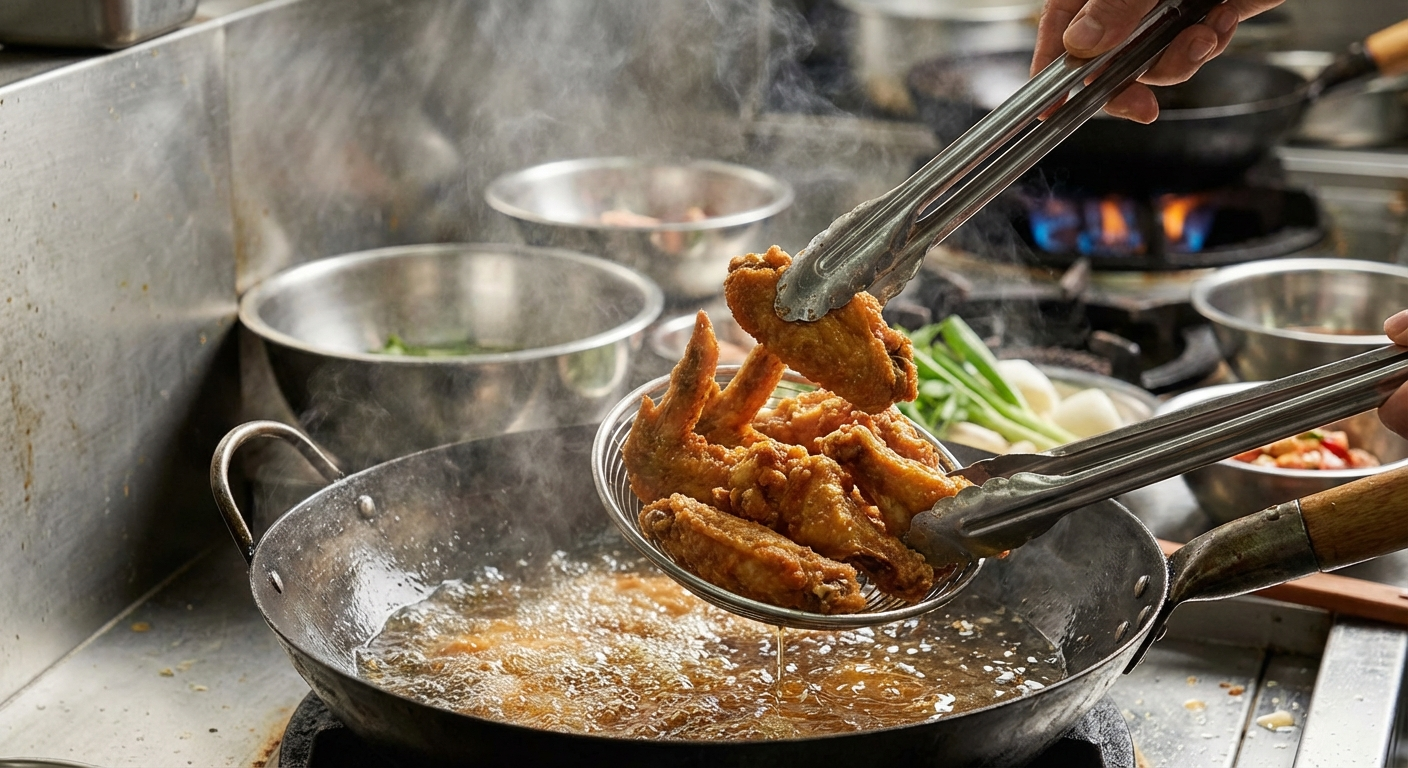
The secret to Korean fried chicken wings is the double-fry technique. The first fry cooks the chicken through and renders the fat from the skin. The second fry, after a brief rest, transforms that skin into something almost supernaturally crispy. It’s the kind of crunch that stays crispy even after you toss the wings in a thick, glossy glaze. Most fried chicken loses its crunch the moment sauce touches it. Korean fried chicken laughs at that problem.
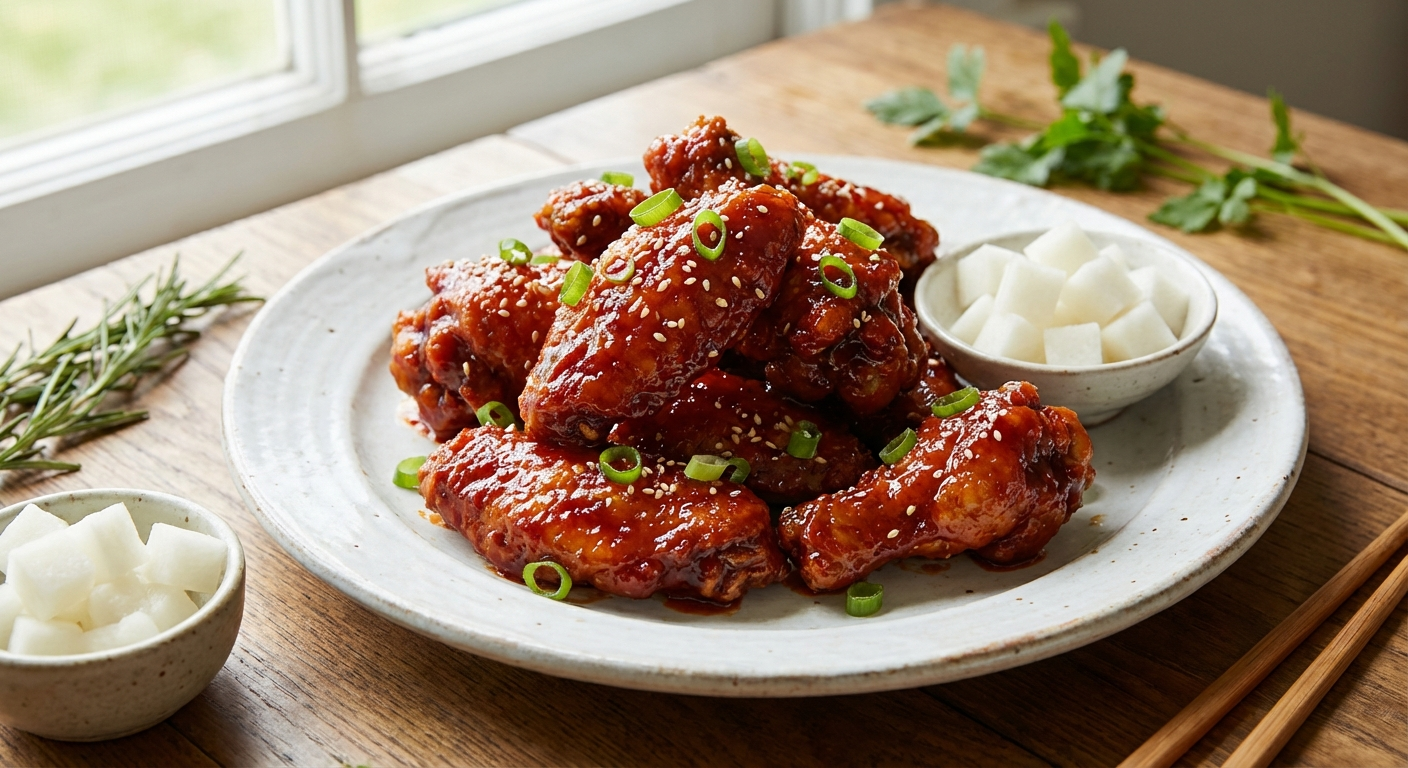
Then there’s the glaze. This isn’t Buffalo sauce or barbecue, it’s a gochujang-based sauce that hits every note on your palate. Sweet from honey and brown sugar, spicy from gochujang and a touch of gochugaru, savory from soy sauce and garlic, with just enough rice vinegar to cut through the richness. It clings to every crack and crevice of that double-fried skin, creating wings that are sticky, shiny, and absolutely irresistible.
Korea Meets Hawaii, A Culinary Love Story
Korean immigration to Hawaii began in 1903, when the first group of Korean laborers arrived to work on sugar plantations. They came with their food traditions — fermented pastes like gochujang and doenjang, the art of pickling and preserving, and a love of bold, layered flavors. Over time, Korean cuisine didn’t just survive in Hawaii, it thrived and evolved, blending with Japanese, Filipino, Chinese, Portuguese, and Native Hawaiian cooking to create something entirely new.
You see it everywhere in local food culture. Korean fried chicken shops dot the streets of Honolulu, from old-school spots on Keeaumoku Street to popular new joints in Kakaako. Plate lunch places serve kalbi and chicken katsu side by side. And at house parties across the islands, Korean fried chicken wings have become as essential as the cooler full of Heineken and the speaker blasting Jawaiian music. These wings aren’t fusion, they’re local. They’re what happens when cultures share a table for over a century.
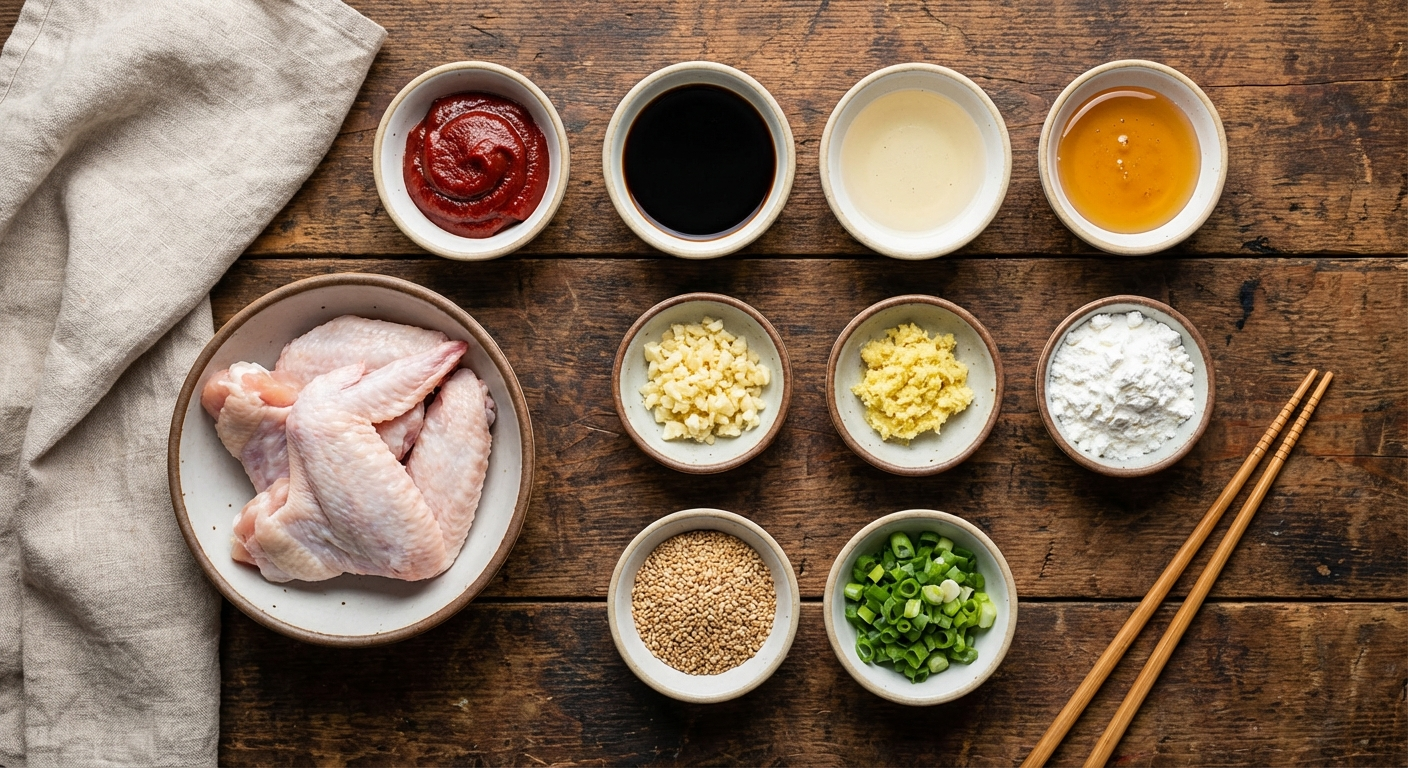
For the Wings
For the Gochujang Glaze
For Garnish
Prep the Wings
First Fry
Make the Glaze
Second Fry and Glaze
Tips
- Keep the batter cold: Using ice-cold water in the batter helps create a crispier coating. Some people even add a few ice cubes to the batter bowl (just remove them before dipping). Cold batter hitting hot oil creates more steam, which means more crunch.
- Don’t skip the rest between fries: That 10-minute rest between the first and second fry is essential. It allows the moisture inside the coating to redistribute, so when you fry again at a higher temperature, the exterior gets extra crispy without overcooking the meat.
- Monitor your oil temperature: Use a deep-fry thermometer or probe thermometer. If the oil is too cool, the wings absorb grease and get soggy. Too hot, and the coating burns before the inside cooks through. 325°F for the first fry, 375°F for the second.
- Make it ahead for parties: You can do the first fry up to 2 hours in advance. Leave the wings on a wire rack at room temperature. When guests arrive, heat the oil to 375°F and do the second fry and glaze right before serving. Fresh-from-the-fryer wings every time.
- Try an air fryer variation: If you don’t want to deep fry, coat the wings in the batter and air fry at 380°F for 20 minutes, flip, then increase to 400°F for 8-10 minutes. They won’t be quite as crispy as double-fried, but they’re still excellent tossed in that gochujang glaze.
Serving Suggestions
These wings are the star of any pupu spread. Set them out on a big platter alongside hurricane popcorn and fried wontons and watch them disappear. They pair perfectly with an ice-cold beer, local favorites like Kona Longboard or a crisp lager work great, or go all-in with a Blue Hawaii Cocktail for a true island party vibe.
For a plate lunch-style meal, serve the wings over a bed of hot white rice with a scoop of mac salad on the side. The sticky glaze soaks into the rice and creates the kind of bite that makes you close your eyes. Don’t forget the pickled daikon, that tangy crunch is the perfect counterpoint to the rich, sweet-spicy glaze. And keep plenty of napkins handy. These wings are gloriously messy, and that’s exactly how it should be.
More Pupu Recipes
If you love these wings, try more of our favorite island-style pupus:
- Mochiko Chicken — Hawaii’s other legendary fried chicken, marinated in a sweet soy-ginger-mochiko batter. Crispy, sticky, and utterly addictive.
- Hurricane Popcorn — Hawaii’s addictive furikake-coated popcorn snack. Buttery, savory, and impossible to stop eating once you start.
- Fried Wontons — Crispy fried wontons stuffed with seasoned pork filling. A local Hawaiian party pupu that everyone fights over.
Prep Time: 20 minutes
Cook Time: 40 minutes (including both fries)
Total Time: 1 hour
Servings: 4-6