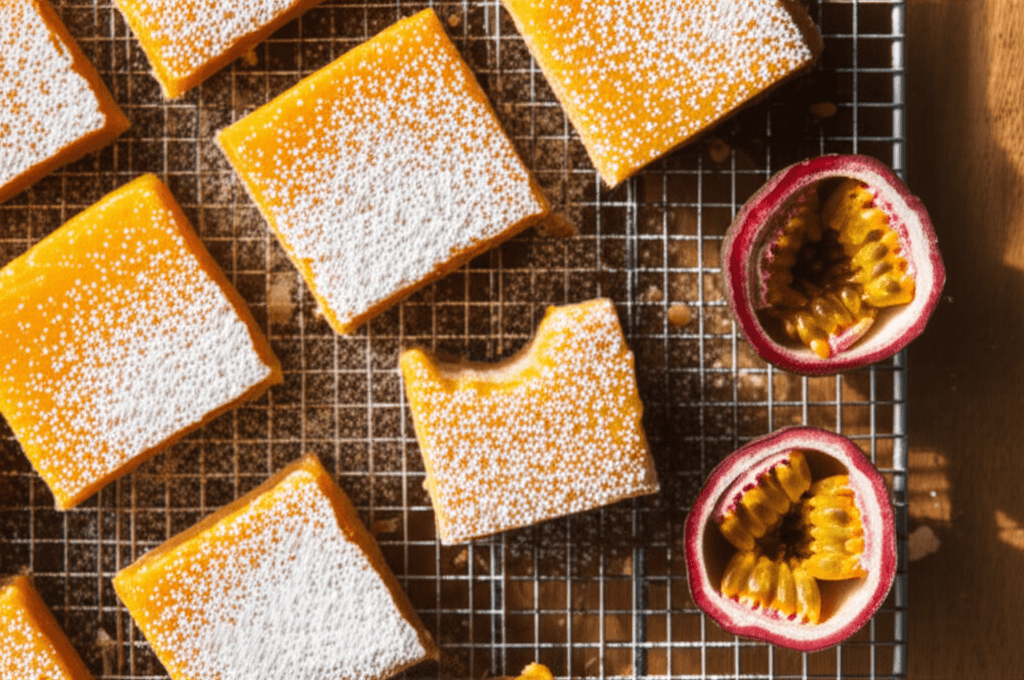
If lemon bars are the dessert of the mainland, then lilikoi bars are their tropical, more interesting cousin who grew up in Hawaii and has stories to tell. Same idea — buttery shortbread crust topped with a tangy citrus curd — but instead of lemon, you use lilikoi (passion fruit), which gives you this electrifying combination of sweet, tart, and floral that lemon can only dream about.
Lilikoi is one of those fruits that perfectly represents Hawaii’s flavor profile. It’s not subtle. One bite and your taste buds light up — it’s intensely tart, deeply aromatic, and has this exotic floral quality that’s unlike any other fruit. The juice is a gorgeous golden-orange color that looks like liquid sunshine on top of a pale shortbread crust. It’s the kind of dessert that makes people close their eyes when they take the first bite.
Lilikoi in Hawaii
Passion fruit was introduced to Hawaii in the 1880s, and the islands proved to be a perfect growing environment. The vines took off, climbing fences and trees and producing a huge abundance of wrinkly, purple or yellow fruits. Today, lilikoi grows wild across the islands — you’ll see the vines cascading over backyard fences, covering trellises, and climbing every available surface. During peak season, people give away bags of lilikoi because the vines produce more than any family can use.
Free: Hawaiian Cooking Starter Kit
Get 5 essential island recipes + a printable pantry checklist — everything you need to start cooking Hawaiian at home.
No spam, ever. Unsubscribe anytime.
In Hawaiian cooking, lilikoi shows up everywhere: in butter (lilikoi butter is a Hawaiian gift shop classic), in shave ice syrup, in cocktails, in chiffon pie, in cheesecake, in salad dressings, and — perhaps most perfectly — in these bars. The fruit’s intense flavor means a little goes a long way, which makes it ideal for baking.
Fresh vs. Frozen Lilikoi
If you live in Hawaii and have a lilikoi vine (or a neighbor with one), you have access to fresh fruit. Lucky you. Cut the fruits in half, scoop out the pulp and seeds, and strain through a fine mesh sieve to get the juice. It takes about 12-15 passion fruits to get 1/2 cup of juice.
If you’re on the mainland, frozen passion fruit puree is your best bet. Goya and other brands sell it in the frozen section of many grocery stores, especially those with good Latin American or Asian sections. You can also order pure lilikoi juice or puree online from Hawaiian producers. Avoid the “passion fruit juice” drinks that are mostly water and sugar — you want pure, undiluted passion fruit.
Ingredients
For the Shortbread Crust
- 1 cup (2 sticks) unsalted butter, softened
- 1/2 cup powdered sugar
- 2 cups all-purpose flour
- 1/4 teaspoon salt
For the Lilikoi Filling
- 4 large eggs
- 1 1/2 cups granulated sugar
- 1/2 cup fresh lilikoi juice (passion fruit juice), strained
- 1/4 cup all-purpose flour
- Zest of 1 lemon
- Powdered sugar for dusting
Instructions
Make the Crust
- Preheat oven to 350°F (175°C). Line a 9×13-inch baking pan with parchment paper, leaving overhang on the sides for easy removal.
- In a large bowl, cream the softened butter and powdered sugar together until light and fluffy, about 2 minutes.
- Add the flour and salt. Mix on low until the dough just comes together — it will be crumbly but should hold together when pressed.
- Press the dough evenly into the bottom of the prepared pan. Use the bottom of a measuring cup to press it flat and compact.
- Bake for 18-20 minutes until the crust is set and just barely starting to turn golden at the edges. Don’t overbake — you want it pale golden, not brown.
Make the Filling
- While the crust bakes, whisk together the eggs and granulated sugar until smooth.
- Add the lilikoi juice, flour, and lemon zest. Whisk until everything is well combined and there are no lumps of flour.
- As soon as the crust comes out of the oven, pour the lilikoi filling directly onto the hot crust. This helps the filling start to set from the bottom up.
- Return to the oven and bake for 20-25 minutes, until the filling is set — it should jiggle slightly in the center but not be liquid. The top will look matte, not shiny.
Cool and Serve
- Let the bars cool completely in the pan on a wire rack — at least 2 hours. The filling will continue to set as it cools.
- Once cool, refrigerate for at least 1 hour before cutting. Cold lilikoi bars cut much cleaner.
- Use the parchment overhang to lift the bars out of the pan. Cut into squares or rectangles.
- Dust generously with powdered sugar just before serving.
Tips for Perfect Lilikoi Bars
- Don’t skip the lemon zest. It might seem redundant with all that lilikoi flavor, but the lemon zest adds a subtle brightness that rounds out the filling.
- Pour filling on hot crust. This is the key to getting that perfect bond between crust and filling. If you let the crust cool, the filling won’t adhere as well.
- Refrigerate before cutting. Warm lilikoi bars are delicious but messy. Cold ones slice clean with sharp edges.
- Powdered sugar right before serving. If you dust them too early, the sugar will absorb moisture from the filling and dissolve. Dust them at the last minute for that beautiful snowy look.
- Freeze well: Lilikoi bars freeze beautifully. Layer them between parchment paper in an airtight container. They’ll keep for up to a month and thaw in about 20 minutes.
Variations
- Lilikoi-coconut bars: Add 1/2 cup of sweetened shredded coconut to the crust for a tropical twist.
- Macadamia nut crust: Replace 1/2 cup of the flour in the crust with finely ground macadamia nuts for a richer, nuttier base.
- Lilikoi-lime bars: Substitute half the lilikoi juice with fresh lime juice and add lime zest for a lilikoi-lime hybrid.
These bars are perfect for potlucks, bake sales, and any gathering where you want to bring something that’s a little different and a lot delicious. They transport well, they look beautiful, and that first tangy-sweet bite always starts a conversation.
Prep Time: 20 minutes | Bake Time: 40-45 minutes | Chill Time: 1 hour | Makes: 24 bars