Before you read
Keep the broth clear and the feeling easy.
Saimin works because it stays light on its feet. CurtisJ's take is that once the broth gets too rich or the toppings turn crowded, you lose the part that makes saimin feel local and specific.
Saimin is the noodle soup that belongs to Hawaii and nowhere else. It’s not ramen. It’s not wonton mein. It’s not pho. Saimin is its own dish — born on the sugar plantations where Japanese, Chinese, Filipino, and Native Hawaiian workers shared their food traditions and created something entirely new. The result is a clean, umami-rich broth, springy egg noodles, and a handful of toppings that haven’t changed in decades because they don’t need to.
If you grew up in Hawaii, saimin was everywhere. It was on the McDonald’s menu (and still is — Hawaii is the only place in the world where you can order saimin at the golden arches). It was at every football game concession stand, every school cafeteria, every convenience store with a hot food counter. It’s the thing you eat at 2 AM, the thing you feed your kids when they’re sick, and the thing you crave the moment you leave the islands.
Making saimin at home is surprisingly straightforward. The broth is the soul of the dish, and once you have that dialed, everything else falls into place.
The Broth: What Makes Saimin Different
Saimin broth is a fusion that happened before anyone used that word. It combines Japanese dashi (kombu and katsuobushi) with Chinese techniques (dried shrimp) and creates a broth that’s lighter than ramen but more complex than plain dashi. The dried shrimp is the key ingredient most people miss, it gives the broth a subtle sweetness and depth that’s unmistakably saimin.
The broth should be clear to slightly golden, not milky or heavy. It should taste like the ocean met a bowl of umami in the best possible way.
Ingredients
For the Broth
- 8 cups water
- 1 piece kombu (about 4 inches) — dried kelp, the backbone of dashi
- 1 cup katsuobushi (bonito flakes), packed loosely
- 1/4 cup small dried shrimp, this is the secret ingredient
- 2 tablespoons soy sauce (use a good Hawaiian or Japanese brand)
- 1 teaspoon sugar
- Salt to taste
For the Bowl
- 1 pound fresh saimin noodles (or fresh Chinese egg noodles — thin and springy)
- 4-6 slices char siu (Chinese BBQ pork), thinly sliced
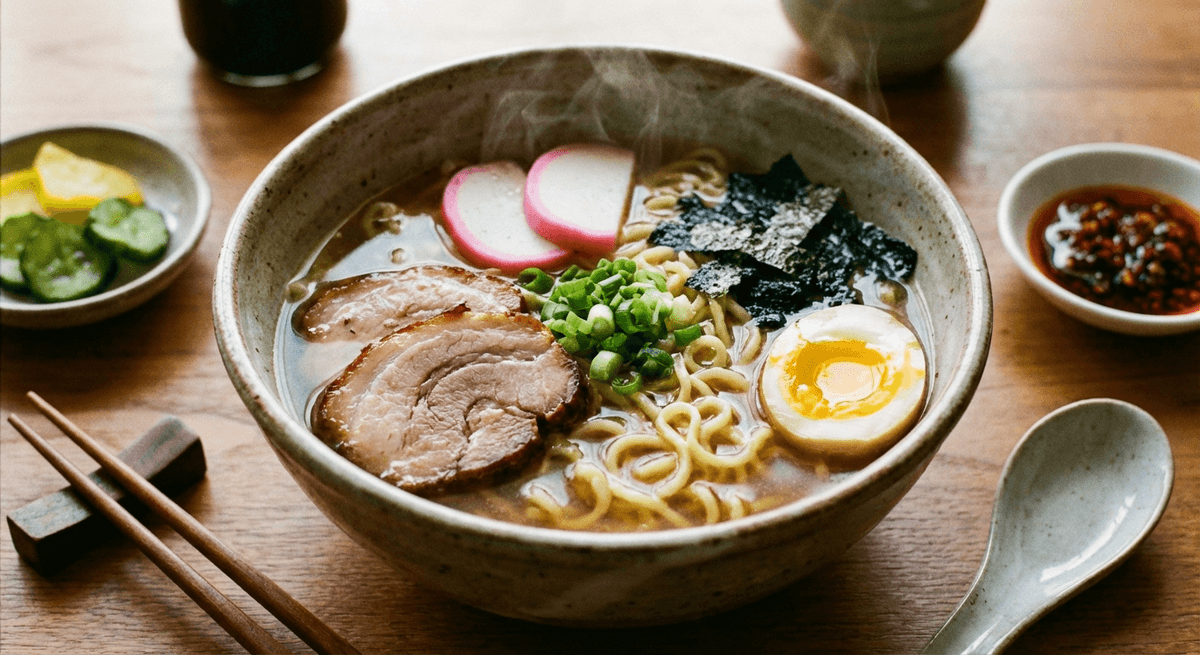
- 4 slices kamaboko (fish cake), the pink-and-white kind, sliced into half-moons
- 2 eggs: scrambled into thin sheets, then sliced into ribbons (kinshi tamago)
- 4 green onions, thinly sliced
- Nori strips, optional but traditional
Step-by-Step: Homemade Saimin
Step 1: Make the Broth
Place the kombu and dried shrimp in a pot with 8 cups of cold water. Let it soak for 30 minutes if you have the time (this extracts more flavor, but you can skip straight to heating if you’re in a rush). Bring the water to a gentle simmer over medium heat — don’t let it boil, or the kombu will make the broth slimy. Just as it starts to bubble, pull out the kombu and discard it.
Now add the bonito flakes. Let them steep for 3-4 minutes without stirring, then strain the entire broth through a fine-mesh sieve or cheesecloth. Discard the bonito and shrimp. Season the broth with soy sauce, sugar, and salt. It should taste clean, savory, and slightly sweet. Set aside and keep warm.
Step 2: Prep the Toppings
While the broth steeps, get your toppings ready. Slice the char siu thin. Cut the kamaboko into half-moons. For the egg ribbons, beat 2 eggs with a pinch of salt, pour into a lightly oiled nonstick pan, and cook into a thin omelet. Roll it up and slice into thin strips. Slice your green onions.
Step 3: Cook the Noodles
Bring a separate pot of water to a boil. Cook the saimin noodles according to package directions — usually just 1-2 minutes for fresh noodles. You want them springy, not mushy. Drain and divide among 4 bowls.
Step 4: Assemble
Ladle the hot broth over the noodles. Arrange the char siu, kamaboko, and egg ribbons on top. Scatter green onions and nori strips over everything. Serve immediately — saimin waits for no one.
The Noodle Matters
True saimin noodles are made with egg and have a distinctive springy, slightly chewy texture that’s different from ramen noodles. Sun Noodle in Honolulu makes the most widely used saimin noodles in Hawaii. If you can find fresh saimin noodles at an Asian grocery store, that’s your best bet. Otherwise, fresh thin Chinese egg noodles are the closest substitute. Dried ramen noodles will work in a pinch, but the texture won’t be quite right.
The Classic Toppings (and Why They Work)
Saimin toppings are minimal and purposeful — each one earns its place in the bowl:
- Char siu: Adds sweetness and richness. A few thin slices are all you need.
- Kamaboko: Provides a mild, bouncy texture contrast. The pink edge adds color to the bowl.
- Egg ribbons: Silky and delicate, they float through the broth like little golden streamers.
- Green onions: Fresh, sharp, and essential. Don’t skip these.
- Nori: Optional but traditional. It softens in the broth and adds an extra layer of ocean flavor.
Some places add Spam, wontons, or even hot dog slices (a concession stand classic). These are all acceptable. Saimin is casual food — there are no rules about toppings, only the broth is sacred.
Variations Worth Trying
Fried Saimin (Dry Mein)
Cook the noodles, drain, then stir-fry in a hot wok with a splash of soy sauce, oyster sauce, and the same toppings. No broth — just smoky, savory noodles. We have a full recipe for fried saimin if you want to go that route.
Saimin Salad
A potluck staple. Cold saimin noodles tossed with shredded cabbage, char siu, kamaboko, and a sesame-soy dressing. Served chilled, it’s basically Hawaii’s version of a cold noodle salad.
Wonton Saimin
Drop a few pork-and-shrimp wontons into the broth along with the noodles. This is the premium version you’d order at a sit-down restaurant.
A Dish That Exists Nowhere Else
Saimin is sometimes called Hawaii’s “only truly local dish” — meaning it wasn’t brought from another country but was created right here on the islands. It came from the plantation camps where workers from Japan, China, the Philippines, Korea, and Portugal lived side by side and shared what they had. The Japanese contributed dashi and noodle-making techniques. The Chinese brought their egg noodle tradition. Everyone added what they knew, and saimin was born.
Today you can find saimin at places like Shige’s Saimin Stand in Wahiawa, Palace Saimin in Kalihi (open since 1946), and yes, at every McDonald’s in Hawaii. But making it at home, with a proper dashi-shrimp broth and fresh noodles, is something special. It takes about 45 minutes, and the result is a bowl that tastes exactly like the islands feel.