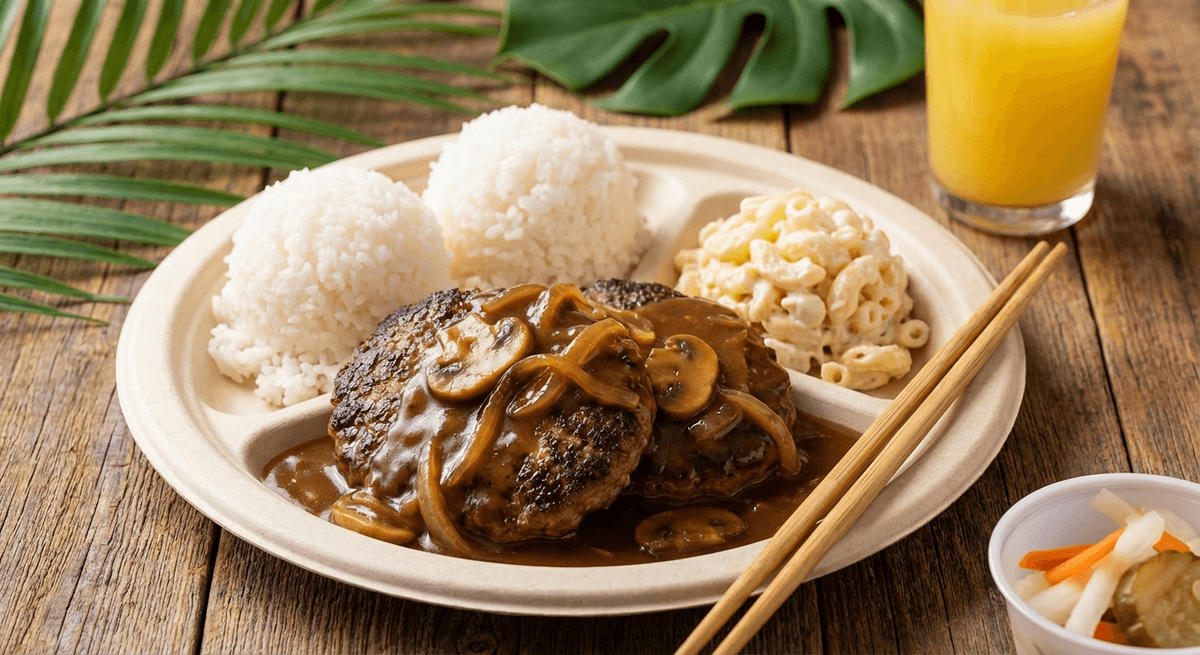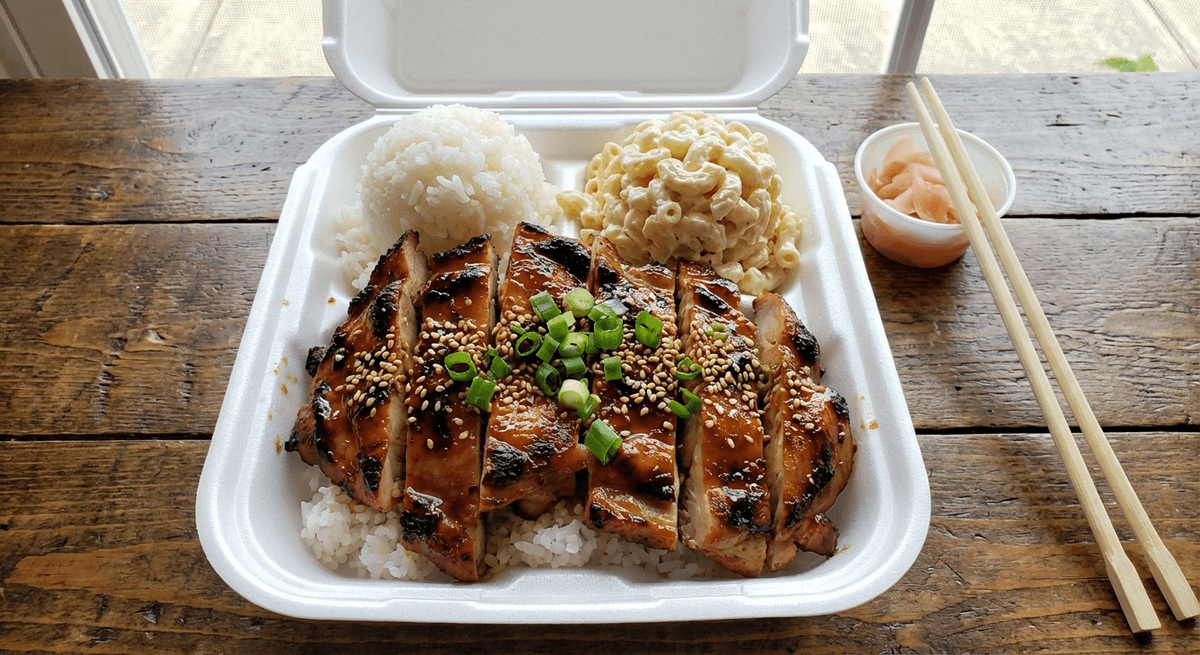
If you ask a local kid what their favorite plate lunch protein is, a lot of them will say shoyu chicken. Not teriyaki chicken (that’s different), not katsu (that’s also different), but shoyu chicken — bone-in chicken pieces braised low and slow in a sweet soy sauce mixture until the meat is falling off the bone and the sauce has reduced into this dark, glossy, impossibly savory liquid that soaks into every grain of rice on the plate.
Shoyu chicken is one of those dishes that’s so simple it almost feels like it shouldn’t be as good as it is. It’s chicken. In soy sauce. With some sugar and ginger. That’s basically it. But the slow braising does something magical, it transforms ordinary chicken into something deeply comforting and richly flavored, with a sweetness that comes from the long reduction rather than from dumping in a bunch of sugar. It’s the kind of dish that every local family has their own version of, passed down from grandma, adjusted over years, and considered the definitive version by everyone in that family.
Shoyu Chicken vs. Teriyaki Chicken
People often confuse shoyu chicken and teriyaki chicken, and while they’re related, they’re different dishes:
- Teriyaki chicken is grilled or broiled, with the sauce brushed on during cooking as a glaze. It’s about the char, the caramelization, the crispy skin.
- Shoyu chicken is braised — the chicken simmers in the sauce for a long time, absorbing the flavor throughout. There’s no char, no crispy skin. It’s about tenderness, depth of flavor, and that rich braising liquid.
Both are essential plate lunch options. Teriyaki is the flashier one. Shoyu chicken is the quiet one that locals often prefer.
The Braising Liquid
The braising liquid is simple but the ratios matter. You want enough soy sauce to flavor the chicken deeply without making it inedibly salty. The sugar balances the salt and helps create that glossy, dark sauce. Fresh ginger and garlic add aromatic depth. And a splash of mirin rounds everything out with a subtle sweetness.
The key is the long, slow braise. As the chicken cooks, it releases its juices into the sauce, and the sauce reduces and concentrates. By the time the chicken is done, the sauce has gone from thin and watery to thick and syrupy, dark as mahogany and packed with umami. That sauce is the whole point, it’s what turns the rice underneath into the best part of the meal.
Build the Braise
Braise
Serve
Tips
- Bone-in, skin-on: Don’t use boneless skinless chicken for this. The bones add body to the sauce, and the skin absorbs the braising liquid beautifully. The skin won’t be crispy, it’ll be soft and saturated with shoyu flavor, which is exactly what you want.
- Dark meat only: Thighs and drumsticks are essential. White meat dries out during the long braise. Dark meat gets more tender the longer it cooks.
- Add hard-boiled eggs: This is a popular local addition. Peel 4-6 hard-boiled eggs and add them to the pot in the last 20 minutes of cooking. They absorb the shoyu sauce and turn a beautiful dark brown with a rich, savory flavor. Shoyu eggs alongside shoyu chicken is a classic combination.
- Make it the day before: Like most braised dishes, shoyu chicken is even better the next day. The flavors deepen overnight in the fridge. Reheat gently on the stove.
- Save the sauce: Any leftover braising liquid is gold. Use it to flavor rice, as a dipping sauce, or as the base for your next batch of shoyu chicken.
- Slow cooker version: Combine everything in a slow cooker, cook on low for 4-6 hours. The chicken will be tender. You may need to reduce the sauce on the stove afterward since slow cookers don’t reduce liquids as effectively.
Everyday Food
Shoyu chicken is the definition of everyday Hawaiian food. It’s not fancy, it’s not complicated, it doesn’t take expensive ingredients or special skills. It’s the kind of thing you throw together on a Tuesday night with stuff you already have in your pantry — soy sauce, sugar, ginger, garlic, chicken. An hour later, you have a meal that tastes like it took all day, and enough leftover sauce to make tomorrow’s rice even better. That’s local cooking at its finest.
Prep Time: 10 minutes | Cook Time: 45-60 minutes | Serves: 4-6