The Great Hawaiian Kitchen Debate
If there’s one thing Hawaiian comfort food has in common, it’s time. Kalua pork needs hours to get that fall-apart tenderness. Oxtail soup has to simmer until the meat is practically melting off the bone. Beef stew needs to braise until everything is rich and thick and perfect. These aren’t quick weeknight dishes, they’re labors of love.
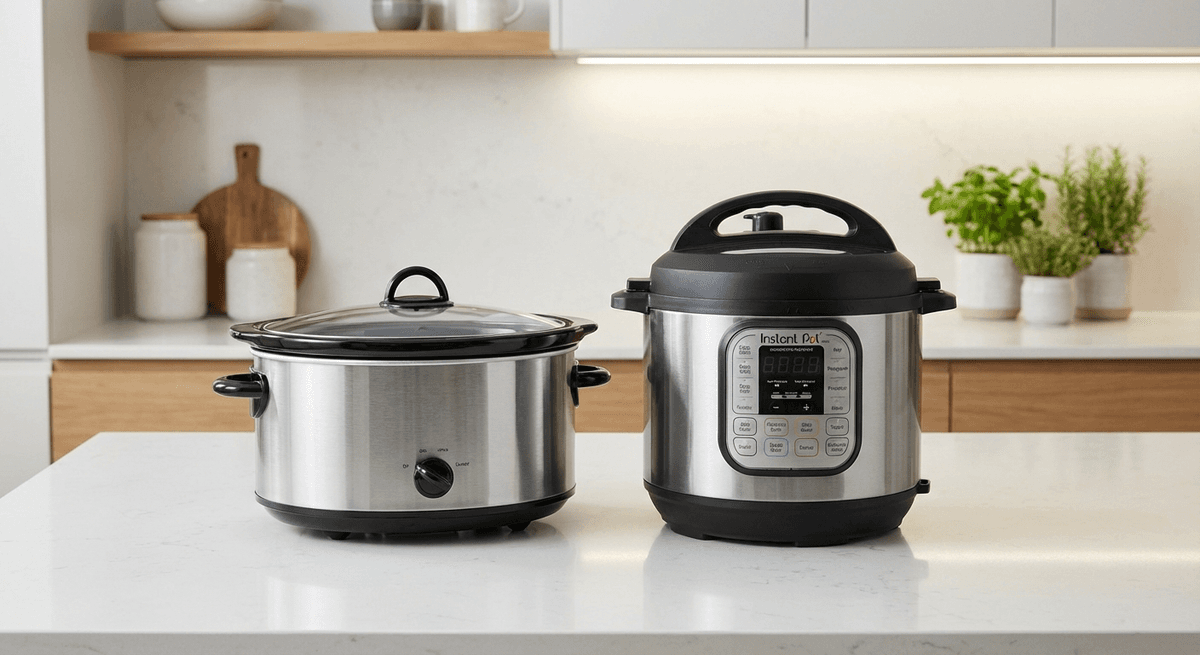
So when slow cookers and Instant Pots both promise to handle these dishes for you, the natural question is: which one should you use? I’ve been cooking Hawaiian comfort food in both for years, and the honest answer is that each one has its strengths. Let me break it down dish by dish so you can figure out what works best for your kitchen.
Slow Cooker: The Set-It-and-Forget-It Champion
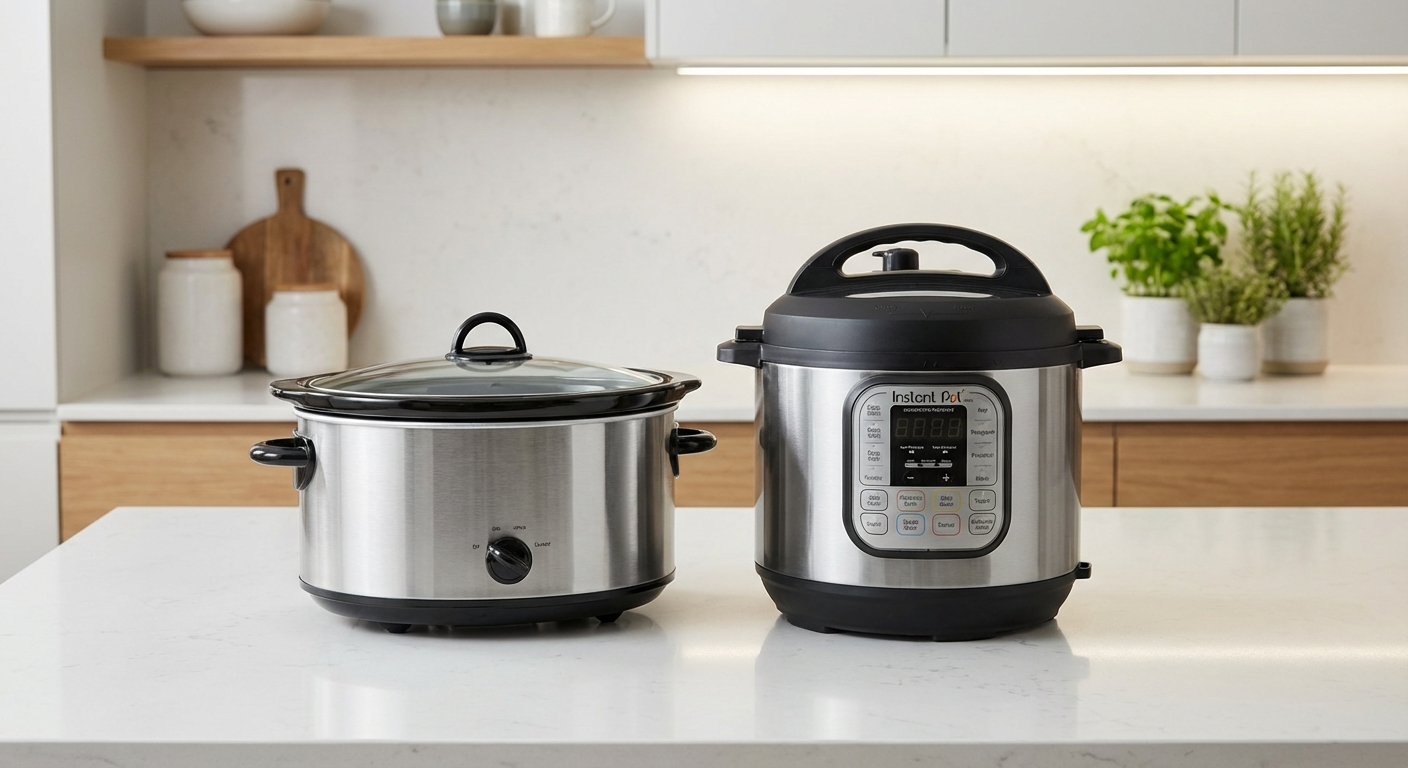
The slow cooker has been a staple in Hawaiian homes for decades, and for good reason. You load it up in the morning, go to work, and come home to a house that smells There’s something almost magical about walking through the door and being hit with the aroma of kalua pork that’s been cooking all day.
What the Slow Cooker Does Best
The slow cooker excels at dishes that benefit from long, gentle cooking. The low, steady heat breaks down tough cuts of meat over many hours, creating that melt-in-your-mouth texture we love. It’s also incredibly forgiving, you don’t need to watch it, stir it, or worry about it burning.
Pros:
- Truly hands-off cooking — set it and forget it
- Gentle heat is ideal for tough, collagen-rich cuts
- Large capacity models are great for feeding big groups
- Very affordable — good models start around $30
- Hard to mess up, even for beginners
- Uses less electricity than an oven running all day
Cons:
- Takes 6 to 10 hours for most Hawaiian comfort dishes
- Can’t brown or sear, you’ll need a separate pan for that
- Flavors can sometimes taste “blended” rather than layered
- Limited to slow cooking, not as versatile as other options
Instant Pot: Speed Meets Versatility
The Instant Pot changed the game for busy cooks. It’s essentially a pressure cooker, slow cooker, rice cooker, and steamer rolled into one. For Hawaiian home cooks who want those long-simmered flavors but don’t have 8 hours to wait, the Instant Pot can be a real lifesaver.
What the Instant Pot Does Best
Pressure cooking forces liquid into the meat at high temperatures, which can break down tough fibers in a fraction of the time. Dishes that would take all day in a slow cooker can be done in 1 to 2 hours in the Instant Pot. Plus, the saute function means you can brown meat right in the pot before pressure cooking — no extra dishes.
Pros:
- Dramatically cuts cooking time — hours instead of all day
- Built-in saute function for browning and building flavor
- Multi-functional: pressure cook, slow cook, steam, rice, yogurt
- Keeps flavors more concentrated due to sealed environment
- Can also replace your rice cooker in a pinch
Cons:
- Learning curve, pressure cooking takes practice
- Not truly hands-off, you need to monitor pressure and release
- Texture can be slightly different from traditional slow cooking
- Smaller capacity than many slow cookers
- More expensive, usually $80 to $150
Dish-by-Dish Breakdown: Which Works Better?
Kalua Pork
Winner: Slow Cooker
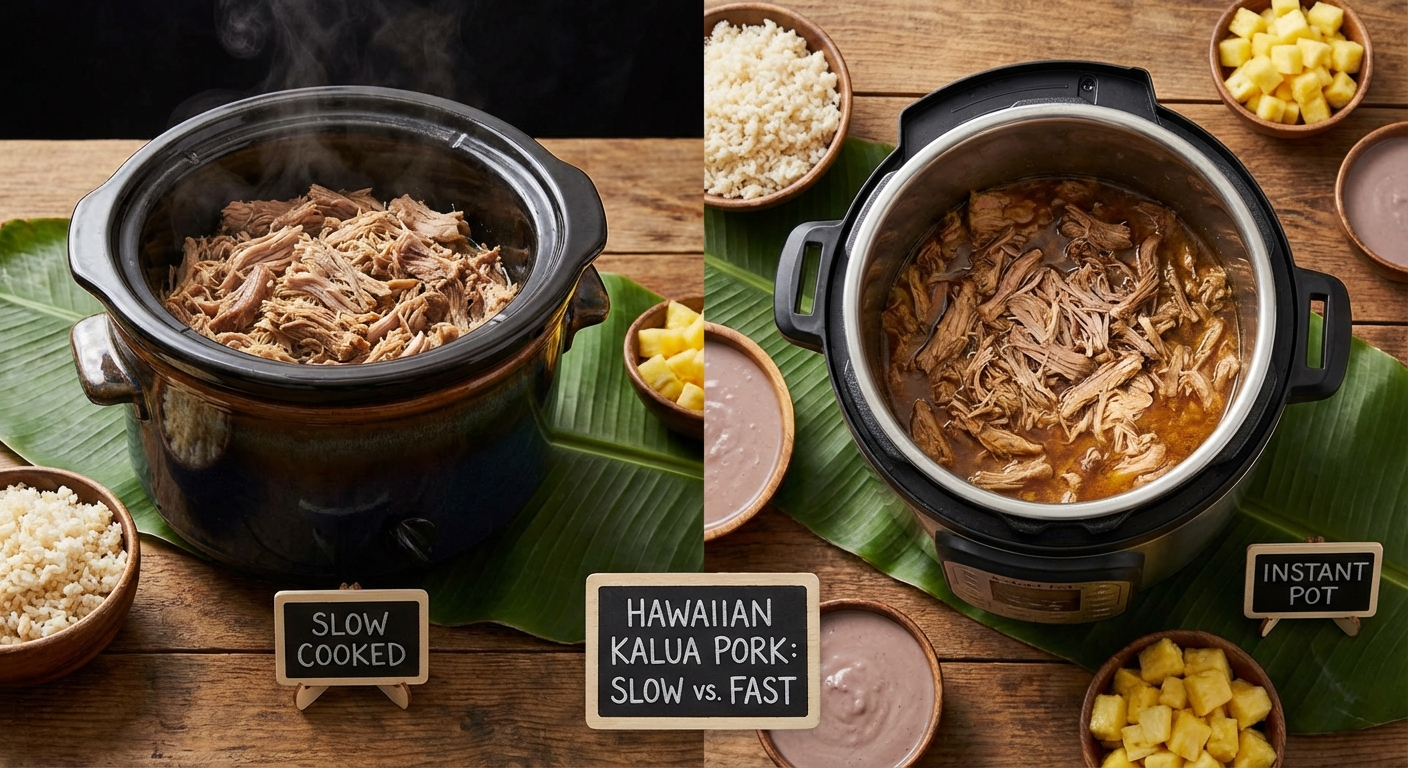
This is where the slow cooker really shines. Kalua pork is all about patience — letting that pork butt sit in liquid smoke and sea salt for 8 to 10 hours until it shreds with a fork. The slow, gentle heat renders the fat perfectly and creates that tender, smoky pulled pork we all crave. You can absolutely make kalua pork in an Instant Pot (about 90 minutes on high pressure), and it comes out good. But the texture from a full day in the slow cooker is just a little more authentic — more like what you’d get from an imu.
Hawaiian Beef Stew
Winner: Instant Pot
Hawaiian beef stew with its big chunks of potato, carrot, and celery benefits from the Instant Pot’s saute function. You can brown the beef right in the pot to build that deep, caramelized flavor, then pressure cook everything together. The result is tender beef and vegetables that still hold their shape, with a rich, thick gravy. In a slow cooker, the vegetables sometimes get too soft and start falling apart before the beef is fully tender.
Laulau
Winner: Slow Cooker
Laulau needs low, slow steaming to let the taro leaves break down and the pork and butterfish get tender and meld together. The slow cooker mimics that long steaming process well. While you can pressure cook laulau, the delicate taro leaves benefit from the gentler treatment. There’s no rushing laulau, it’s a dish that rewards patience.
Oxtail Soup
Winner: Instant Pot
Oxtail is one of the toughest cuts around, loaded with collagen and connective tissue. On the stovetop, it needs 3 to 4 hours of simmering. In a slow cooker, you’re looking at 8 to 10 hours. The Instant Pot can get oxtail fall-off-the-bone tender in about 45 to 60 minutes under pressure. The broth comes out just as rich and gelatinous, and you save yourself a whole day of cooking. This is one of the Instant Pot’s greatest hits.
Chicken Long Rice
Winner: Either (slight edge to Instant Pot)
Chicken long rice is relatively quick to begin with, so neither appliance has a huge advantage. That said, the Instant Pot’s saute function lets you cook everything in one pot — saute your ginger and chicken, add your broth, pressure cook briefly, then toss in the long rice at the end. It’s efficient and reduces cleanup. A slow cooker works fine too, especially if you want to prep it in the morning and come home to it ready.
So Which Should You Buy?
Here’s my honest take: if you can only get one, go with the Instant Pot. Its versatility makes it the better all-around kitchen tool, and it can actually function as a slow cooker too (even if it’s not quite as good in that mode). You’ll appreciate the speed on busy weeknights when you still want homemade Hawaiian food but don’t have all day to cook.
But if you already have a rice cooker and your main goal is making big batches of kalua pork, laulau, and other traditional dishes where low-and-slow is the whole point, a large slow cooker is hard to beat. They’re inexpensive and dead simple to use.
And honestly? The best answer might be both. I have a slow cooker and an Instant Pot in my kitchen, and they both earn their counter space. Some Sundays I’ll have the slow cooker going with kalua pork while I use the Instant Pot for Portuguese bean soup. That’s a good day.
Final Thoughts
Hawaiian comfort food is about nourishing the people you love with dishes that take care and attention. Whether you use a slow cooker, an Instant Pot, or both, what matters most is that you’re cooking from the heart. The right tool just makes it a little easier to get dinner on the table and in Hawaiian homes, getting everyone around that table is what it’s all about.