If I had to pick one food that defines everyday life in Hawaii, it would be Spam musubi. Not poke, not plate lunch, not even shave ice — Spam musubi. It’s the food that every kid in Hawaii grows up eating, the thing you grab from the gas station or 7-Eleven on your way to the beach, the snack that sits next to the register at every convenience store from Hilo to Haleiwa, wrapped tight in plastic wrap, still warm from the morning batch.
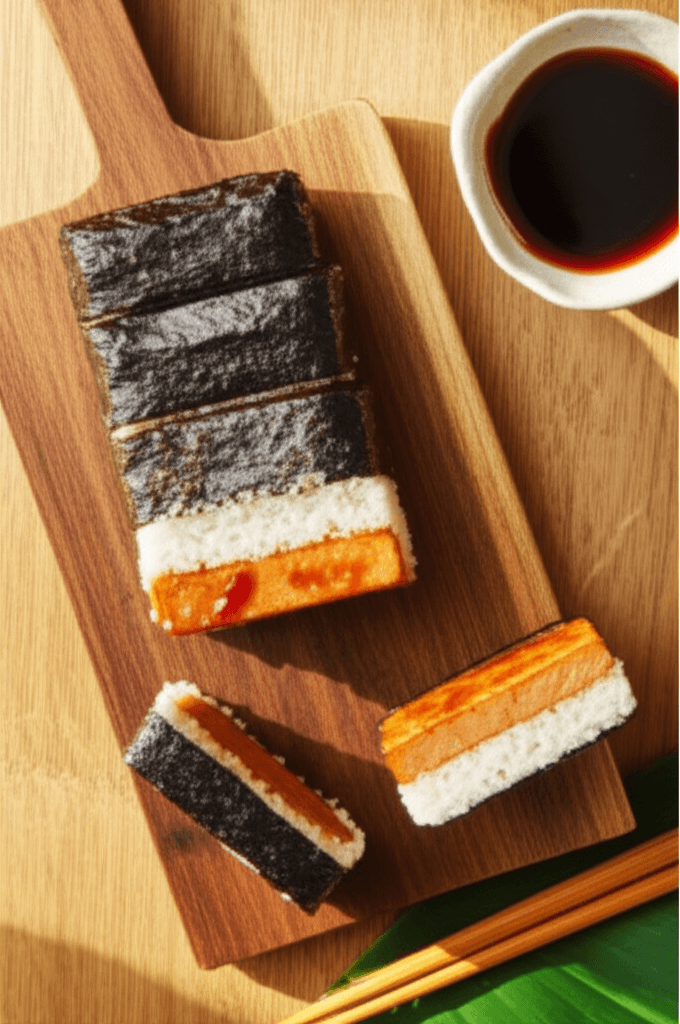
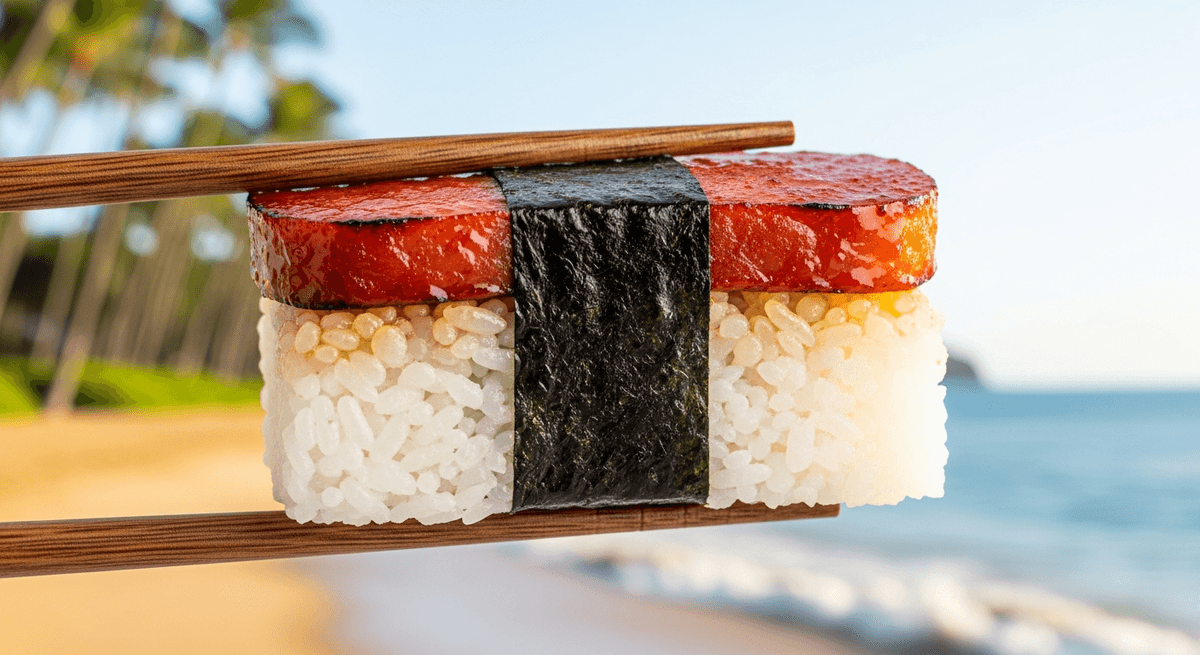
Spam musubi is deceptively simple: a block of rice, a slice of fried Spam, a strip of nori holding it all together. But like a lot of simple things in Hawaiian food, there’s a story behind it, one that goes back to World War II, the plantation era, and the beautiful way Hawaii takes ingredients from everywhere and makes them something entirely its own.
Why Hawaii Loves Spam
Hawaii consumes more Spam per capita than anywhere else in the world — roughly seven million cans per year for a population of about 1.4 million people. That’s about five cans per person per year, and honestly, I think that number is low. Spam is in everything here: fried rice, saimin, breakfast plates, bento boxes, and of course, musubi.
The love affair started during World War II, when fresh meat was scarce and the military distributed canned goods across the Pacific. Spam, with its long shelf life and salty, savory flavor, became a staple for both military personnel and local families. After the war ended, Spam stayed. It fit perfectly into the local palate — salty, rich, and ideal paired with rice. Japanese, Filipino, Korean, and Native Hawaiian families all adopted it and made it their own.
If you’re from the mainland and you think Spam is a joke, I get it. The mainland relationship with Spam is complicated. But in Hawaii, there’s no irony. Spam is beloved, full stop. We put it on restaurant menus next to ahi and wagyu without blinking. It’s not a guilty pleasure, it’s just pleasure.
The Birth of Spam Musubi
Spam musubi is essentially the Hawaiian evolution of Japanese onigiri (rice balls). Japanese plantation workers brought the tradition of portable rice snacks to Hawaii, and somewhere along the way, someone had the genius idea of topping a block of rice with a slice of teriyaki-glazed fried Spam and wrapping it in nori. The exact origin is debated, some credit Barbara Funamura of Kauai in the 1980s, but the concept feels inevitable. Rice plus Spam plus nori is such a natural Hawaiian combination that it probably emerged in a hundred kitchens at once.
Today, Spam musubi is everywhere. Every 7-Eleven in Hawaii has a warming case full of them. School cafeterias sell them. Parents make batches for their kids’ sports tournaments. It’s the ultimate portable Hawaiian food — no utensils needed, travels well, and tastes good at any temperature.
The Secret to Great Spam Musubi
A lot of people think Spam musubi is foolproof, but there’s a real difference between a mediocre one and a great one. Here’s what matters:
- Fry the Spam. Never skip this step. Raw-from-the-can Spam on rice is sad. Frying gives it caramelized edges, a slight crunch, and develops the flavor.
- Glaze it. The soy sauce, sugar, and mirin glaze is what transforms fried Spam from good to addictive. That sweet-savory lacquer is everything.
- Rice texture matters. The rice should be warm, well-seasoned, and packed firmly but not too tight. You want it to hold together but still have a tender bite. A musubi mold helps, but you can use the Spam can itself.
- Nori quality counts. Use good roasted nori, the kind you’d use for sushi. Thin, crisp nori makes a huge difference in the final product.
For the Spam
For the Rice
For Assembly
Prepare the Spam
Season the Rice
Assemble the Musubi
Tips and Variations
- Egg musubi: Add a thin fried egg (tamago-style) between the rice and Spam. This is the deluxe version and it’s
- Furikake Spam musubi: Mix furikake into the rice and sprinkle extra on top of the Spam before wrapping. The nori-sesame flavor takes it up a notch.
- Spicy musubi: Add a thin layer of Kewpie mayo mixed with sriracha on the rice before adding the Spam.
- Teriyaki musubi: Use a thicker teriyaki glaze instead of the soy-sugar-mirin combo for a sweeter version.
- Bacon avocado musubi: Add crispy bacon and creamy avocado for a modern twist that’s become one of our most popular variations.
- Make ahead: Spam musubi keeps well at room temperature for several hours, making it perfect for picnics, beach days, and packed lunches. Wrap each one individually in plastic wrap.
The Musubi Mold
A musubi mold is a small plastic press shaped like a Spam slice, it costs a few dollars and makes assembly much easier and more consistent. You can find them at any Asian grocery store or online. If you don’t have one, the Spam can trick works: wash the can, remove both ends with a can opener, and use it as a mold. Just be careful of sharp edges.
Some people skip the mold entirely and just shape the rice by hand, onigiri-style. That works too — your musubi might not be as perfectly rectangular, but it’ll taste just as good.
A Local Institution
Spam musubi isn’t fancy food. It’s not trying to impress anyone. It’s a kid’s lunch, a beach snack, a late-night craving, a potluck contribution that always disappears first. It’s Hawaii in a single bite — Japanese technique, American ingredients, Filipino practicality, and that indefinable local spirit that turns simple things into something you’ll crave for the rest of your life.
Make a batch. Wrap them up. Take them to the beach. Share with your friends. That’s the whole point.
Prep Time: 15 minutes | Cook Time: 10 minutes | Makes: 8-10 musubi