Here is what happened the time I decided to make poi from scratch. Spoiler alert: it did not go as planned.
The Ambitious Idea
I was feeling nostalgic and decided I wanted “real” poi—not the store-bought stuff, but made the traditional way. How hard could it be? Cook some taro, mash it up, add water. Simple, right?
Wrong.
Finding the Taro
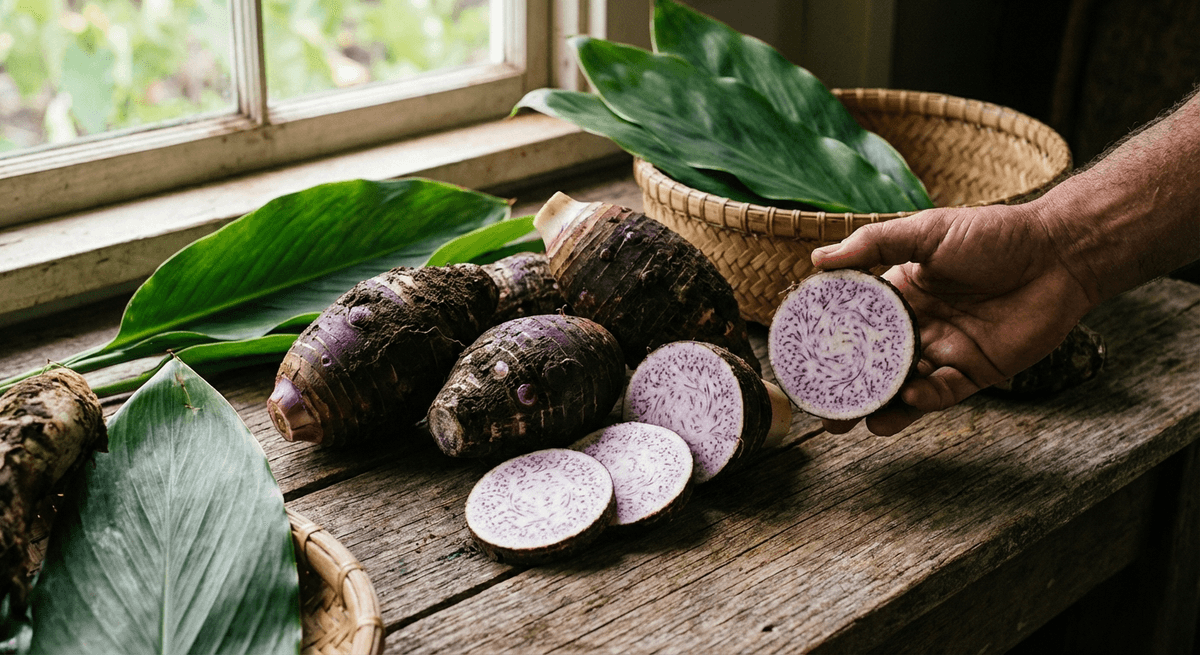
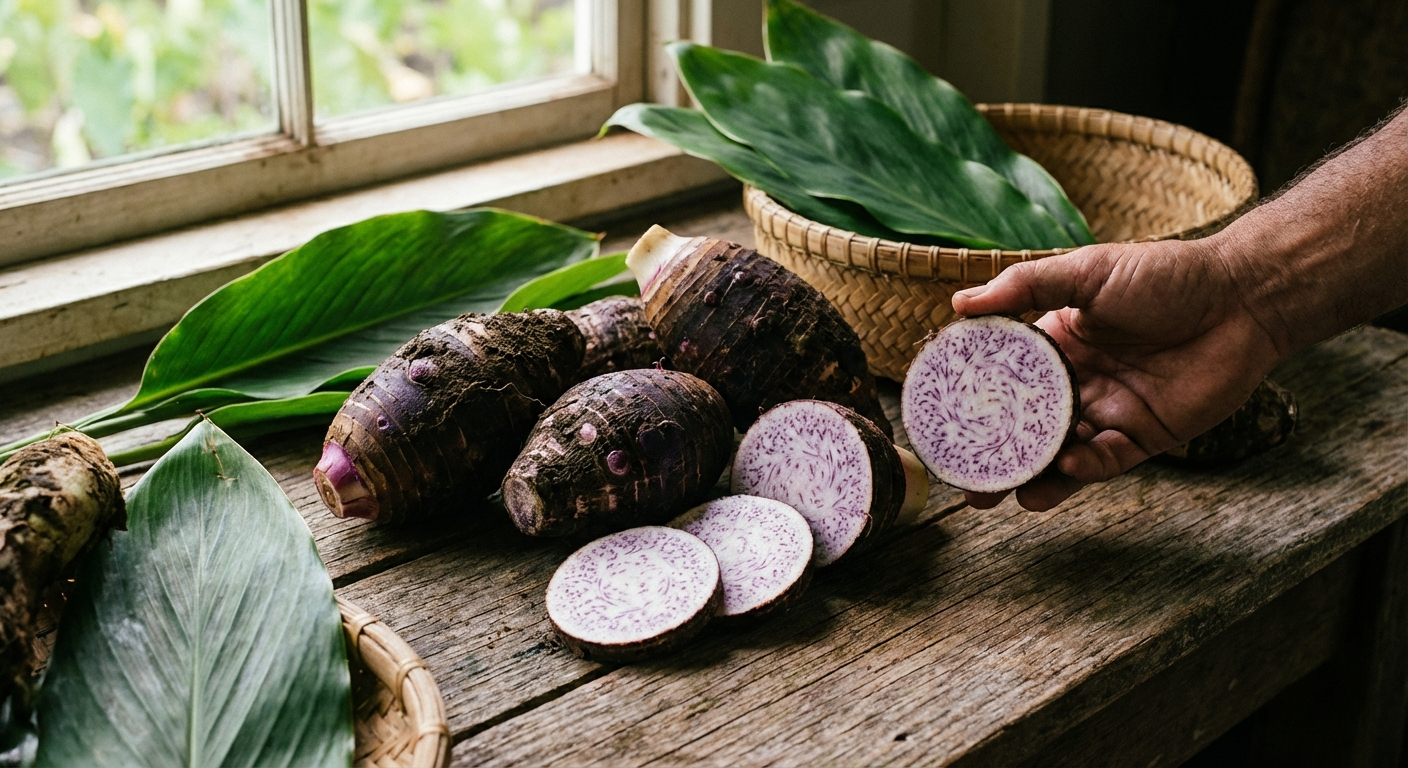
First obstacle: finding good taro. After visiting four different stores, I finally found some at an Asian market. The roots were massive and intimidating, covered in a hairy brown skin.
“You know how to cook this?” the cashier asked skeptically.
“Of course,” I lied.
Where to Find Taro
If you’re on the mainland and want to try this yourself, here’s where to look. Asian grocery stores are your best bet — H Mart, 99 Ranch, or any well-stocked Asian market usually carries taro root. Some Whole Foods locations stock it too, especially in areas with larger Pacific Islander communities. If you’re lucky enough to be in Hawaii, farmers markets are da kine spot. The taro there is fresher than anything you’ll find on a store shelf, and the farmers can tell you exactly which variety is best for poi.
Look for taro that feels heavy for its size and firm all the way through. Avoid any that feel soft or have dark, mushy spots. The skin should be rough and hairy but intact — no cracks or mold. And buy more than you think you need. Trust me on this one. You lose a lot of volume in the cooking and pounding process.
The Cooking Disaster
I got home and Googled “how to cook taro.” Forty-five minutes of boiling, it said. Easy enough.
Except I didn’t cut the pieces evenly. Some were done in 30 minutes. Others were still hard as rocks after an hour. And the ones that overcame fell apart into mush.
Also, nobody warned me about the SLIME. Cooked taro is incredibly slippery. I nearly dropped the whole pot.
The Mashing Struggle
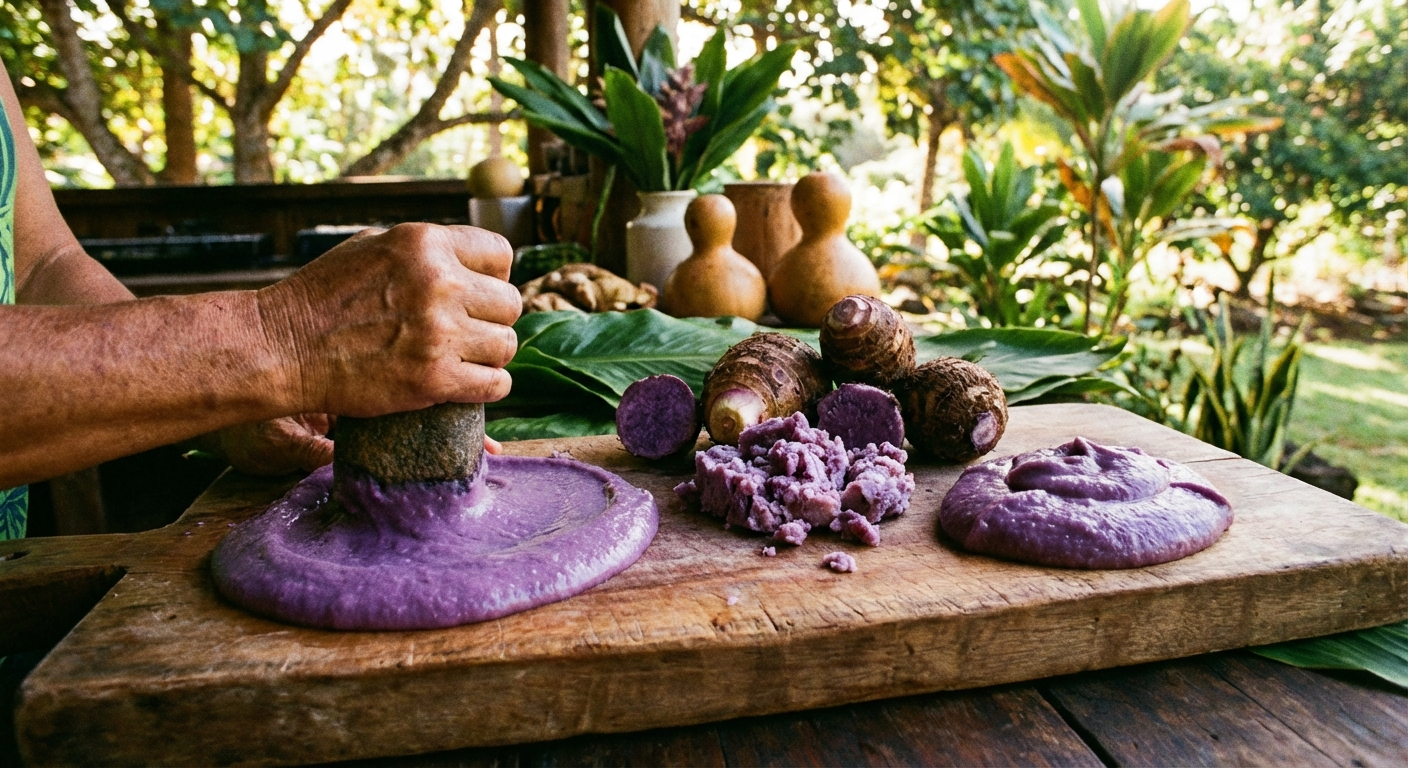
Traditional poi is made by pounding cooked taro with a stone pounder called a pohaku ku’i ‘ai. I don’t have one of those. I have a potato masher and determination.
What followed was 45 minutes of the most physically demanding cooking I’ve ever done. Taro does not want to be mashed. It fights back. It sticks to everything. It laughs at your potato masher.
Halfway through, I tried the food processor. The motor started smoking. I unplugged it quickly.
The Sticky Truth
By the time I achieved something resembling poi, my kitchen looked like a crime scene. There was taro:
- On the ceiling
- In my hair
- Somehow inside the refrigerator
- On the dog
The Verdict
I nervously tasted my creation.
You know what? It wasn’t bad. It wasn’t as smooth as Tutu used to make, and it was probably too thick, but it tasted like poi. Real poi that I made with my own hands.
I called my mom to brag. She laughed for about five minutes, then said, “Now you know why we buy it from the store.”
Why Poi Matters
Here’s the thing though — even with all the mess and the struggle, making poi connected me to something much bigger than a recipe. Poi is the most sacred food in Hawaiian culture. According to Hawaiian tradition, the taro plant (kalo) is the elder sibling of the Hawaiian people. The creation story tells of Haloa, the first taro plant, born from the gods. So when you eat poi, you’re not just eating food. You’re being nourished by family.
For generations, poi was the center of every meal. It was the first solid food given to babies. It sustained entire communities. There’s even a tradition that says you shouldn’t argue or speak in anger when a bowl of poi is on the table, because it represents the presence of Haloa. That’s how deep the respect runs.
Knowing all of that made my messy kitchen disaster feel a little more meaningful. Yeah, my poi wasn’t perfect. But I was participating in something that my ancestors did for centuries, and there’s real mana in that.
Tips for First-Timers
If my story hasn’t scared you off (and I hope it hasn’t), here are some tips I wish someone had given me before I started:
- Peel before boiling: It’s way easier to peel raw taro than cooked taro. Use gloves because raw taro can irritate your skin.
- Cut into even chunks: About 2-inch pieces. Seriously, even sizes. I cannot stress this enough.
- Boil until fork-tender: When a fork slides through easily with no resistance, it’s done. Usually 45 minutes to an hour.
- Mash while hot: Taro gets gummy and resistant as it cools. Work fast.
- Add water gradually: A little at a time until you hit the consistency you like.
- Use a stand mixer if you have one: The paddle attachment on low works much better than a potato masher and won’t kill your food processor.
- Wet your hands and tools: Water keeps the taro from sticking to everything. Everything.
Different Ways to Eat Poi
Once you’ve got your poi (whether homemade or store-bought — no shame in that game), there are different ways to enjoy it:
- Fresh poi (poi hou): Eaten the day it’s made, sweet and mild. This is my favorite. Smooth, slightly sweet, and clean-tasting.
- Day-old poi: Starts to develop a slight tang. Still good. Great with kalua pig or lomi salmon.
- Sour poi (poi ‘awawa): Left to ferment for 2-3 days. The tang gets real. Some people love it, some people don’t. It’s an acquired taste, kind of like sourdough bread.
- Poi with sugar and milk: A classic way to serve it to kids. Mix in a little sugar and a splash of milk. Broke da mouth good. My tutu used to make this for me as an after-school snack.
- Poi in smoothies: A modern take. Blend poi with banana, coconut milk, and honey. It’s actually really good — thick, creamy, and nutritious.
- Two-finger or three-finger: The traditional way to eat poi is with your fingers. Two-finger poi is thicker (you only need two fingers to scoop it). Three-finger poi is thinner. It’s one of those fun debates — everybody has their preference.
What I Learned
- Respect tradition – There’s a reason people trained for years to make poi properly
- Cut evenly – This applies to all cooking, but especially taro
- Get the right tools – A food processor won’t cut it
- Embrace the mess – Sometimes the journey is the point
- Store-bought is fine – Really, it’s okay
Will I Do It Again?
Absolutely. Maybe not tomorrow, but I’m determined to get better at this. It’s part of my heritage, and there’s something deeply satisfying about connecting with tradition through food—even when that food ends up on the ceiling.
Have you ever tried making a traditional dish from scratch? How’d it go? Share your stories below!
A hui hou,
Curtis