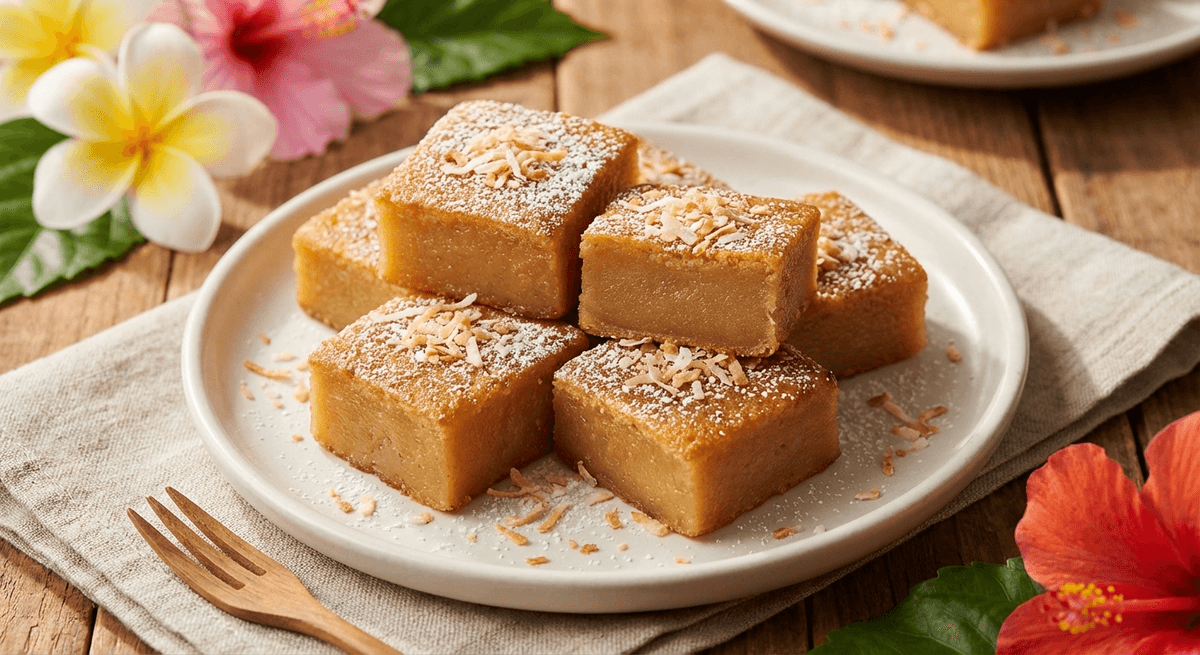
No Lunar New Year celebration in Hawaii is complete without gau. This sticky, sweet coconut mochi cake has been a treasured tradition in island Chinese families for generations, symbolizing family unity and the promise of reaching new heights in the coming year.
Gau (also spelled “nian gao” in Mandarin) literally means “year cake,” but in Chinese it sounds like “higher year” – representing the wish for improvement and success in all things. In Hawaii, we’ve made it our own by emphasizing the coconut and creating a version that’s become a beloved local treat.
The Meaning Behind Gau
Every element of gau carries significance:
- Sticky texture – Represents family sticking together through the year
- Sweet flavor – For a sweet life ahead
- Round shape – Symbolizes completeness and family reunion
- Rising during steaming – Represents rising fortune and advancement
- Golden color – Signifies wealth and prosperity
Hawaiian-Style Gau
While traditional Chinese nian gao is often made with just glutinous rice flour and sugar, Hawaiian gau incorporates rich coconut milk – a nod to the Polynesian influence on island cuisine. The result is incredibly moist, fragrant, and utterly addictive.
Some families add red beans, sesame seeds, or Chinese dates. Others keep it simple. This version is the classic Hawaiian coconut style that you’ll find at bakeries and family tables across the islands.
Prepare the Pan
Make the Batter
Steam the Gau
Traditional Steaming Method:
Oven Method (Easier):
Cool and Serve
Serving Styles
Fresh: Slice into squares or diamonds and serve at room temperature. The texture is soft and chewy.
Pan-Fried (Local Favorite):
- Slice cold gau into 1/2-inch thick pieces.
- Dip in beaten egg.
- Pan-fry in butter until golden and crispy on both sides.
- The outside becomes crispy while the inside stays soft and gooey.
With Ice Cream: Serve pan-fried gau warm with a scoop of vanilla or coconut ice cream.
Storage
- Room temperature: 2-3 days, covered
- Refrigerator: Up to 2 weeks, tightly wrapped
- Freezer: Up to 3 months, well wrapped
Note: Refrigerated gau becomes very firm. Let it come to room temperature or pan-fry for best texture.
Tips for Perfect Gau
- Strain the batter: For extra smooth gau, strain the batter through a fine mesh sieve
- Don’t peek: Opening the steamer lets out steam and can cause uneven cooking
- Let it rest: Gau improves after resting overnight – the texture becomes more cohesive
- Use brown sugar: It gives the characteristic golden color and rich flavor
- Full-fat coconut milk: Don’t substitute with light coconut milk
A Gift of Good Fortune
In Hawaii, it’s traditional to gift gau to friends, neighbors, and family during Lunar New Year. Wrap individual pieces in red paper or place a whole pan in a festive container. You’re sharing not just a delicious treat, but wishes for prosperity and sweetness in the coming year.
Complete Your Lunar New Year Celebration
Start your feast with Char Siu (Chinese BBQ Pork) and Pork & Shrimp Dumplings, then end on a sweet note with this traditional gau. If you love the mochiko magic in this cake, try our Butter Mochi for another chewy coconut treat, or our Mochi Ice Cream for a frozen twist on the same beloved ingredient. For tips on working with another Hawaiian staple root, check out our guide on how to prep and cook taro. Gung Hee Fat Choy – wishing you prosperity and happiness!
Prep Time: 15 minutes | Cook Time: 2 hours | Cooling Time: 2+ hours | Serves: 20-24 pieces