Before you read
Start with the format before you start ranking the plates.
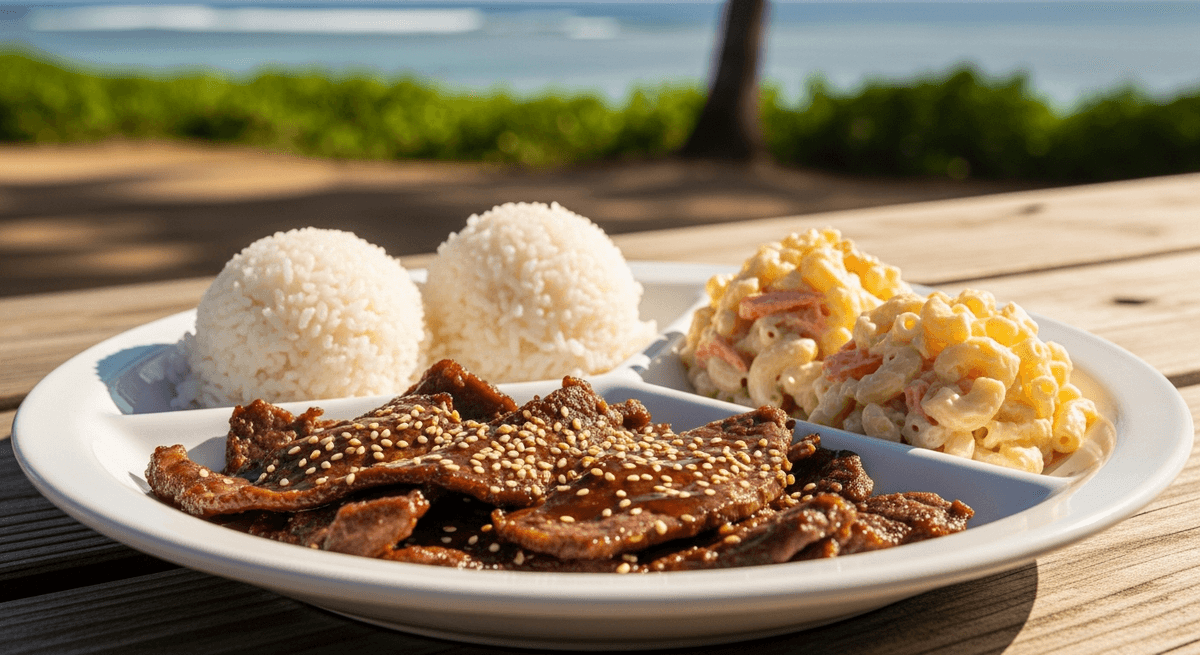
Two scoops rice and one scoop mac salad are not random proportions. CurtisJ's view is that this page should explain the structure, the value, and the daily-life logic behind a plate lunch before you jump into specific mains. If you want a build list of actual plate lunch meals to cook, use the recipe roundup next.
Before you read
Start with the format, then the emotion.
Two scoops rice and one scoop mac salad are not random proportions. CurtisJ's view is that the plate lunch makes sense because it is filling, affordable, and built around the everyday appetite that shaped it.
A plate lunch is Hawaii’s most beloved meal — two scoops of sticky white rice, one scoop of creamy macaroni salad, and a generous portion of a main protein, all served together on a single plate or in a styrofoam takeout container. It’s the everyday meal that defines Hawaiian food culture, served at lunch counters, food trucks, and family kitchens across the islands.
If you’re new to Hawaiian food, the plate lunch is your starting point. Understanding this meal means understanding how Hawaii’s multicultural history shows up on a plate.
The Three Components
Two Scoops Rice
Always medium-grain white rice — Calrose is the standard. It’s short, slightly sticky, and starchy enough to soak up sauces and gravies. Most plate lunch spots use an ice cream scoop to portion it, giving each serving those signature dome shapes. The rice isn’t an afterthought — it’s the foundation that ties the whole plate together.
Long-grain rice is wrong. Brown rice is available at some modern spots but isn’t traditional. Learn to cook it right and get a good rice cooker.
One Scoop Mac Salad
Hawaiian macaroni salad is not mainland macaroni salad. It’s simpler, creamier, and the pasta is deliberately cooked past al dente so it absorbs the mayo-based dressing. The ingredient list is short: elbow macaroni, Best Foods mayonnaise, a little milk, grated carrot, and maybe some minced onion. No mustard, no pickles, no relish.
The key is making it the day before. Overnight in the fridge transforms it. Here’s the full recipe.
The Protein
This is where things get interesting. The protein on a plate lunch can come from Hawaiian, Japanese, Chinese, Korean, Filipino, or sausage-eggs-rice/”>Portuguese cooking traditions — reflecting the multicultural workforce that created the meal in the first place. Common options include:
- Kalua pig — smoky, shredded pork
- Shoyu chicken — braised in soy sauce
- Teriyaki chicken — the everyday classic
- Hamburger steak — gravy-smothered patties
- Loco moco — hamburger patty, gravy, fried egg
- Kalbi short ribs — Korean-Hawaiian BBQ
- Katsu curry — crispy cutlet with Japanese curry
- Mochiko chicken — crispy fried chicken
- Garlic shrimp — North Shore style
- Chicken adobo — Filipino braised chicken
A “mixed plate” means you get two proteins instead of one — and it’s the best way to try multiple things.
Where the Plate Lunch Came From
The plate lunch wasn’t invented in a restaurant. It was born on the sugar and pineapple plantations of the late 1800s and early 1900s.
Workers from Japan, China, Korea, the Philippines, Portugal, and Hawaii labored side by side. At lunch, they’d share food from their bento boxes — a Japanese worker might swap rice for a Filipino worker’s adobo, or a Portuguese family’s sausage might end up next to a Chinese family’s char siu. Over decades, these shared lunches evolved into a standardized format: protein, rice, and a side.
After World War II, lunch wagons started selling this meal to construction workers and laborers. The styrofoam container became standard, the mac salad scoop became mandatory, and the plate lunch went from plantation food to Hawaii’s defining meal.
Read the full history:Talk Story: The History of the Plate Lunch
Where to Get a Plate Lunch
In Hawaii, plate lunch is everywhere:
- Lunch counters and drive-ins — Rainbow Drive-In (Oahu), Cafe 100 (Hilo), and hundreds of small local spots
- Food trucks — especially along construction sites and beaches
- Supermarket delis — every Foodland, Times, and Safeway in Hawaii has a plate lunch counter
- Chain restaurants — L&L Hawaiian Barbecue brought plate lunch to the mainland with hundreds of locations
Prices are typically $10-15 for a regular plate, making it one of the best food values in Hawaii. The portions are generous — many people split one plate between two.
Making Plate Lunch at Home
You don’t need to be in Hawaii to eat plate lunch. Here’s the formula:
- Make mac salad the day before. It needs overnight to set. Get the recipe here.
- Cook the rice. Medium-grain Calrose rice in a rice cooker. Two scoops per plate.
- Pick a protein. Any of the recipes listed above work. For your first plate lunch, try shoyu chicken — it’s the most classic and forgiving.
- Plate it up. Protein on one side, two rice scoops in the middle, mac salad on the other side. Spoon any sauce or gravy over the rice.
For the complete deep dive with every protein recipe, restaurant guides, kitchen gear recommendations, and party planning tips, read the Complete Guide to Hawaiian Plate Lunch.
Plate Lunch FAQ
Is plate lunch healthy? It’s hearty. A typical plate lunch runs 800-1200 calories depending on the protein. It’s a working person’s meal — fuel for the day. Some modern spots offer brown rice and salad options, but traditional plate lunch doesn’t apologize for its portions.
Can I get plate lunch on the mainland? L&L Hawaiian Barbecue has locations across the mainland US. Otherwise, making it at home is your best bet — and honestly, homemade is better.
What’s the difference between a plate lunch and a bento? A bento is a compartmentalized box lunch (Japanese origin). A plate lunch is served on a plate or in a single-compartment container. Some Hawaiian spots use the terms interchangeably, but purists will point out the difference.
What’s a “mixed plate”? A plate lunch with two different proteins instead of one. The best move if you can’t decide between teriyaki chicken and kalbi ribs.
Explore Hawaiian Plate Lunch
- The Complete Guide to Hawaiian Plate Lunch — Every recipe, every protein, restaurant guides, and more
- All Plate Lunch Recipes — The complete recipe collection
- Hawaiian Macaroni Salad — The essential side dish
- Chicken Long Rice — Hawaii’s comforting noodle soup
- Hawaiian Ingredients Guide — Stock your pantry for plate lunch cooking
- How to Throw a Hawaiian Backyard Party — Plate lunch is perfect for feeding a crowd