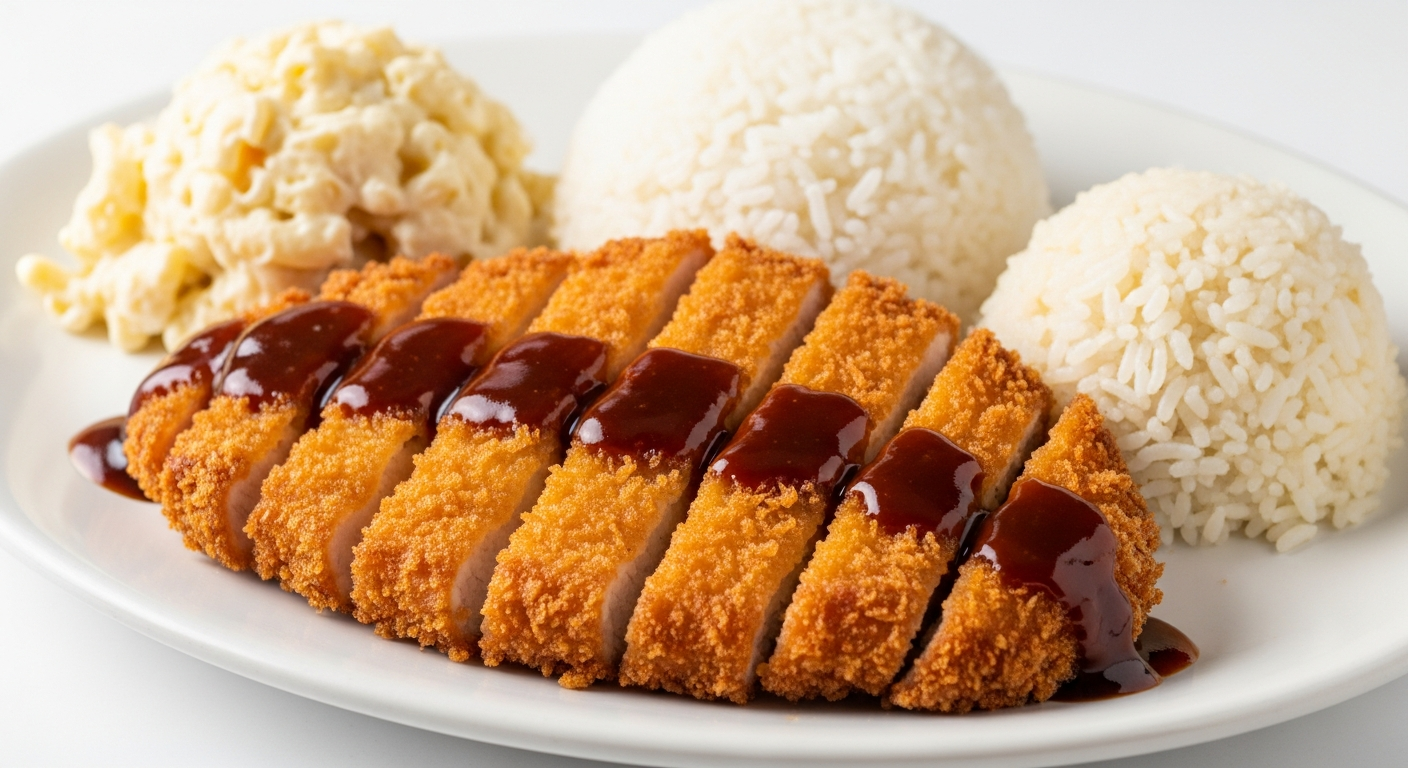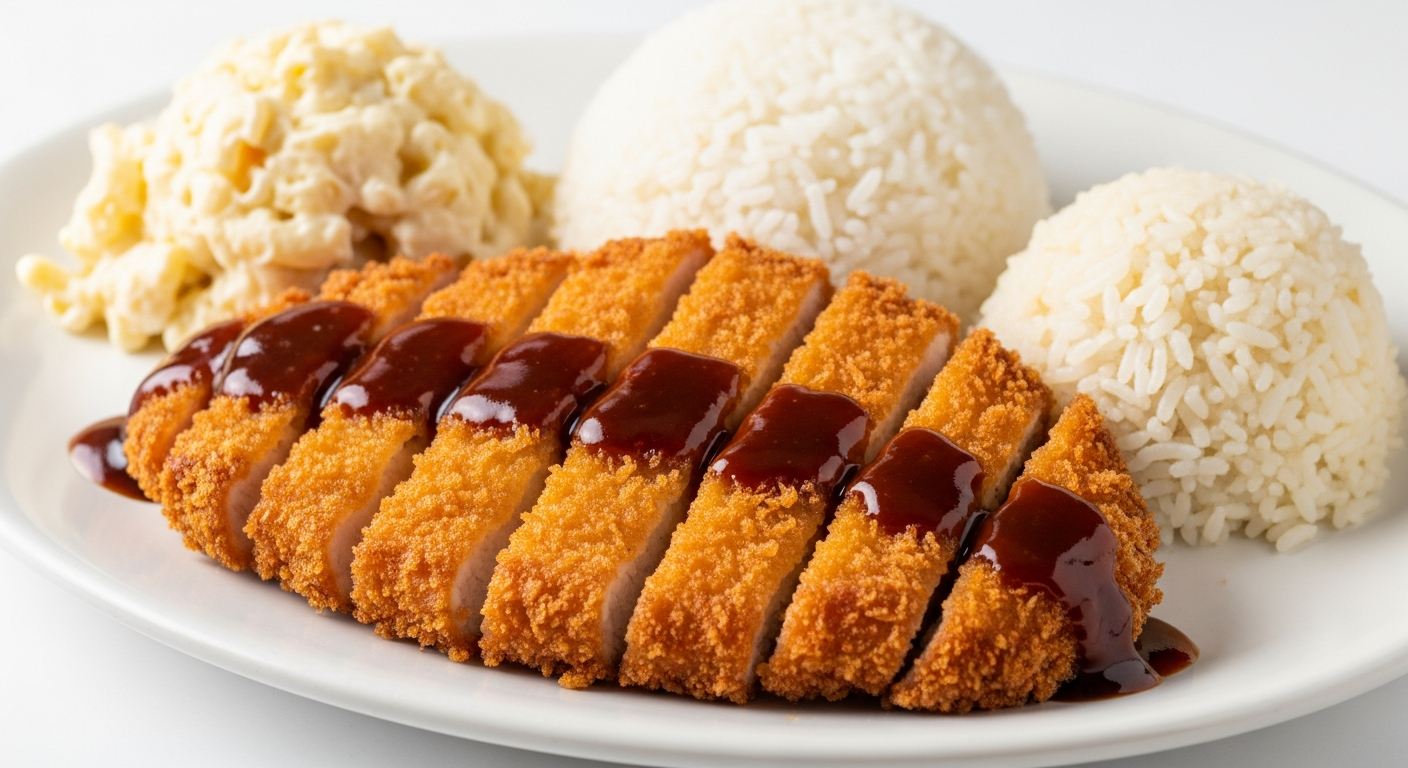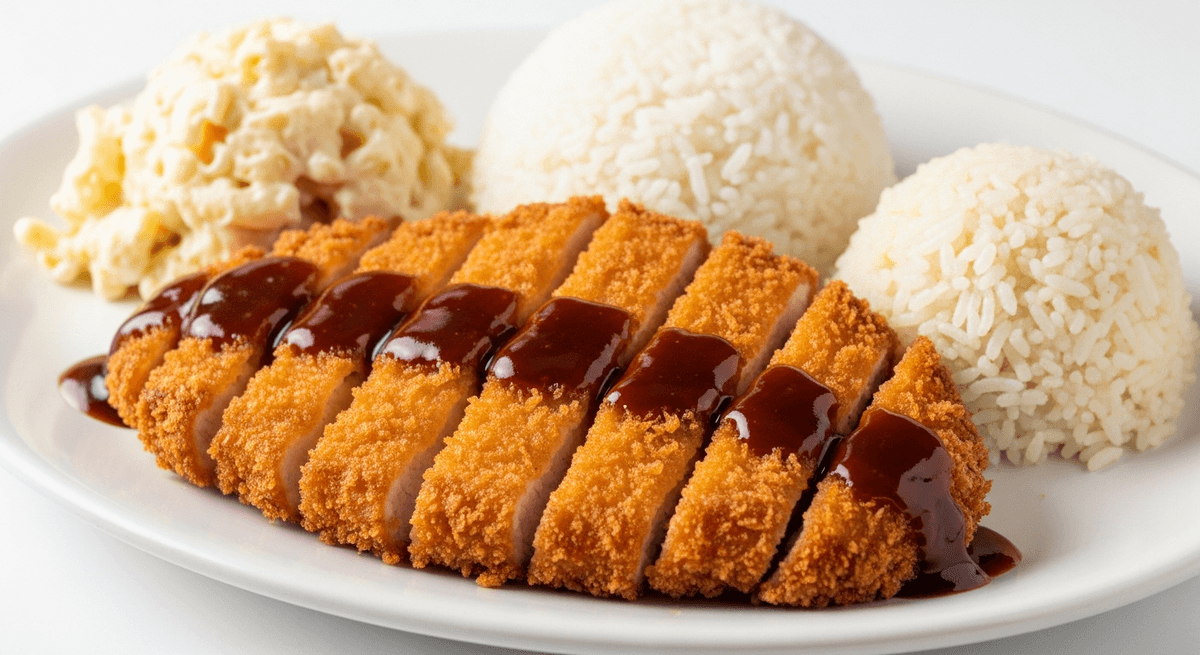
Katsu Curry – Japanese-Hawaiian Comfort Food
Island Comfort

Katsu Curry – Japanese-Hawaiian Comfort Food

February 8, 2026 by CurtisJ 55 minutes Servings: 4

There’s a specific kind of hunger that only katsu curry can fix. You know the one — it hits you on a rainy Manoa afternoon, or after a long Saturday of yard work, when your body is just begging for something warm, rich, and deeply satisfying. For me, that craving always takes me back to this little spot tucked behind a strip mall in Kalihi, where the aunty behind the counter would pile your plate impossibly high with rice, ladle that thick golden curry over everything, and then lay a perfectly fried cutlet right on top. No frills, no fancy plating — just soul food, Hawaii-style.

Growing up, katsu curry was one of those dishes that showed up everywhere. It was on the menu at the Japanese restaurants in Kapahulu. It was in the hot case at Zippy’s. My buddy’s obachan made her version every Sunday, and we’d crowd around the table fighting over the last piece of katsu before the curry even hit the rice. There was something about the way that crispy breaded pork shattered under your chopsticks, giving way to tender meat, all of it swimming in a sauce that was savory, a little sweet, and impossibly comforting. If you love the crispy katsu part of this dish, you’ve got to try our Chicken Katsu — same golden crunch but with a tangy katsu sauce instead of curry.

This is my version of that magic — the kind of katsu curry you can make at home on a weeknight without breaking a sweat. The curry comes together fast thanks to Japanese curry roux blocks (if you know, you know), and the tonkatsu is a simple bread-and-fry situation that delivers restaurant-level crunch every time. Pile it all on a plate with hot rice and you’ve got a meal that’ll make your whole house smell like the best plate lunch shop on the island.

What Makes Katsu Curry Special

Katsu curry is the ultimate collision of textures and flavors — you’ve got the shattering crunch of panko-breaded pork, the velvety richness of Japanese curry sauce, and the clean simplicity of steamed rice tying it all together. Unlike Indian or Thai curries, Japanese curry is milder, sweeter, and thicker, almost like a savory gravy. It’s the kind of dish that kids and adults both go crazy for, which is exactly why it’s been a plate lunch staple in Hawaii for decades.

What really sets this dish apart is that it’s more than the sum of its parts. A plain tonkatsu is great. A bowl of curry rice is great. But when you combine them? That’s when the magic happens. The curry softens the bottom of the cutlet just slightly while the top stays crispy, giving you this incredible contrast in every bite. It’s comfort food engineering at its finest.

From Plantation Fields to Plate Lunch: The Story of Curry in Hawaii

Japanese immigrants began arriving in Hawaii in the late 1800s to work the sugar plantations, and they brought their food traditions with them. Japanese curry — which itself was adapted from British navy curry in the Meiji era — became a staple in plantation camp kitchens because it was hearty, affordable, and could feed a crowd. The curry stretched whatever vegetables and protein were available into a filling meal over rice.

Over the generations, Hawaii’s version of Japanese curry evolved into something uniquely local. It became a little sweeter, a little milder — perfect for the mixed-plate sensibility of island eating. When commercial curry roux blocks like S&B Golden Curry and Vermont Curry hit the shelves, it became even easier for home cooks to whip up a pot. The addition of tonkatsu — breaded and fried cutlets — turned a humble curry rice into a full-on plate lunch showstopper. Today, katsu curry is everywhere in Hawaii, from mom-and-pop shops to upscale izakayas, and every family has their own spin on it.
Ingredients

Flat lay of katsu curry ingredients including pork loin chops, panko breadcrumbs, S&B Golden Curry roux, potatoes, carrots, onion, garlic, ginger, eggs, and rice arranged on a rustic wooden surface
Everything you need for katsu curry — pork chops, panko, curry roux, and fresh vegetables ready to go.

For the Curry Sauce

  • 1 tablespoon vegetable oil
  • 1 large onion, diced
  • 2 medium carrots, peeled and cut into half-moons
  • 2 medium Yukon Gold potatoes, peeled and cubed
  • 3 cloves garlic, minced
  • 1 tablespoon freshly grated ginger
  • 3 ½ cups water or chicken broth
  • 1 package (3.5 oz) S&B Golden Curry roux — medium hot
  • 1 tablespoon soy sauce
  • 1 teaspoon honey
  • 1 tablespoon ketchup (trust me on this one)

For the Tonkatsu

  • 4 boneless pork loin chops (about ½ inch thick)
  • Salt and black pepper
  • ½ cup all-purpose flour
  • 2 large eggs, beaten
  • 1 ½ cups panko breadcrumbs
  • Vegetable oil for frying (about 1 inch deep in your pan)

For Serving

  • 4 cups cooked short-grain white rice
  • Fukujinzuke (Japanese red pickled vegetables) or takuan (yellow pickled daikon)
  • Thinly sliced green onions

Instructions

Make the Curry Sauce

  1. Sauté the aromatics: Heat the vegetable oil in a large pot over medium heat. Add the diced onion and cook for 5-6 minutes, stirring occasionally, until softened and lightly golden. Add the garlic and ginger and cook for another 30 seconds until fragrant.
  2. Add the vegetables: Toss in the carrots and potatoes, stirring to coat them in the aromatics. Cook for about 2 minutes.
  3. Simmer the base: Pour in the water or chicken broth and bring everything to a boil. Reduce the heat to medium-low, cover, and simmer for 15-18 minutes until the potatoes and carrots are fork-tender.
  4. Melt in the roux: Turn off the heat. Break the curry roux blocks into pieces and add them to the pot, stirring gently until completely dissolved. Add the soy sauce, honey, and ketchup. Return to low heat and simmer for another 5 minutes, stirring occasionally, until the curry is thick and glossy. Keep warm while you fry the katsu.

Fry the Tonkatsu

Golden panko-breaded tonkatsu pork cutlets frying in a deep skillet with bubbling oil, tongs lifting one crispy piece, with a pot of Japanese curry sauce simmering in the background
Frying the tonkatsu until deep golden brown — that panko crunch is everything.
  1. Prep the pork: Pat the pork chops dry with paper towels. Season both sides generously with salt and pepper. If the chops are thick, place them between plastic wrap and pound them to an even ½-inch thickness with a meat mallet or rolling pin.
  2. Set up your breading station: Place the flour, beaten eggs, and panko breadcrumbs in three separate shallow dishes. Dredge each pork chop in flour (shake off excess), dip in egg (let excess drip off), then press firmly into the panko, making sure both sides are evenly coated.
  3. Fry until golden: Heat about 1 inch of vegetable oil in a deep skillet or Dutch oven to 350°F. Carefully lay the breaded pork chops into the oil — don’t crowd the pan, work in batches if needed. Fry for 3-4 minutes per side until deep golden brown and cooked through (internal temp of 145°F). Transfer to a wire rack set over a sheet pan to drain.
  4. Slice and serve: Let the katsu rest for 2 minutes, then slice crosswise into ½-inch strips, keeping the cutlet shape together.

Plate It Up

  1. Build your plate: Scoop a generous mound of hot rice onto one side of a plate. Lay the sliced katsu next to the rice, then ladle the curry sauce over part of the katsu and rice — leave some of the cutlet exposed so it stays crispy. Garnish with sliced green onions and serve with fukujinzuke or takuan on the side.
Beautifully plated katsu curry with sliced crispy tonkatsu pork cutlet, steamed white rice, and thick golden Japanese curry sauce, garnished with green onions and fukujinzuke pickles
The finished plate — crispy katsu, golden curry, and steamed rice. This is Hawaiian comfort food at its best.

Tips for the Best Katsu Curry

  • Use the right roux: S&B Golden Curry (medium hot) is the classic choice in Hawaii. Vermont Curry is another popular option — it’s slightly sweeter and milder. You can even mix two different brands or heat levels to customize your flavor.
  • Don’t skip the ketchup: I know it sounds strange, but a little ketchup adds a subtle sweetness and tang that rounds out the curry beautifully. It’s a trick a lot of Japanese home cooks use.
  • Press the panko firmly: Really press those breadcrumbs into the pork. The more panko that sticks, the crunchier your katsu will be. Japanese panko is coarser than regular breadcrumbs, and that’s what gives you the signature shatter.
  • Oil temperature matters: Keep your oil at 350°F. Too hot and the outside burns before the pork cooks through. Too cool and the breading absorbs oil and gets soggy. A thermometer is your best friend here.
  • Make the curry ahead: The curry sauce actually tastes better the next day after the flavors have had time to meld. Make a big batch on Sunday and you’ve got easy meals all week — just fry fresh katsu when you’re ready to eat.

Serving Suggestions

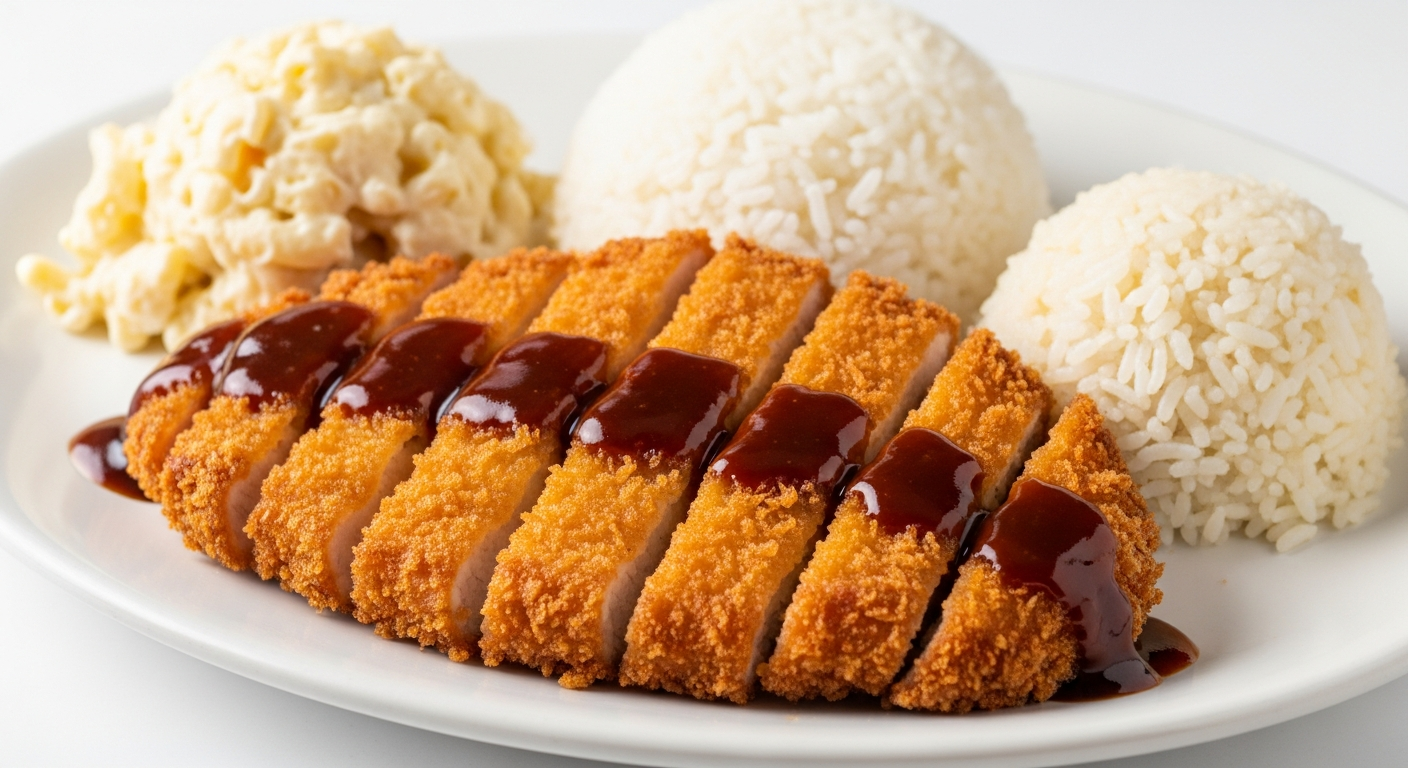
Katsu curry is a complete meal on its own, but if you want to go full plate lunch style, serve it with a scoop of creamy mac salad on the side. A simple cucumber salad dressed with rice vinegar and sesame seeds is a nice lighter option that cuts through the richness. For the rice, you want plain steamed short-grain — it’s worth investing in a good rice cooker to get it perfect every time. And don’t forget the pickles. Fukujinzuke is the traditional Japanese accompaniment, and that sweet-tangy crunch is the perfect counterpoint to the rich curry.

More Island Comfort Recipes

If you love katsu curry, you’ve got to try my Plate Lunch Chicken Katsu — same crispy breading technique but with tender chicken breast and a tangy katsu sauce. For another Japanese-Hawaiian comfort classic, check out my Hamburger Steak smothered in gravy — it’s the kind of stick-to-your-ribs plate lunch that makes everything better. And if you haven’t tried Mochiko Chicken yet, you’re missing out on one of Hawaii’s all-time greatest hits.

Prep Time: 20 minutes
Cook Time: 35 minutes
Total Time: 55 minutes
Servings: 4

Katsu Curry – Japanese-Hawaiian Comfort Food

Prep 20 minutes Cook Time: 35 minutes Total Time: 55 minutes Servings: 4
Cook 35 minutes Total Time: 55 minutes Servings: 4
Total 55 minutes Servings: 4
Servings
2

Ingredients

Instructions

1

Sauté the aromatics: Heat the vegetable oil in a large pot over medium heat. Add the diced onion and cook for 5-6 minutes, stirring occasionally, until softened and lightly golden. Add the garlic and ginger and cook for another 30 seconds until fragrant.

2

Add the vegetables: Toss in the carrots and potatoes, stirring to coat them in the aromatics. Cook for about 2 minutes.

3

Simmer the base: Pour in the water or chicken broth and bring everything to a boil. Reduce the heat to medium-low, cover, and simmer for 15-18 minutes until the potatoes and carrots are fork-tender.

4

Melt in the roux: Turn off the heat. Break the curry roux blocks into pieces and add them to the pot, stirring gently until completely dissolved. Add the soy sauce, honey, and ketchup. Return to low heat and simmer for another 5 minutes, stirring occasionally, until the curry is thick and glossy. Keep warm while you fry the katsu.

5

Prep the pork: Pat the pork chops dry with paper towels. Season both sides generously with salt and pepper. If the chops are thick, place them between plastic wrap and pound them to an even 1/2-inch thickness with a meat mallet or rolling pin.

6

Set up your breading station: Place the flour, beaten eggs, and panko breadcrumbs in three separate shallow dishes. Dredge each pork chop in flour (shake off excess), dip in egg (let excess drip off), then press firmly into the panko, making sure both sides are evenly coated.

7

Fry until golden: Heat about 1 inch of vegetable oil in a deep skillet or Dutch oven to 350°F. Carefully lay the breaded pork chops into the oil - don't crowd the pan, work in batches if needed. Fry for 3-4 minutes per side until deep golden brown and cooked through (internal temp of 145°F). Transfer to a wire rack set over a sheet pan to drain.

8

Slice and serve: Let the katsu rest for 2 minutes, then slice crosswise into 1/2-inch strips, keeping the cutlet shape together.

9

Build your plate: Scoop a generous mound of hot rice onto one side of a plate. Lay the sliced katsu next to the rice, then ladle the curry sauce over part of the katsu and rice - leave some of the cutlet exposed so it stays crispy. Garnish with sliced green onions and serve with fukujinzuke or takuan on the side.

Chef's Notes

- Use the right roux: S&B Golden Curry (medium hot) is the classic choice in Hawaii. Vermont Curry is another popular option - it's slightly sweeter and milder. You can even mix two different brands or heat levels to customize your flavor. - Don't skip the ketchup: I know it sounds strange, but a little ketchup adds a subtle sweetness and tang that rounds out the curry beautifully. It's a trick a lot of Japanese home cooks use. - Press the panko firmly: Really press those breadcrumbs into the pork. The more panko that sticks, the crunchier your katsu will be. Japanese panko is coarser than regular breadcrumbs, and that's what gives you the signature shatter. - Oil temperature matters: Keep your oil at 350°F. Too hot and the outside burns before the pork cooks through. Too cool and the breading absorbs oil and gets soggy. A thermometer is your best friend here. - Make the curry ahead: The curry sauce actually tastes better the next day after the flavors have had time to meld. Make a big batch on Sunday and you've got easy meals all week - just fry fresh katsu when you're ready to eat.