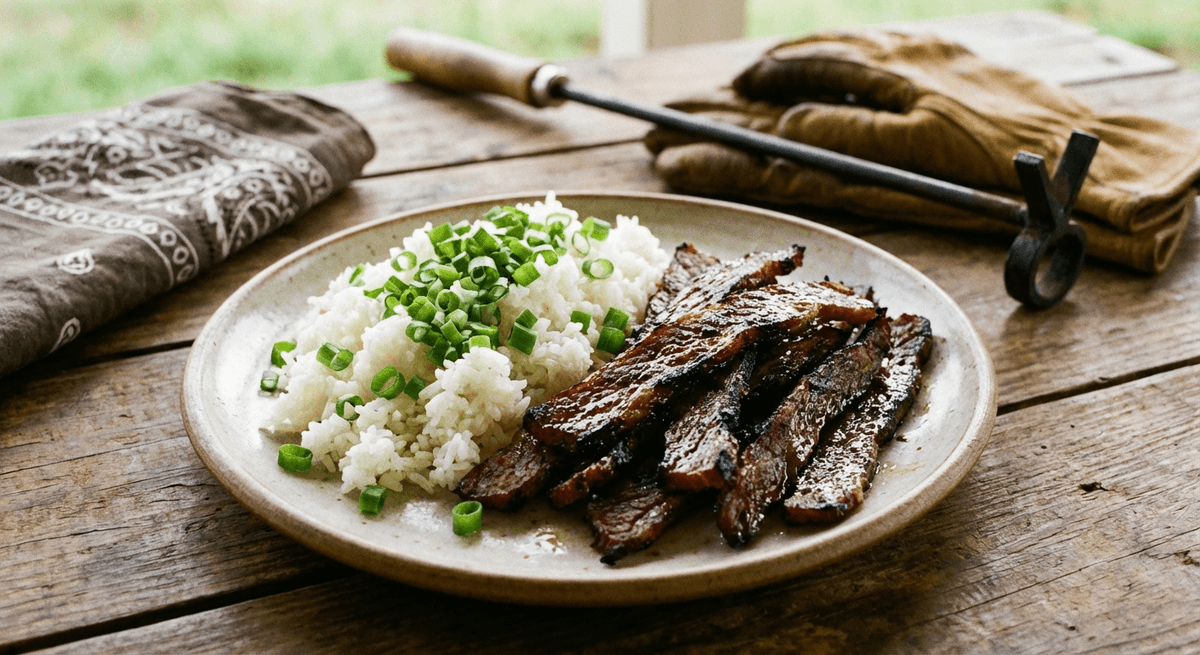
If you’ve never had pipikaula, you’re missing one of the most underrated dishes in all of Hawaiian cuisine. It’s Hawaiian-style dried beef — salted, seasoned, sun-dried (or oven-dried), and then pan-fried until the outside is crispy and the inside is chewy and intensely flavorful. Think of it as Hawaii’s answer to beef jerky, except it’s a million times better because you fry it after drying it, which gives you a real contrast of textures: crunchy, salty exterior and tender, concentrated beefy interior.
Pipikaula (pronounced “pee-pee-KOW-la”) comes from the Hawaiian words pipi (beef, derived from the English “beefy”) and kaula (rope or string), a reference to the long strips of meat hung on lines to dry in the sun, like ropes of beef swaying in the trade winds. It’s one of the oldest preservation techniques in Hawaiian cuisine, dating back to the days when paniolo (Hawaiian cowboys) needed portable, long-lasting food for long days in the saddle on the ranches of the Big Island.
Paniolo Roots
The paniolo tradition in Hawaii goes back to the 1830s, when King Kamehameha III invited Mexican-Spanish vaqueros to teach Hawaiians how to manage the wild cattle that had been roaming the islands since Captain George Vancouver brought them as a gift in 1793. These vaqueros brought their cattle-working skills, their horsemanship, and their food preservation techniques, including salting and drying beef.
Hawaiian cowboys adapted the technique to their own tastes and conditions. The salt air, warm sun, and steady trade winds of the islands were perfect for drying meat. Pipikaula became a ranch staple — something you could tuck in your saddlebag in the morning and eat throughout the day, needing nothing but your hands and maybe a little salt. The Parker Ranch on the Big Island, one of the largest cattle ranches in the United States, was a center of pipikaula tradition, and you can still find excellent versions at restaurants and markets in the Waimea area.
What Makes Pipikaula Special
The magic of pipikaula is the two-stage process: dry first, then fry. The drying concentrates the beef flavor and creates a chewy, dense texture — kind of like the best beef jerky you’ve ever had. But then you take those dried strips and fry them in a hot pan until the edges get crispy and the fat renders out, creating these gorgeous, dark, crunchy-chewy morsels of concentrated beef flavor.
The seasoning is simple: Hawaiian salt, maybe some soy sauce, a little sugar, garlic, ginger, and sometimes Hawaiian chili pepper. The simplicity is deliberate, you want to taste the beef. Good pipikaula starts with good beef, and the drying process amplifies every bit of flavor in the meat.
Prepare and Cure the Beef
Dry the Beef
Oven Method (recommended for most home cooks):
Traditional Sun-Drying Method:
Fry and Serve
Serving Pipikaula
- As a pupu: Cut into small pieces and serve with toothpicks alongside cold beer. This is the classic way — pipikaula is one of the best drinking snacks in existence.
- With poi: At a Hawaiian feast, pipikaula alongside poi is a traditional pairing that goes back generations.
- Plate lunch style: Serve over rice with mac salad for a proper Hawaiian plate lunch. Highway Inn in Kakaako does a legendary pipikaula plate.
- In fried rice: Dice pipikaula and toss it into fried rice for real umami depth.
Storage
The dried (but unfried) pipikaula will keep in the refrigerator for up to 2 weeks, or in the freezer for several months. This makes it perfect for making a big batch and frying portions as you want them. The paniolo would be proud.
Prep Time: 30 minutes | Curing Time: 24 hours | Drying Time: 3-5 hours | Cook Time: 5 minutes | Serves: 8-10 as a pupu