Before you read
The missing d matters because the texture matters.
Real shave ice is about softness, not novelty. CurtisJ's rule is simple: if the ice crunches like gravel or the syrup just slides off, you are looking at the wrong thing. Start with texture, then talk toppings.
It’s “shave ice,” not “shaved ice.” That’s the first thing any local will tell you and it matters more than you think. The missing “d” isn’t bad grammar. It’s a marker of authenticity that separates the real thing from every mainland imitation and tourist-trap snow cone. In Hawaii, shave ice is its own category of frozen treat — finer, smoother, and more deeply layered than anything you’ve had from an ice cream truck.
If you’ve visited the islands, you’ve stood in line for it. If you haven’t, this guide explains everything: what shave ice actually is, where it came from, what makes it different, and why it’s one of the most beloved foods in Hawaii.
How to Say It
Shave ice. Not shaved ice. Not a snow cone. In Hawaiian Pidgin English, the past tense “d” gets dropped, it’s “shave ice” the same way locals say “crack seed” instead of “cracked seed.” If you order “shaved ice” in Hawaii, nobody will refuse to serve you, but they’ll know you’re not from here.
What Is Shave Ice, Exactly?
Shave ice is a frozen dessert made from a block of ice that is shaved into paper-thin, snow-like ribbons using a specialized machine with a sharp blade. The shaved ice is packed into a dome shape in a cup or bowl, then with flavored syrups — tropical fruit flavors like lilikoi (passion fruit), guava, mango, coconut, and pineapple being the most popular.
What makes Hawaiian shave ice special is the texture. The ice is shaved so fine that it’s almost fluffy, it absorbs the syrup completely instead of letting it drain to the bottom. Every bite is evenly flavored from top to bottom. This is the fundamental difference between shave ice and a snow cone, where the ice is crunchy and granular and all the flavor ends up in a puddle at the bottom of the paper cone.
Shave Ice vs. Snow Cones
This is the question that starts arguments. Here’s the definitive answer:
- Shave ice: ice is shaved from a block into ultra-thin ribbons. The texture is smooth, snow-like, and fluffy. Syrup absorbs into the ice evenly. Every bite is flavorful.
- Snow cones: ice is crushed or ground into small granules. The texture is crunchy and icy. Syrup drains through to the bottom. You end up eating plain ice on top and a sticky puddle at the bottom.
It’s the difference between fresh powder snow and a gravel parking lot. Once you’ve had real shave ice, snow cones feel like a sad approximation.
The History: From Japan to Hawaii
Shave ice in Hawaii traces back to Japanese immigrant plantation workers in the late 1800s and early 1900s. In Japan, a dessert called kakigōri (かき氷), finely shaved ice topped with sweet syrups, had been enjoyed for centuries, originally as a luxury for the aristocracy and eventually as a summer street food.
When Japanese workers came to Hawaii’s sugar plantations, they brought the tradition with them. Using hand-cranked ice shavers, they’d shave blocks of ice and top them with simple fruit syrups, a cheap, refreshing treat in the brutal plantation heat. Over time, shave ice stands became fixtures in plantation towns and eventually spread across every island.
By the mid-20th century, shave ice had become fully Hawaiian — absorbing influences from every island culture. Japanese additions like azuki beans (sweet red beans) and mochi became standard. Local tropical fruit syrups replaced the Japanese originals. And the classic combination of shave ice over vanilla ice cream became the island signature that exists nowhere else in the kakigōri tradition.
Classic Shave Ice Flavors
Every shave ice stand has dozens of flavors, but these are the Hawaiian essentials:
- Lilikoi (passion fruit): tart, tropical, the most “Hawaiian” flavor
- Guava, sweet and floral, a local favorite
- Mango, rich and tropical
- Coconut, creamy and mild, pairs with everything
- Pineapple, bright and tangy
- Li hing mui: sweet-sour-salty plum flavor, distinctly Hawaiian. If you know, you know.
- Lychee: delicate and perfumy, a subtle choice
- Tiger’s Blood, strawberry and coconut, the cult classic
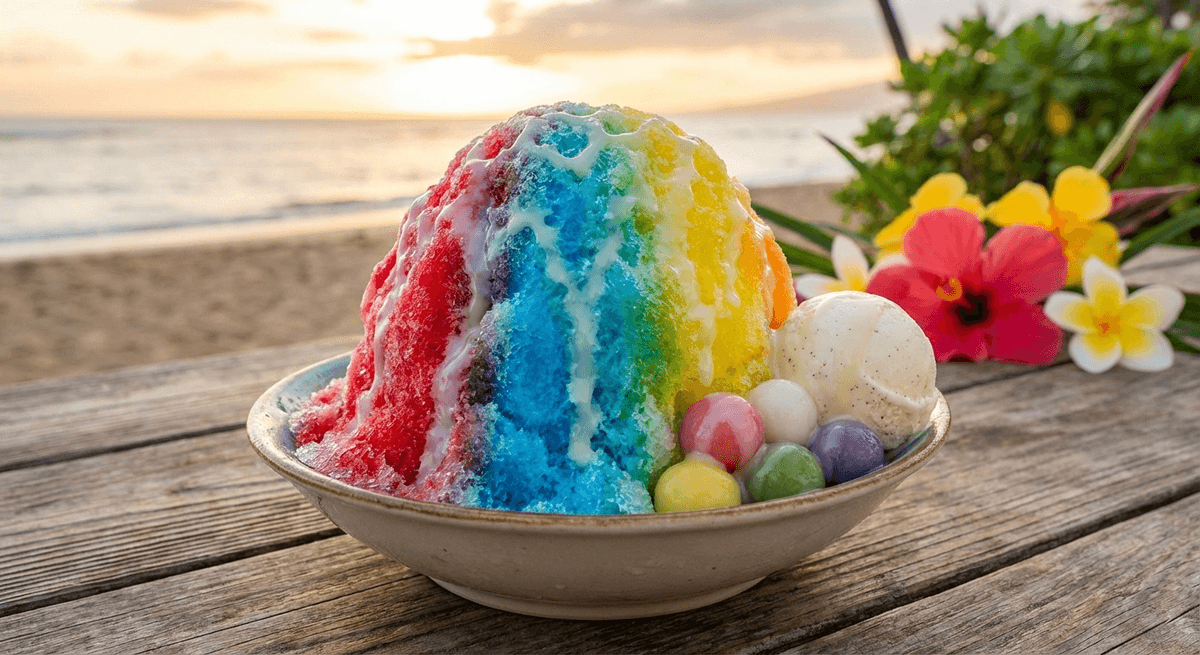
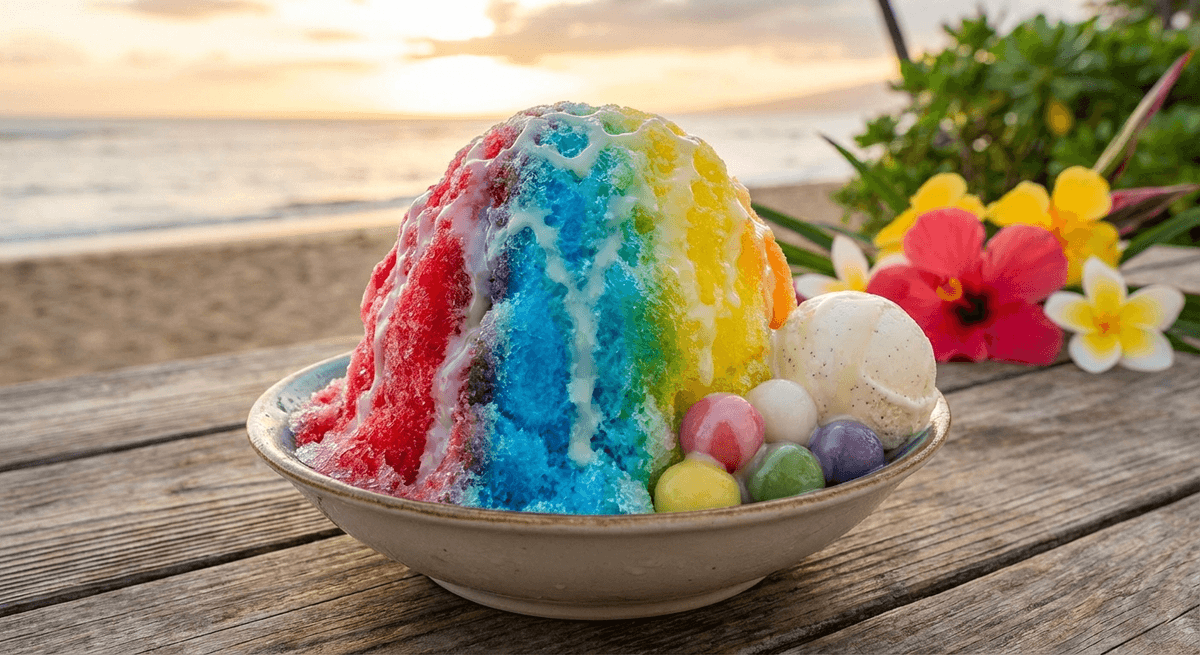
- Rainbow, three flavors (usually strawberry, pineapple, and blue vanilla) layered for the classic Instagram-worthy look
The best shave ice stands make their own syrups from real fruit instead of artificial concentrates. The difference is night and day — real lilikoi syrup versus artificial passion fruit tastes like two completely different things. Our Shave Ice Syrup Guide shows you how to make your own tropical syrups at home.
Toppings and Add-Ons
Plain shave ice with syrup is great. But the toppings are where it becomes a Hawaiian masterpiece:
- Ice cream on the bottom: a scoop of vanilla ice cream hidden in the bottom of the cup, under the shave ice. As the ice melts, it mixes with the cream for a tropical milkshake finish. This is the most popular add-on in Hawaii.
- Azuki beans (sweet red beans): a Japanese contribution. Sweet, earthy, and slightly chewy, spooned into the bottom of the cup alongside (or instead of) ice cream. The combination of cold shave ice and sweet beans is uniquely satisfying.
- Mochi balls: small, chewy rice flour dumplings that add texture. They soften slightly from the cold ice and become little bursts of chewy sweetness.
- Condensed milk drizzle: sweet, creamy condensed milk drizzled over the top for richness. A Filipino-influenced addition that’s become standard.
- Li hing mui powder: the sweet-sour-salty dried plum powder dusted over the top. An acquired taste that locals are obsessed with.
- Fresh fruit: sliced mango, strawberries, or other fresh fruit on top for extra freshness
The full-loaded order at most stands: shave ice with three syrups, ice cream on the bottom, azuki beans, and a mochi. It’s a towering, colorful, dripping mess and it’s perfect.
Famous Shave Ice Spots
Every island has its legendary shave ice stand. These are the ones that locals and visitors argue about:
O’ahu
- Matsumoto Shave Ice (Hale’iwa, North Shore), the most famous shave ice stand in Hawaii, operating since 1951. The line wraps around the building. Worth the wait.
- Aoki’s Shave Ice (Hale’iwa) — right down the road from Matsumoto’s, less crowded, and many locals say it’s better.
- Waiola Shave Ice (Honolulu), the local’s choice in town. Barack Obama’s reported favorite.
- Uncle Clay’s House of Pure Aloha (Honolulu) — all-natural syrups made from real fruit. No artificial flavors.
Maui
- Ululani’s Hawaiian Shave Ice (multiple locations) — widely considered the best on Maui. Homemade syrups, premium toppings.
Big Island
- Scandinavian Shave Ice (Kailua-Kona), a Big Island institution with homemade tropical syrups
Making Shave Ice at Home
You can make legitimate shave ice at home, but you need the right equipment. A blender or food processor won’t cut it, the ice has to be shaved, not crushed. Our Best Shave Ice Machines for Home guide reviews the best options at every price point.
The key components:
- A quality shave ice machine: one with a sharp blade that produces fine, fluffy ice. Avoid “snow cone” machines that just crush ice.
- Homemade syrups: our Shave Ice Syrup Guide covers lilikoi, guava, mango, coconut, and more. Real fruit syrups are transformative.
- Proper cups: dome-shaped flower cups (the ones that look like a tulip) are traditional and hold the ice better than flat-bottomed cups
- Toppings: vanilla ice cream, azuki beans (canned is fine), and mochi balls from an Asian grocery store
Shave Ice Etiquette
A few unwritten rules:
- Eat it fast: shave ice waits for no one. It starts melting the moment it’s handed to you, especially in Hawaiian heat. Don’t take 15 minutes of photos before eating.
- Rotate the cup: eat from all sides evenly so it doesn’t collapse on one side and send the dome tumbling
- It’s okay to make a mess: your hands will be sticky and multicolored. Your shirt might take a hit. This is normal. Embrace it.
- Three flavors max: most stands let you pick up to three syrup flavors. Two or three is the sweet spot. Going beyond that muddies everything together.
Explore More Hawaiian Food
- Traditional Hawaiian Foods Explained — Your complete guide to island cuisine
- Shave Ice Syrup Guide — Make your own tropical syrups at home
- Best Shave Ice Machines for Home — Get the right equipment
- Hawaiian Desserts Guide — Every island sweet from haupia to butter mochi
- Must-Try Hawaiian Delicacies — Traditional island foods every food lover needs
- Hawaiian Snacks & Treats — Order island favorites shipped to your door