Chow Fun – Local Hawaiian Stir-Fried Noodles
Island Comfort

Chow Fun – Local Hawaiian Stir-Fried Noodles

February 8, 2026 by CurtisJ 33 minutes Servings: 4

There’s something about chow fun that takes me straight back to those late-night runs to the little Chinese restaurants tucked along Waialae Avenue in Kaimuki. You know the ones — the kind of places where the tables are a little sticky, the fluorescent lights hum overhead, and the kitchen is throwing flames so high you can see the glow from the dining room. My dad used to take us after Friday night football games, and it was always the same order: a plate of chow fun, some won ton min, and maybe some crispy gau gee on the side. That was the ritual.

What I remember most is the sound — the violent sizzle of noodles hitting a screaming hot wok, the clatter of the metal spatula working at breakneck speed. And then the smell would hit you. That smoky, almost charred aroma that you can only get from a well-seasoned wok cranked up to maximum heat. That’s wok hei — the “breath of the wok” — and it’s what separates a good plate of chow fun from a truly unforgettable one.

Making chow fun at home took me years to figure out. The noodles would clump, they’d stick to the pan, the sauce would pool instead of coat. But after a lot of trial and error (and a lot of mediocre noodles), I finally dialed it in. The secrets are simpler than you think: blazing heat, dry noodles, and don’t overcrowd the wok. Once you get those three things right, you’re making chow fun that rivals anything coming out of those McCully takeout spots. If you love this dish, you’ll want to try our Fried Saimin next — another wok-fired noodle classic from the islands.

What Makes Chow Fun Special

Chow fun is all about the noodles. These aren’t your thin chow mein noodles or angel hair pasta — we’re talking wide, flat rice noodles (ho fun or he fen) that are silky, slightly chewy, and have this incredible ability to soak up sauce while still holding their shape. When they hit a hot wok, the edges get just a little bit charred and crispy while the centers stay soft and tender. That contrast in texture is everything.

The other thing that sets chow fun apart is its simplicity. You don’t need twenty ingredients or a complicated sauce. Tender slices of beef, a handful of bean sprouts, some green onions, and a clean savory sauce made from soy sauce and oyster sauce. That’s it. The wok does all the heavy lifting. When the heat is right and the timing is on, each noodle gets kissed with that smoky wok hei flavor that you just cannot replicate with a fancy sauce or a dozen spices.

A Plate Lunch Staple with Deep Roots

Chow fun came to Hawaii with the Chinese immigrants who arrived during the plantation era in the mid-1800s. These workers brought their culinary traditions from Guangdong province, where stir-fried rice noodles were an everyday staple. In Hawaii, the dish found a natural home alongside other Chinese-Hawaiian classics like beef tomato, char siu, and manapua.

Over the generations, chow fun became a fixture at local Chinese restaurants, plate lunch spots, and family dinner tables across the islands. It adapted to local tastes — sometimes made with char siu instead of beef, sometimes with a little more oyster sauce for sweetness. Every family, every restaurant has their own version. But the soul of the dish stays the same: simple ingredients, high heat, and that unmistakable smoky flavor that says “this was made in a proper wok.” You’ll find it on the menu at just about every Chinese restaurant from Kalihi to Kailua, right alongside other quick-fire favorites like Teriyaki Chicken, and it’s one of those dishes that locals order without even looking at the menu.
Ingredients

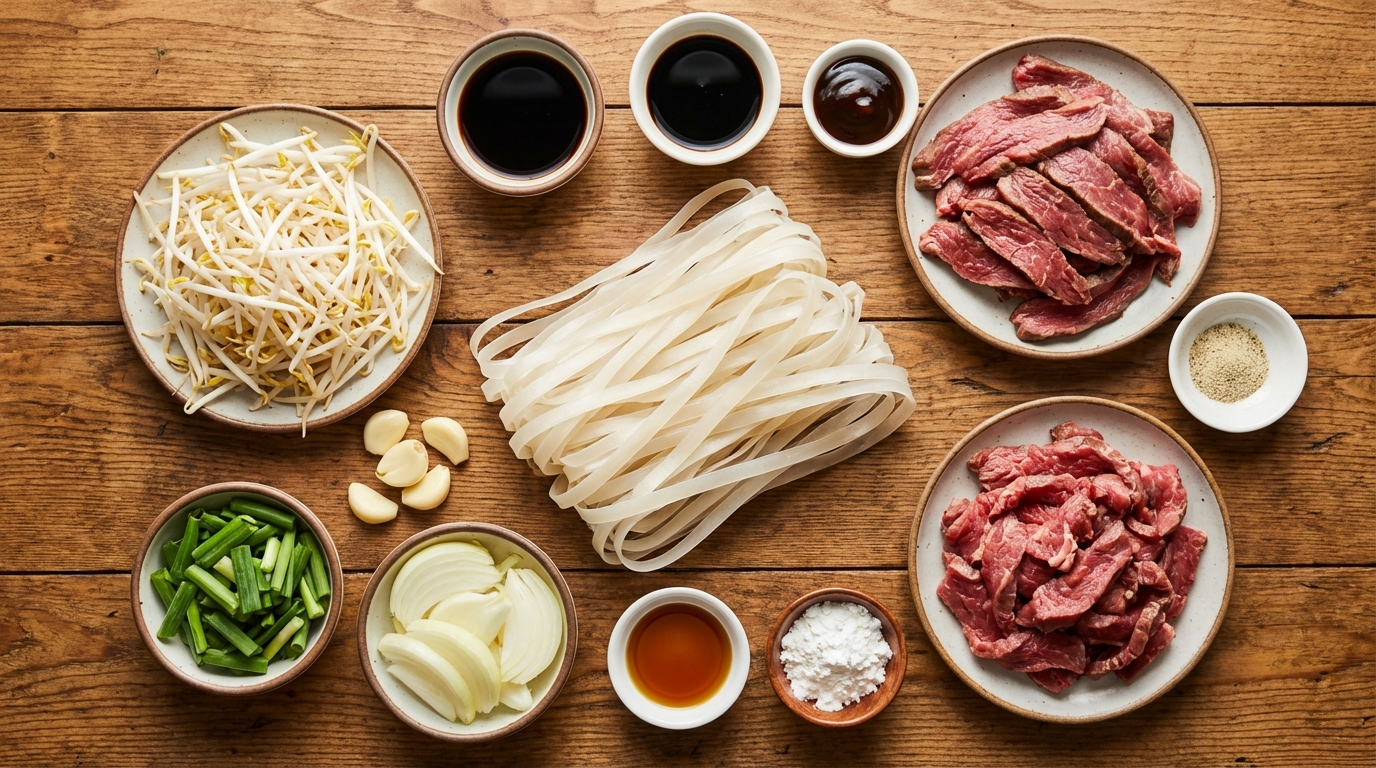
Flat lay of chow fun ingredients including wide rice noodles, sliced flank steak, bean sprouts, green onions, soy sauce, dark soy sauce, and oyster sauce arranged on a rustic wooden surface
Everything you need for chow fun — wide rice noodles, flank steak, bean sprouts, and a simple savory sauce.

For the Beef

  • 1 pound flank steak, sliced thin against the grain
  • 1 tablespoon soy sauce
  • 1 tablespoon cornstarch
  • 1 teaspoon sesame oil
  • ½ teaspoon white pepper

For the Sauce

  • 3 tablespoons soy sauce
  • 1 tablespoon oyster sauce
  • 1 tablespoon dark soy sauce
  • 1 teaspoon sesame oil
  • ½ teaspoon sugar
  • ¼ teaspoon white pepper

For the Stir-Fry

  • 1 pound fresh wide rice noodles (ho fun), separated into individual strips
  • 3 tablespoons vegetable oil, divided
  • 4 cloves garlic, minced
  • 2 cups bean sprouts
  • 4 stalks green onion, cut into 2-inch pieces
  • 1 small yellow onion, thinly sliced

Instructions

Prep the Beef and Noodles

  1. Marinate the beef: In a bowl, combine the sliced flank steak with 1 tablespoon soy sauce, cornstarch, sesame oil, and white pepper. Toss until evenly coated and let it sit for at least 15 minutes at room temperature. This gives the beef that velvety, tender texture when it hits the wok.
  2. Separate the noodles: Gently peel apart the fresh rice noodles into individual strips. If they’ve been refrigerated, microwave them for 30-45 seconds to soften, or let them come to room temperature. You want them pliable, not stiff — stiff noodles will break apart in the wok.
  3. Mix the sauce: Whisk together the soy sauce, oyster sauce, dark soy sauce, sesame oil, sugar, and white pepper in a small bowl. Set it right next to your stove — once you start cooking, everything moves fast.

Stir-Fry

  1. Sear the beef: Heat your wok over the highest heat possible until it’s smoking. Add 1 tablespoon of oil and swirl to coat. Add the beef in a single layer and let it sear without moving for about 45 seconds. Flip and cook another 30 seconds until browned but still slightly pink inside. Remove the beef to a plate immediately — it will finish cooking later.
  2. Cook the aromatics: Add another tablespoon of oil to the wok. Toss in the garlic and sliced yellow onion. Stir-fry for about 30 seconds until fragrant. You want color on the onion but not burnt garlic — keep things moving.
  3. Add the noodles: Add the remaining tablespoon of oil, then carefully add the rice noodles. Spread them out in the wok and let them sit undisturbed for about 30-45 seconds so the bottom layer gets a little char. Then gently toss and flip, being careful not to break the noodles. Repeat this process — let them sit, then toss — for about 2 minutes total.
  4. Wide rice noodles being tossed in a smoking hot wok with visible wok hei flames, deep brown noodles with charred edges during stir-frying
    High heat and a well-seasoned wok — that smoky wok hei char is what makes chow fun special.
  5. Pour in the sauce: Drizzle the sauce mixture over the noodles and toss gently to coat everything evenly. The dark soy sauce will give the noodles that beautiful deep brown color.
  6. Finish the dish: Return the beef to the wok along with the bean sprouts and green onions. Toss everything together for about 30-45 seconds — just enough to heat the beef through and barely wilt the sprouts. You want those bean sprouts to still have crunch. Remove from heat and serve immediately.
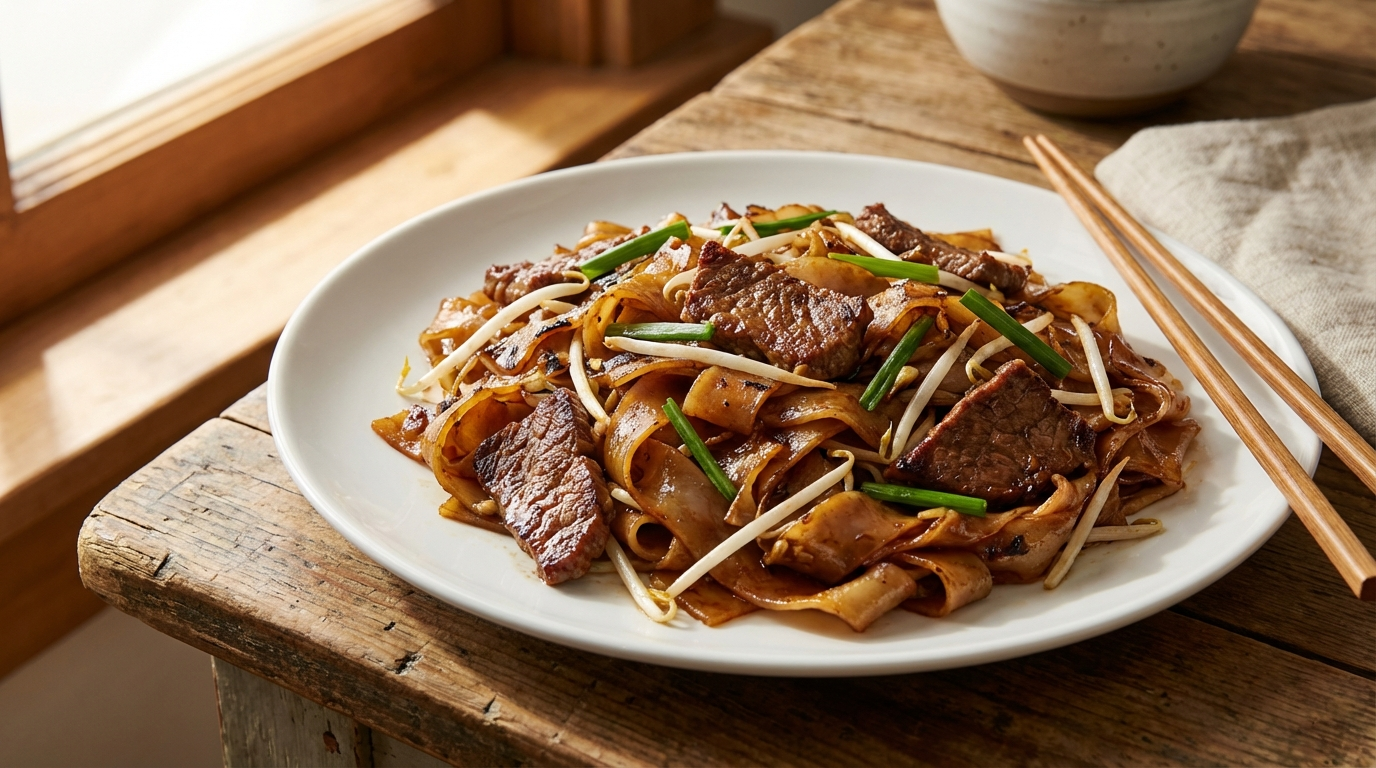
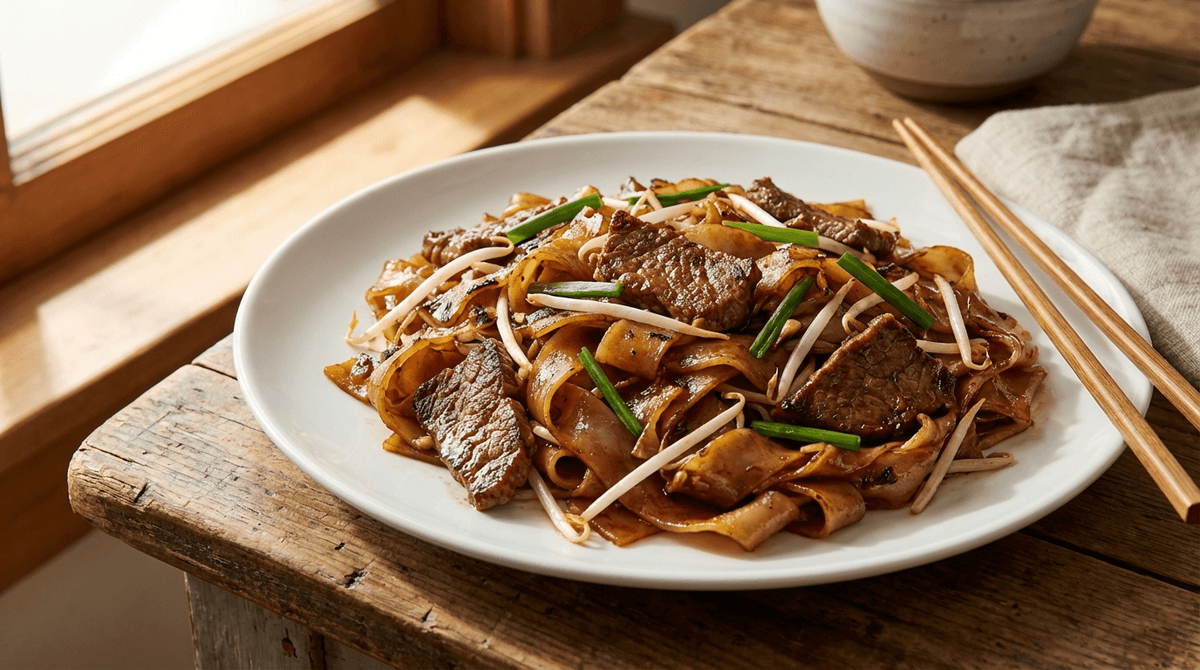
Beautifully plated beef chow fun with wide rice noodles, seared beef slices, crunchy bean sprouts, and green onions showing smoky wok hei char
The finished plate — smoky, savory, and loaded with wok hei flavor. This is chow fun done right.

Tips for the Best Chow Fun

  • Use the highest heat possible: This is non-negotiable. Chow fun needs screaming hot temperatures to get that wok hei char. If your wok isn’t smoking before the food goes in, it’s not hot enough. A well-seasoned carbon steel wok makes all the difference here.
  • Don’t overcrowd the wok: If you’re cooking for a crowd, work in batches. Too many noodles in the wok at once means the temperature drops and you end up steaming instead of frying. Steamed chow fun is sad chow fun.
  • Fresh noodles are key: Look for fresh wide rice noodles in the refrigerated section of your Asian grocery store. Dried rice noodles are a decent backup, but they don’t have the same silky chew. If using dried, soak them in warm water until pliable, then drain very well before cooking.
  • Dark soy sauce for color: Dark soy sauce is thicker, less salty, and slightly sweet compared to regular soy sauce. It’s what gives chow fun that rich, deep brown color. You can find it at any Asian grocery — Lee Kum Kee brand works great. Don’t skip it.
  • Velvet the beef for tenderness: That quick cornstarch marinade isn’t just for flavor — it creates a thin coating that protects the beef from the intense heat and keeps it silky tender. Don’t skip the marinating time.

Serving Suggestions

Chow fun is a complete meal on its own, but if you’re going full local-style spread, serve it alongside a bowl of hot saimin soup and some crispy fried won tons. For a bigger family dinner, pair it with beef tomato over a scoop of perfect white rice — that’s a classic Chinese-Hawaiian combo right there.

For a plate lunch vibe, serve a scoop of chow fun next to some chicken katsu or kalua pork with mac salad and rice on the side. And if you want to keep it simple, just pile it high on a plate with some chili pepper water and hot mustard on the side. That’s how we do it.

More Island Comfort Recipes

If you love chow fun, you’ll want to try these other local favorites:

Prep Time: 25 minutes
Cook Time: 8 minutes
Total Time: 33 minutes
Servings: 4

Chow Fun – Local Hawaiian Stir-Fried Noodles

Prep 25 minutes Cook Time: 8 minutes Total Time: 33 minutes Servings: 4
Cook 8 minutes Total Time: 33 minutes Servings: 4
Total 33 minutes Servings: 4
Servings
4

Ingredients

Instructions

1

Marinate the beef: In a bowl, combine the sliced flank steak with 1 tablespoon soy sauce, cornstarch, sesame oil, and white pepper. Toss until evenly coated and let it sit for at least 15 minutes at room temperature. This gives the beef that velvety, tender texture when it hits the wok.

2

Separate the noodles: Gently peel apart the fresh rice noodles into individual strips. If they've been refrigerated, microwave them for 30-45 seconds to soften, or let them come to room temperature. You want them pliable, not stiff - stiff noodles will break apart in the wok.

3

Mix the sauce: Whisk together the soy sauce, oyster sauce, dark soy sauce, sesame oil, sugar, and white pepper in a small bowl. Set it right next to your stove - once you start cooking, everything moves fast.

4

Sear the beef: Heat your wok over the highest heat possible until it's smoking. Add 1 tablespoon of oil and swirl to coat. Add the beef in a single layer and let it sear without moving for about 45 seconds. Flip and cook another 30 seconds until browned but still slightly pink inside. Remove the beef to a plate immediately - it will finish cooking later.

5

Cook the aromatics: Add another tablespoon of oil to the wok. Toss in the garlic and sliced yellow onion. Stir-fry for about 30 seconds until fragrant. You want color on the onion but not burnt garlic - keep things moving.

6

Add the noodles: Add the remaining tablespoon of oil, then carefully add the rice noodles. Spread them out in the wok and let them sit undisturbed for about 30-45 seconds so the bottom layer gets a little char. Then gently toss and flip, being careful not to break the noodles. Repeat this process - let them sit, then toss - for about 2 minutes total.

7

Pour in the sauce: Drizzle the sauce mixture over the noodles and toss gently to coat everything evenly. The dark soy sauce will give the noodles that beautiful deep brown color.

8

Finish the dish: Return the beef to the wok along with the bean sprouts and green onions. Toss everything together for about 30-45 seconds - just enough to heat the beef through and barely wilt the sprouts. You want those bean sprouts to still have crunch. Remove from heat and serve immediately.

Chef's Notes

- Use the highest heat possible: This is non-negotiable. Chow fun needs screaming hot temperatures to get that wok hei char. If your wok isn't smoking before the food goes in, it's not hot enough. A well-seasoned carbon steel wok makes all the difference here. - Don't overcrowd the wok: If you're cooking for a crowd, work in batches. Too many noodles in the wok at once means the temperature drops and you end up steaming instead of frying. Steamed chow fun is sad chow fun. - Fresh noodles are key: Look for fresh wide rice noodles in the refrigerated section of your Asian grocery store. Dried rice noodles are a decent backup, but they don't have the same silky chew. If using dried, soak them in warm water until pliable, then drain very well before cooking. - Dark soy sauce for color: Dark soy sauce is thicker, less salty, and slightly sweet compared to regular soy sauce. It's what gives chow fun that rich, deep brown color. You can find it at any Asian grocery - Lee Kum Kee brand works great. Don't skip it. - Velvet the beef for tenderness: That quick cornstarch marinade isn't just for flavor - it creates a thin coating that protects the beef from the intense heat and keeps it silky tender. Don't skip the marinating time.