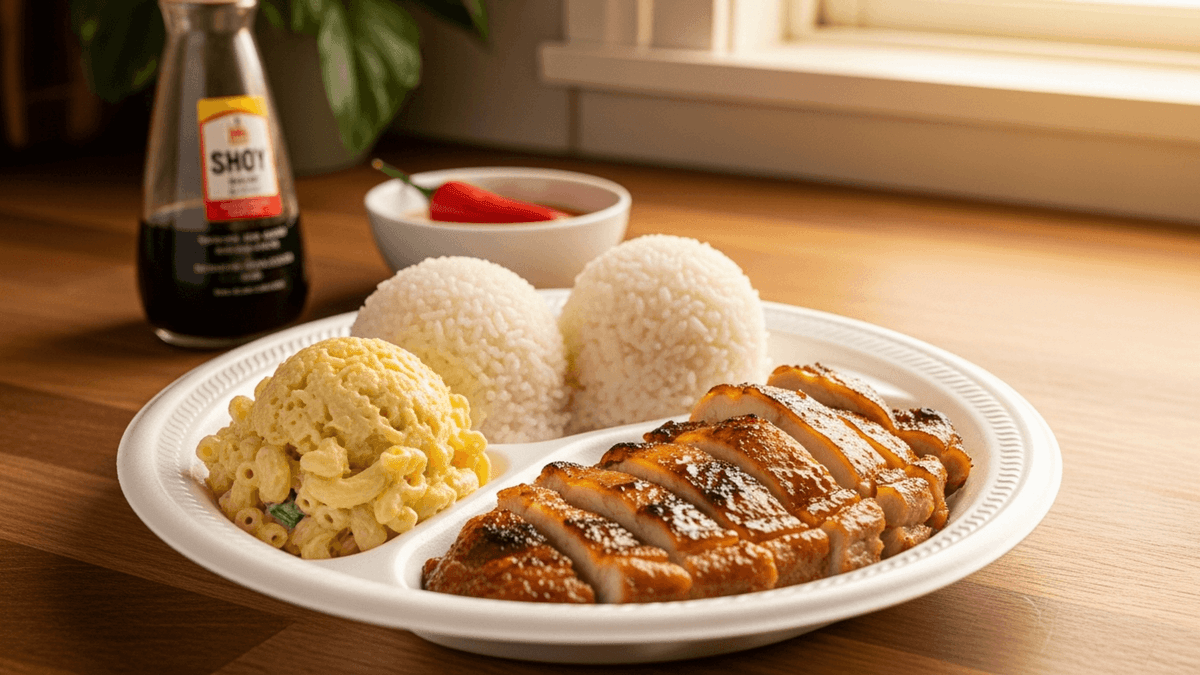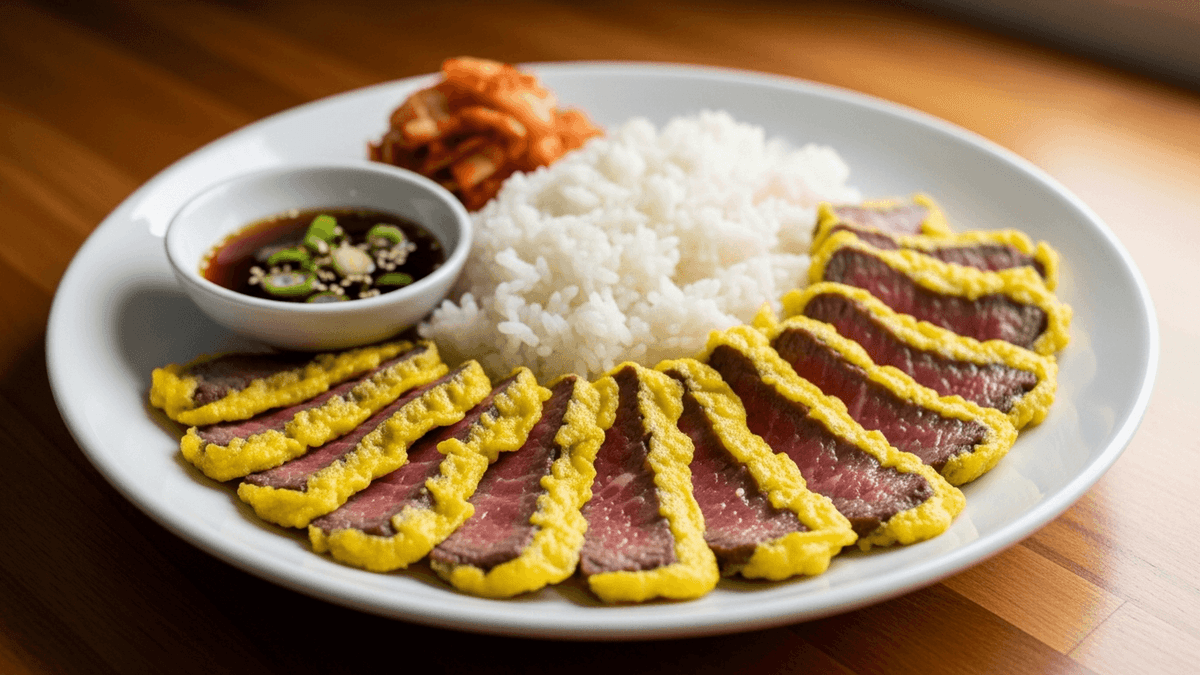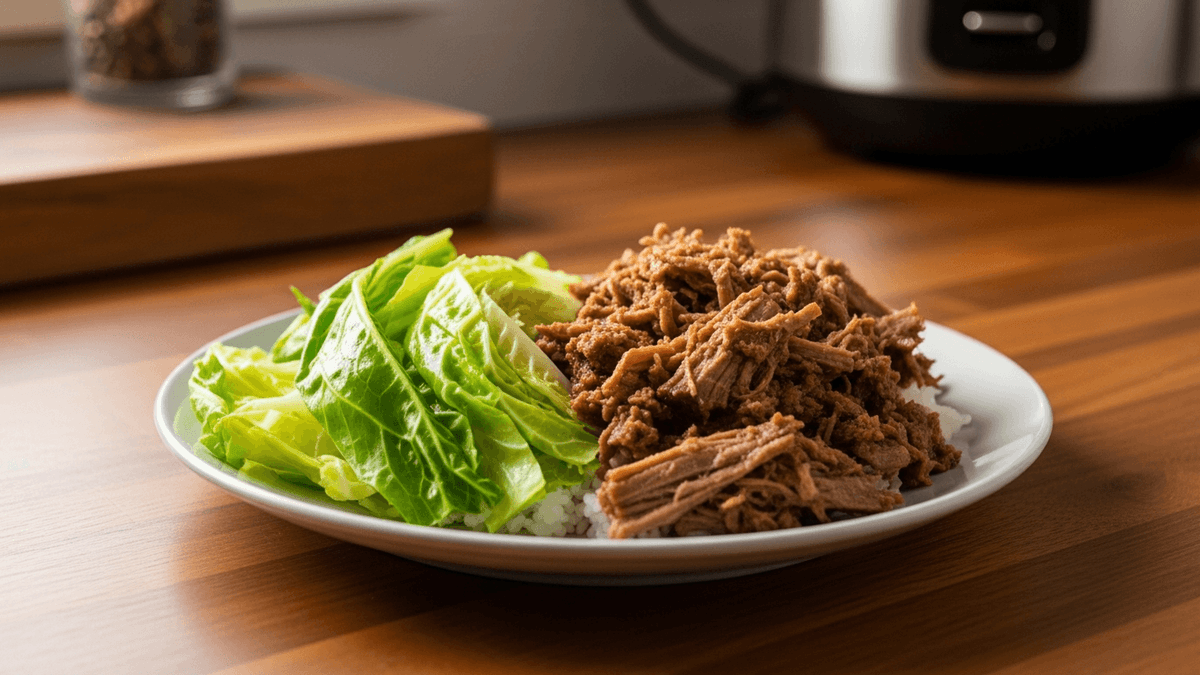
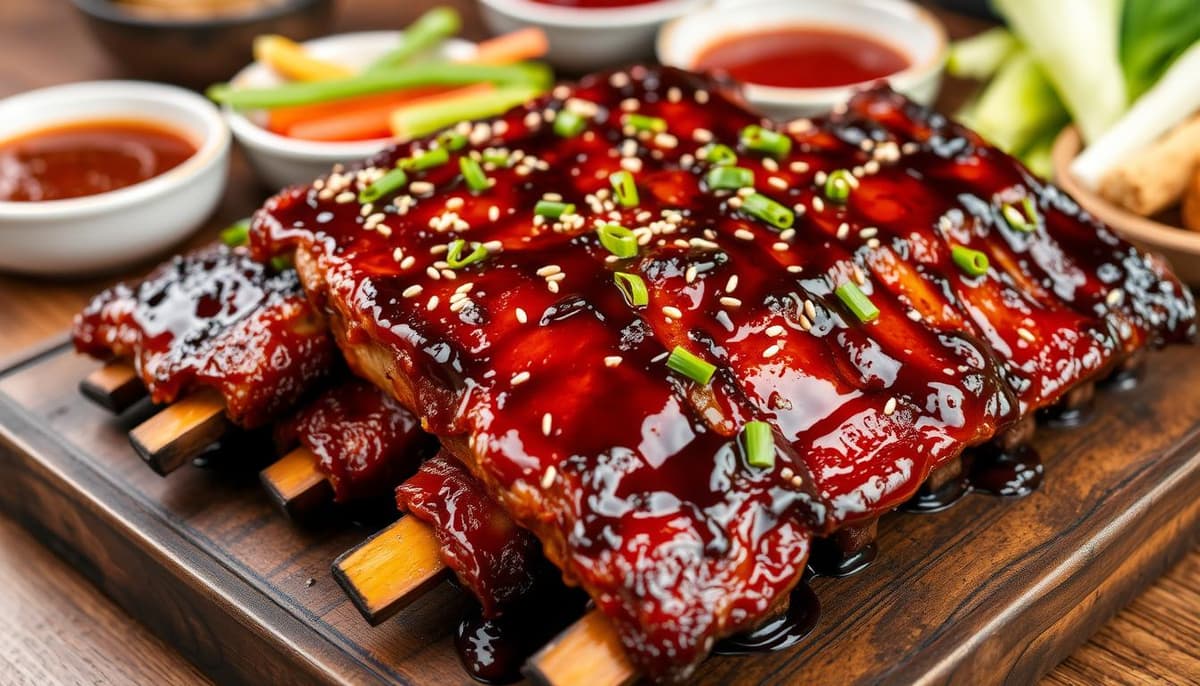
In Hawaii, kalbi isn’t Korean food. I mean, it is Korean food — it started there, the name is Korean, the basic technique is Korean. But in Hawaii, kalbi belongs to everybody. It’s on the plate lunch menu at every drive-in. It’s the first thing to disappear at any potluck. It’s what your uncle is grilling on the hibachi in the carport on any given Saturday. Kalbi is local food, full stop, and it might be the single best argument for what happens when Korean immigrants bring their culinary traditions to Hawaii and the whole island says, “Shoots, we eating that.”
Kalbi — also spelled galbi — means “rib” in Korean, and it refers to thin-cut beef short ribs marinated in a sweet soy sauce mixture and grilled over high heat. The Hawaiian version tends to be sweeter than what you’d find in Seoul, with the marinade often including pineapple juice or Asian pear, sesame oil, garlic, and a generous amount of sugar. The ribs are cut flanken-style — across the bone, so each piece has three or four small cross-sections of bone with thin strips of meat between them. This thin cut means more surface area for the marinade and faster cooking on the grill, which means more caramelized, sticky, charred goodness per bite.
Kalbi’s Place in Hawaii
Korean immigrants began arriving in Hawaii in significant numbers in the early 1900s, working alongside Japanese, Filipino, Chinese, Portuguese, and Native Hawaiian laborers on the sugar and pineapple plantations. They brought bulgogi, kimchi, and kalbi with them, and these dishes quickly became part of the broader local food culture.
By the mid-20th century, kalbi had become one of the most popular plate lunch proteins on the islands. Korean BBQ restaurants popped up across Honolulu, and the backyard kalbi cookout became a fixture of local life. Today, you can’t have a proper local party without kalbi on the grill. Baby luaus, graduation parties, birthday celebrations, tailgates — kalbi is there, and if it’s not, people ask why.
The Marinade Is Everything
Great kalbi lives or dies by its marinade. The meat is thin, so it absorbs flavor quickly and completely. A good kalbi marinade balances five elements:
- Salty: Soy sauce is the backbone
- Sweet: Sugar, mirin, and often pineapple or Asian pear
- Savory (umami): Sesame oil and garlic provide depth
- Aromatic: Green onions, ginger, and toasted sesame
- Tenderizing: Pineapple juice or grated Asian pear contains enzymes that break down the meat fibers
The tenderizing element is key but requires caution. Too much pineapple juice or too long a marination time will turn the meat mushy. Four to eight hours is the sweet spot — long enough to get deep flavor and tenderization, short enough to keep the meat’s integrity.
For the Marinade
For Serving
Marinate the Ribs
Grill the Kalbi
Serve
Tips and Variations
- Finding the right cut: Ask your butcher for flanken-cut short ribs, cut 1/4-inch thick across the bone. Korean and Asian markets almost always carry them. Some mainstream markets may need to special-order them or cut them for you.
- No grill? No problem: You can broil kalbi in the oven. Place ribs on a foil-lined baking sheet and broil on high for 3-4 minutes per side, watching carefully. A cast iron grill pan also works well.
- Double the marinade: You can never have too much kalbi at a party. Make extra — it goes fast.
- Save the bones: After eating, the small rib bones with bits of caramelized meat and marrow are some of the best bites. Don’t throw them away until you’ve gnawed every last bit of flavor off them.
The Backyard Kalbi Cookout
In Hawaii, a backyard kalbi cookout is its own kind of gathering — less formal than a luau, more intentional than “just grilling.” You set up the hibachi in the carport or the backyard, somebody brings the kim chee, somebody else shows up with mac salad, there’s always a cooler full of beer, and the ribs go on the grill a few at a time while people stand around talking story. The smell of kalbi grilling is one of those sensory memories that every local kid carries — it means weekend, it means family, it means home.
Make a batch this weekend. Invite some people over. Stand around the grill. That’s all there is to it.
Prep Time: 20 minutes | Marinating Time: 4-8 hours | Cook Time: 5 minutes | Serves: 6-8