Before you cook
The plate is a system, not a single dish.
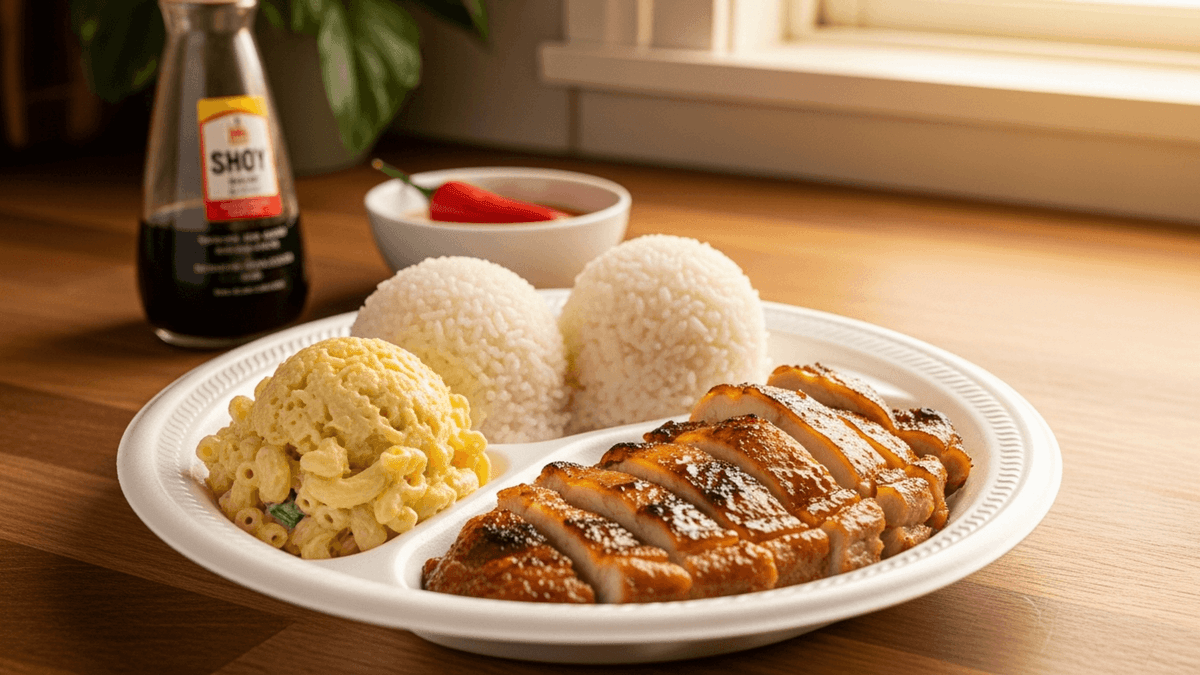
A plate lunch works because the three components balance each other. Two scoops of rice carry the sauce and heat. One scoop of cold creamy mac salad cuts the salt. One hot salty protein does the flavor work. Take any one of them out and the plate reads as a plain dinner. Keep all three and it reads as Hawaii.
A real Hawaii plate lunch is not a recipe, it is a format. You build it from components. The reason homemade plate lunches get close to drive-in quality is that each component is honest on its own; the reason most mainland attempts miss is that they treat it as a theme instead of a structure. Swap the mac salad for steamed broccoli and the whole thing collapses into a generic chicken dinner. Keep the format, rotate the protein, and it holds.
This guide is the practical version of building a plate at home on a weeknight schedule. For the deeper background on where the plate lunch came from and every protein in the rotation, see the full plate lunch guide.
The three-component rule
Every Hawaii plate lunch is built from the same three things. The format is fixed; only the protein rotates.
- Two scoops of rice. Medium-grain Calrose, cooked plain, served warm. Not jasmine, not basmati, not sushi rice. The scoops should hold their dome shape without being sticky. A spring-release ice cream scoop gives you the clean half-sphere a local plate has.
- One scoop of cold mac salad. Creamy, slightly sweet, loose enough to spread a little when it hits the plate. The mac is what carries this from "meat and two sides" to "plate lunch."
- One hot protein. Teriyaki chicken, kalua pork, beef teriyaki, chicken katsu, loco moco, kalbi, meat jun, Spam and eggs, or something seasonal. Pick one. Generous portion, served warm, sauced or glazed where the dish calls for it.
That is the whole format. Every drive-in, every family kitchen, every plate lunch in Hawaii builds on this. The small moves below are what separate a real plate from an approximation.
Picking the protein
Seven proteins cover about 90 percent of what people eat at home or order at drive-ins. In rough order of home-kitchen ease:
- Loco moco. Hamburger patty, brown gravy, fried egg, rice. 20-minute weeknight plate.
- Teriyaki chicken thighs. The reliable first build. Marinate overnight in shoyu, brown sugar, garlic, ginger; grill or pan-sear; slice.
- Slow-cooker kalua pork with cabbage. Eight hours in the cooker, zero attention. Weekend-cook-for-three-weeknight-plates strategy.
- Chicken katsu. Panko-breaded, pan-fried, sliced into strips. Needs a little more technique but the payoff is big.
- Beef teriyaki. Thin-sliced sirloin or short rib, same marinade as the chicken, fast grill. Richer plate than the chicken.
- Kalbi short ribs. Korean-cut flanken-sliced short ribs marinated and grilled. Worth the extra step.
- Meat jun. The Korean-Hawaiian egg-battered beef. The plate-lunch-protein most mainland cooks have never heard of.
A mixed plate is the move if you are cooking for a hungry table: two proteins on one plate, both in half portions, rice and mac unchanged. The classic drive-in combos are teriyaki chicken + kalbi, or kalua pork + shoyu chicken.
The mac salad is where most plates fail
More homemade plate lunches get derailed by the mac salad than by any other component. Hawaii mac salad is not the al dente pasta salad at a mainland barbecue. Three specific differences:
- The macaroni is soft on purpose. Cook it two to three minutes past al dente. The texture should be yielding, almost tender-mushy. Al dente is wrong here.
- More mayo than feels right. Full-fat Hellmann's or Best Foods, generously. The dressing should coat every noodle and leave a small pool in the bowl. Skimpy mac is mainland mac.
- Subtle sweetness. Grated onion, shredded carrot, a teaspoon of sugar or a splash of rice vinegar. Never raw onion chunks. Never mustard as a dominant flavor.
Make it the morning of, chill hard, serve cold. The full Hawaiian mac salad recipe covers the exact ratios.
The rice
Medium-grain Calrose is the Hawaii standard. Nothing else gives you the same scoopable, cohesive, not-too-sticky texture. Cook it in a rice cooker (the home-kitchen expectation in Hawaii) with slightly less water than the package says — about 1.1 cups water per cup of rice. Rest it covered off the heat for 10 minutes before scooping.
For the scoop: a spring-release ice cream scoop gives you clean, rounded half-spheres that slide off the plate in one piece. Two scoops per plate, placed next to each other, is the local-plate look. A flat pile of rice reads as mainland.
The sauce drawer
Most plate lunches are complete as-is. A few condiments earn a spot next to the plate:
- Shoyu on the side, especially with Spam, eggs, or plainer proteins.
- Hot mustard with char siu or katsu.
- Katsu sauce (thick, dark, tangy — Bulldog brand is fine) with chicken katsu.
- Chili pepper water: Hawaiian chilies, vinegar, water, garlic. Bright hot sauce for any protein.
- Furikake sprinkled on the rice, especially under a loco moco egg.
A realistic weeknight timeline
The practical home version from cold start to plated dinner in about 45 minutes, one person cooking:
- 0:00 — Start the rice cooker (30-40 minutes including rest).
- 0:05 — Take the protein out of the fridge if it is already marinated. If starting fresh, marinate, start the grill or pan, and plan for an extra 30 minutes.
- 0:10 — Pull the mac salad from the fridge so it is not ice-cold when you plate.
- 0:20 — Cook the protein. Teriyaki chicken takes 10-12 minutes per side; katsu takes 4-5 minutes per side; loco moco takes 20 minutes start to finish.
- 0:35 — Slice the protein if it needs slicing, let it rest.
- 0:45 — Plate: rice first (two scoops on one side), mac salad on the other, protein across the middle, shoyu or chili pepper water on the table.
For week-of meal prep: cook a large batch of protein on Sunday, cook rice every two days, and make fresh mac salad midweek. Protein and rice hold four days in the fridge; mac salad holds three.
Build-your-own plate for a crowd
The easiest way to feed a group is to scale the proteins up to two or three options and let people build their own plate. Lay it out on the counter:
- A rice cooker with a scoop
- A bowl of mac salad with a ladle
- Two or three warm proteins on platters, each with a serving fork
- A tray of sauces in small bowls with spoons
- Stacked foam or ceramic plates
Each person grabs a plate, scoops their own rice and mac, picks their protein or combination, and sauces to taste. This is how a party in Hawaii actually feeds twelve without a sit-down meal. See the full plate lunch guide for more detail on the history and regional variations.
Common mistakes
- Using long-grain or jasmine rice. It will not scoop. Calrose, or a similar medium-grain Japanese or Korean rice.
- Making the mac salad al dente. It will read as pasta salad, not plate lunch. Overcook on purpose.
- Being stingy with the mayo. Skimpy mac is a mainland tell. The dressing should be visible.
- Cutting the protein too early. Let it rest five minutes so the juices stay in the meat when you slice.
- Hot mac. The mac salad is meant to be cold. Warm mac turns greasy fast.
- Overthinking the sides. No pickled cabbage, no greens, no side salad. Rice and mac, period.
A home plate lunch gets 90 percent of the way to a drive-in plate with about 45 minutes of actual cooking and one grocery run. The last 10 percent comes down to repetition and personal taste. Cook the same format five weeks in a row with five different proteins and the plate becomes second nature.