Before you cook
Kalua pork and cabbage is a weeknight plate lunch, not a luau recreation.
The pork does the heavy lifting; the cabbage exists to catch the salty, smoky fat and turn every bite into a small excuse to eat more rice. This is the home version that shows up on a plate lunch, not the underground-oven version you build a Saturday around.
If you have eaten kalua pork from an imu at a real luau, you know the texture and salt level the slow cooker is trying to land. Fork-shreddable pork, cured just enough with Hawaiian salt that it could hold its own without a sauce, and a faint smoke that runs through every bite. The at-home version uses liquid smoke as a seasoning rather than a shortcut, and the slow cooker handles the long cook that the imu handles underground.
The twist that makes this post-able is the cabbage. Staged correctly, it turns a single dish into a full plate. It catches the seasoned fat as it cooks down, holds its shape enough to serve as the green on the plate, and balances the saltiness of the pork so the whole dish feels lighter than it has any business being.
What to get right
Three things carry this recipe. Get them right and the rest is time.
1. The salt. Hawaiian salt is the whole seasoning. Coarse, mineral, and if you can find alaea (the red clay-mixed variant), better. Kosher salt works but the mineral edge is not the same. Do not skip the salt rub and do not substitute table salt — the crystal size matters for how the cure sets on the surface before the slow cooker does its work.
2. The smoke. Liquid smoke is a tool, not a cheat. Wright's Hickory is the Hawaii supermarket standard and has the right balance — not chemical, not overpowering. One teaspoon is enough for a 4-pound shoulder. More than that and the pork starts tasting like burnt tires.
3. The cabbage timing. If you add the cabbage at the start, it cooks for 8 hours and turns into gray mush. Added for the last 45 to 60 minutes on high, it stays tender at the thick end and bright green on the edges. This single staging move is what makes it a plate lunch instead of a stew.
How to serve it
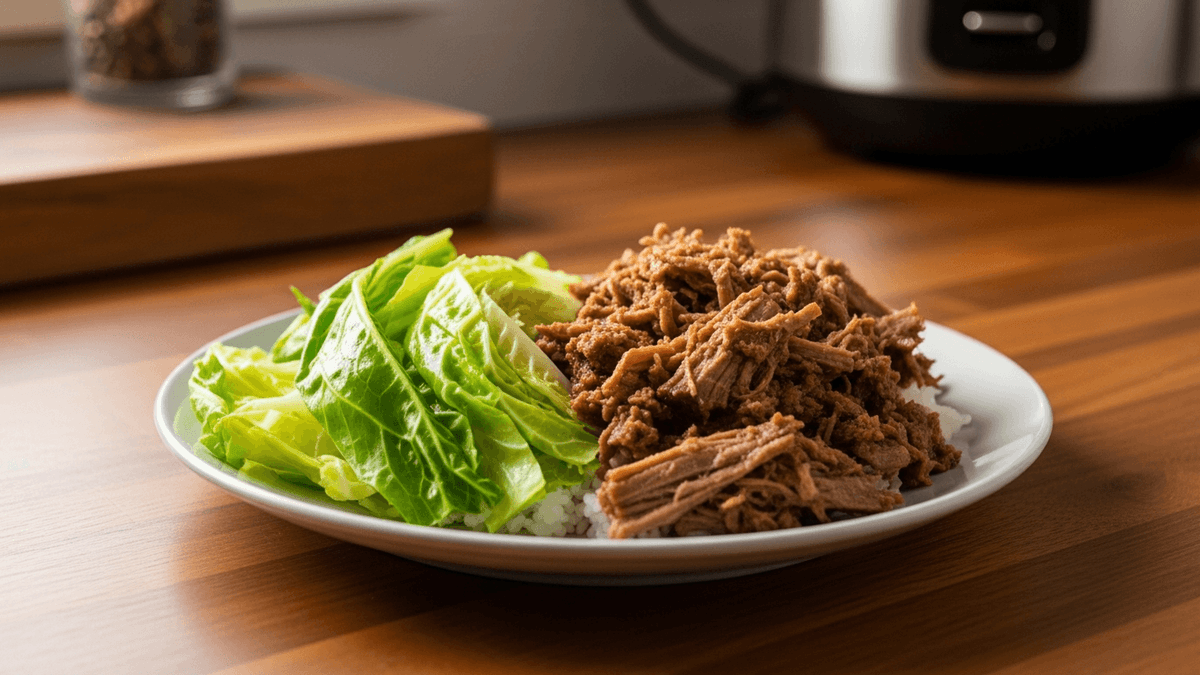
The default plate: two scoops of rice on one side, cabbage wedges tucked against the pork, shredded pork on top with a spoonful of the braising liquid, maybe a scoop of mac salad if you are running the full plate lunch. Chili pepper water on the side. See the plate lunch guide for the full format.
Two alternate plates worth knowing:
- On bread: pile the pork and a little chopped cabbage on a soft sweet roll with a drizzle of the braising liquid. It is closer to a Hawaiian pulled-pork sandwich than a bao, and it eats clean at a party.
- In a bowl: rice at the bottom, cabbage around the edge, pork in the middle, a fried egg on top, furikake over everything. Breakfast-for-dinner version.
Make ahead and reheat
Pork freezes well. Cabbage does not. If you are making this for a week of plate lunches or a party, cook the pork a day ahead, let it rest in its braising liquid overnight in the fridge, and cook the cabbage the day of service. The pork actually gets slightly better on day two as the salt and smoke settle deeper into the meat.
Reheat the pork covered in a skillet with a splash of braising liquid. For plate-lunch-style edges, finish the reheated pork on a dry hot pan for a minute per side to crisp up. That is closer to what a drive-in serves.
For the deeper history of the dish and the difference between imu-cooked kalua and the home version, see what kalua pig is. For the oven method (slightly drier, slightly more caramelized), see the oven-roasted kalua. For another weeknight classic that rides the same plate, see the weeknight loco moco.