Kalua Pig – Smoky Oven-Roasted Hawaiian Pork
Island Comfort

Kalua Pig – Smoky Oven-Roasted Hawaiian Pork

February 20, 2026 by CurtisJ 5 hours 15 minutes

If there’s one dish that connects modern Hawaii to ancient Hawaii, it’s kalua pig. Long before plate lunches and shrimp trucks, before the plantations and the missionaries, Native Hawaiians were cooking whole pigs underground in an imu — an earthen oven lined with volcanic rocks and banana leaves. The pig would cook slowly over hours, absorbing the smoke from kiawe wood and the mineral earthiness of the hot stones, emerging tender, smoky, and falling-apart gorgeous. That’s kalua pig — kalua meaning “to cook in an underground oven” — and it’s been the centerpiece of Hawaiian feasts for centuries.

Today, kalua pig is everywhere in Hawaii. It’s on plate lunch menus, at luaus, at every family party, in sliders and tacos and eggs Benedict. It’s one of the most foundational flavors in Hawaiian cuisine. But unless you have a backyard big enough to dig a pit and a full day to tend the fire, you’re probably not cooking it the traditional way. The good news is that you can make incredible kalua pig in your oven with almost no effort — and the result is remarkably close to the real thing.

The Imu: The Traditional Way

To truly appreciate the oven shortcut, it helps to understand what the imu is and why it matters. The traditional Hawaiian underground oven is a pit dug into the earth, lined with volcanic rocks that have been heated in a fire for hours. The whole pig is wrapped in banana and ti leaves, lowered onto the hot rocks, covered with more leaves and burlap, and then buried under a mound of earth. The pig steams and roasts slowly for 8-12 hours in that sealed underground chamber, with the smoke from the rocks and the moisture from the leaves creating a flavor that’s smoky, earthy, slightly sweet, and unlike anything you can produce on a conventional grill or smoker.

If you ever get the chance to attend a traditional Hawaiian luau where they pull the pig from the imu — do it. Watching the men uncover the earth, pull back the burlap and leaves, and reveal that perfectly cooked, golden-brown pig is one of the great food experiences. The smell alone is worth the trip. For more on the luau tradition and its significance, read our Talk Story: The Luau.

The Home Cook’s Kalua Pig

The oven method uses a simple trick to approximate the imu: liquid smoke. A few drops of liquid smoke in the seasoning mixture gives you that distinctive smoky flavor without digging a pit in your backyard. Combined with Hawaiian salt and slow roasting in a tightly sealed pan, the result is pork that’s smoky, salty, incredibly tender, and shreds effortlessly with two forks. It’s not identical to imu-cooked kalua pig — nothing is — but it’s close enough that most locals consider it a perfectly legitimate version.

The beauty of this recipe is its simplicity. Three ingredients for the pork: pork butt, Hawaiian salt, and liquid smoke. That’s it. You season it, wrap it, put it in the oven, and walk away for several hours. The oven does all the work.

Ingredients

  • 5-6 lbs bone-in pork shoulder (pork butt)
  • 2 tablespoons Hawaiian salt (or coarse sea salt)
  • 1 1/2 tablespoons liquid smoke (hickory or mesquite)
  • Banana leaves for wrapping (optional, but adds authenticity and flavor)

Instructions

Prepare the Pork

  1. Preheat your oven to 325°F (165°C).
  2. Score the pork shoulder all over with a sharp knife — make cuts about 1 inch apart and 1/2 inch deep across the entire surface. This allows the salt and smoke to penetrate deep into the meat.
  3. Rub the Hawaiian salt all over the pork, working it into the cuts.
  4. Drizzle the liquid smoke over the pork, rubbing it in the same way. Get it into every cut and crevice.

Wrap and Roast

  1. If using banana leaves: Lay 2-3 banana leaves on a large roasting pan (you can soften them first by passing them quickly over a gas flame or microwaving for 30 seconds). Place the pork in the center and wrap the leaves around it, then cover tightly with heavy-duty aluminum foil. The banana leaves add a subtle herbaceous flavor and help steam the meat.
  2. If not using banana leaves: Place the pork in a roasting pan and cover very tightly with heavy-duty aluminum foil. You want a tight seal to trap all the steam inside — double-wrap if needed.
  3. Roast for 4-5 hours (about 1 hour per pound), until the internal temperature reaches 200°F (93°C) and the meat is fall-apart tender.
  4. Don’t open the foil during cooking. Trust the process. The sealed environment creates the steaming effect that mimics the imu.

Shred and Serve

  1. Remove the pan from the oven and let it rest, still covered, for 20-30 minutes.
  2. Carefully open the foil — there will be a lot of hot steam and liquid.
  3. Remove and discard the bone (it should pull right out) and any large chunks of fat.
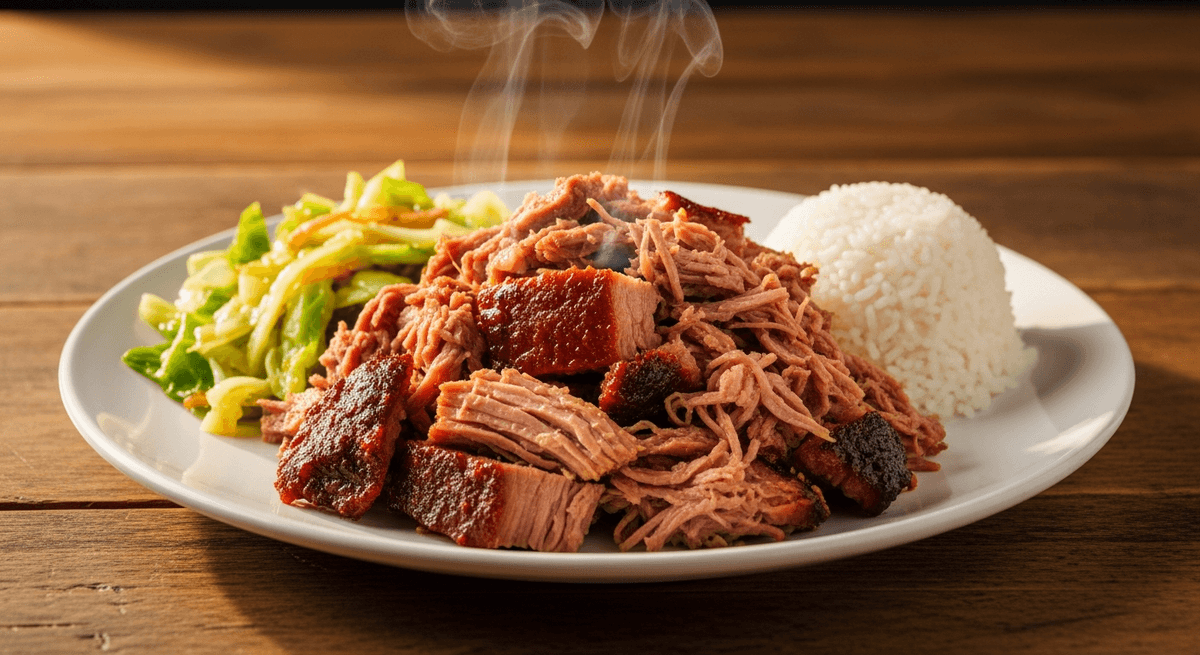
  4. Using two forks, shred the pork into the cooking juices. The meat should fall apart with zero resistance. Mix the shredded pork with the pan juices — this keeps it moist and distributes the smoky, salty flavor throughout.
  5. Taste and adjust seasoning. You may want a bit more salt or another small splash of liquid smoke.

How to Serve Kalua Pig

Kalua pig is one of the most versatile proteins in Hawaiian cooking. Once you have a batch of shredded kalua pig, you can use it a dozen different ways:

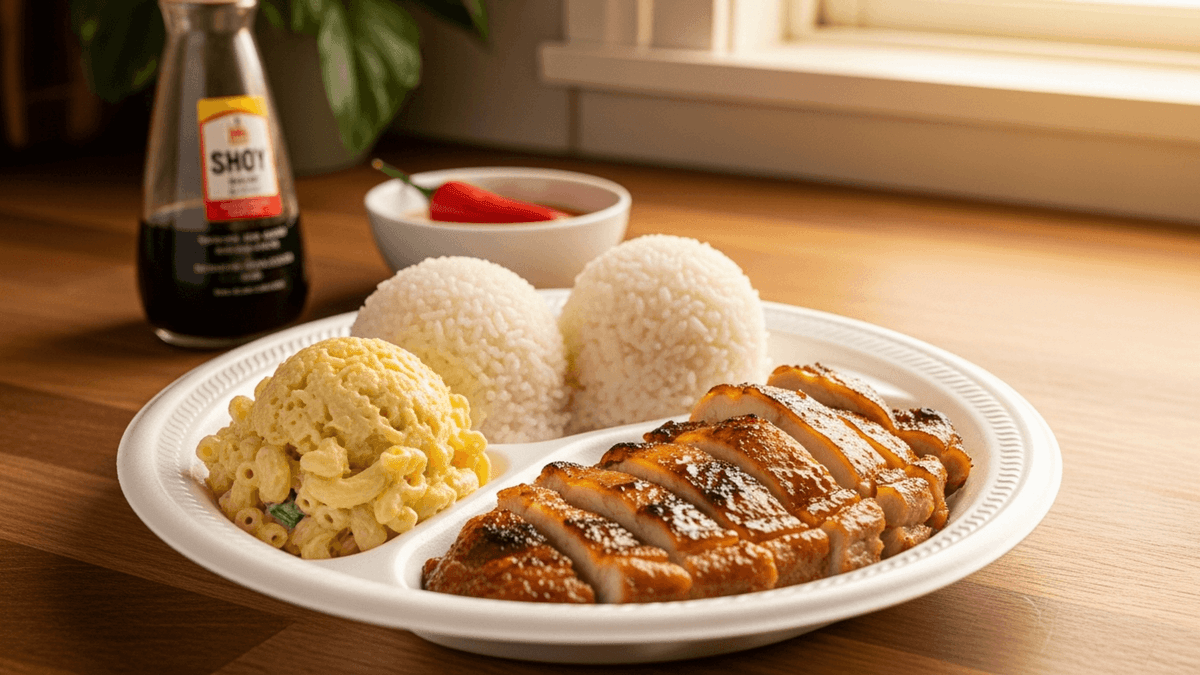
  • Plate lunch: Over rice with mac salad — the classic. Add a drizzle of the pan juices over the rice.
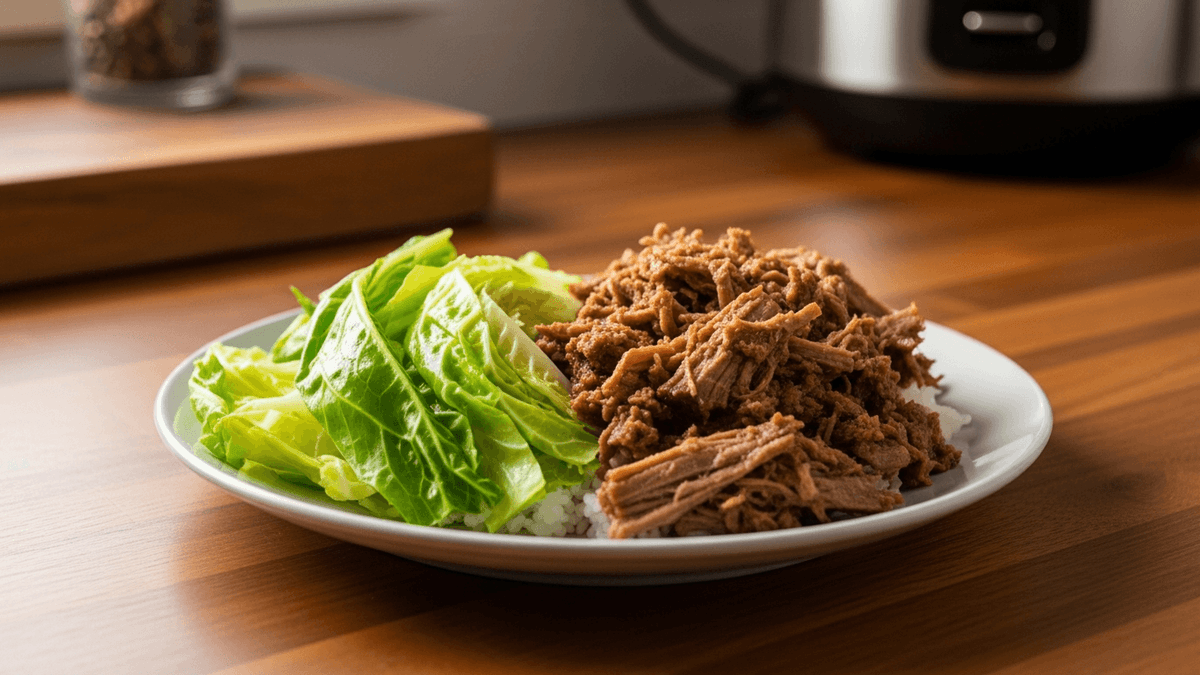
  • With cabbage: Kalua pig and cabbage is a beloved local combination. Sauté shredded cabbage in a pan, add the kalua pig, and let them cook together until the cabbage is tender. Simple and perfect.
  • In sliders: Pile kalua pig on sweet Hawaiian rolls with a little coleslaw. Outstanding party food.
  • Eggs Benedict: Replace the Canadian bacon with kalua pig for a Hawaiian breakfast that’ll ruin regular Benedicts for you forever.
  • Nachos or tacos: Kalua pig works brilliantly in any context where you’d use pulled pork.
  • Hawaiian plate: Alongside lomi lomi salmon, poi, and squid luau for a traditional Hawaiian feast.

Tips

  • Bone-in is better. The bone adds flavor and helps the meat stay moist during the long cook. Boneless works in a pinch, but reduce cooking time by about 30 minutes.
  • Don’t skip the liquid smoke. Without an actual imu, liquid smoke is doing the heavy lifting on flavor. It’s the difference between kalua pig and generic pulled pork.
  • Go easy on the liquid smoke. A little goes a very long way. Too much and the pork tastes acrid and artificial. 1 1/2 tablespoons for a 5-6 pound roast is the sweet spot.
  • Save the juices. The liquid in the pan after cooking is pure gold — smoky, salty pork broth. Use it to moisten the shredded meat, or save it for making cabbage, rice, or soup.
  • Slow cooker option: You can make this in a slow cooker: same prep, cook on low for 10-12 hours or high for 6-8 hours. It works, though the oven version develops slightly better flavor because of the higher heat.
  • Freezes beautifully. Kalua pig freezes in portions with its juices for up to 3 months. Thaw and reheat gently — it tastes just as good the second time.

Prep Time: 15 minutes | Cook Time: 4-5 hours | Serves: 10-12
Kalua Pig – Smoky Oven-Roasted Hawaiian Pork

Prep 15 minutes
Cook 4-5 hours
Total 5 hours 15 minutes
Servings
10

Ingredients

Instructions

1

Preheat your oven to 325°F (165°C).

2

Score the pork shoulder all over with a sharp knife - make cuts about 1 inch apart and 1/2 inch deep across the entire surface. This allows the salt and smoke to penetrate deep into the meat.

3

Rub the Hawaiian salt all over the pork, working it into the cuts.

4

Drizzle the liquid smoke over the pork, rubbing it in the same way. Get it into every cut and crevice.

5

If using banana leaves: Lay 2-3 banana leaves on a large roasting pan (you can soften them first by passing them quickly over a gas flame or microwaving for 30 seconds). Place the pork in the center and wrap the leaves around it, then cover tightly with heavy-duty aluminum foil. The banana leaves add a subtle herbaceous flavor and help steam the meat.

6

If not using banana leaves: Place the pork in a roasting pan and cover very tightly with heavy-duty aluminum foil. You want a tight seal to trap all the steam inside - double-wrap if needed.

7

Roast for 4-5 hours (about 1 hour per pound), until the internal temperature reaches 200°F (93°C) and the meat is fall-apart tender.

8

Don't open the foil during cooking. Trust the process. The sealed environment creates the steaming effect that mimics the imu.

9

Remove the pan from the oven and let it rest, still covered, for 20-30 minutes.

10

Carefully open the foil - there will be a lot of hot steam and liquid.

11

Remove and discard the bone (it should pull right out) and any large chunks of fat.

12

Using two forks, shred the pork into the cooking juices. The meat should fall apart with zero resistance. Mix the shredded pork with the pan juices - this keeps it moist and distributes the smoky, salty flavor throughout.

13

Taste and adjust seasoning. You may want a bit more salt or another small splash of liquid smoke.

Chef's Notes

- Bone-in is better. The bone adds flavor and helps the meat stay moist during the long cook. Boneless works in a pinch, but reduce cooking time by about 30 minutes. - Don't skip the liquid smoke. Without an actual imu, liquid smoke is doing the heavy lifting on flavor. It's the difference between kalua pig and generic pulled pork. - Go easy on the liquid smoke. A little goes a very long way. Too much and the pork tastes acrid and artificial. 1 1/2 tablespoons for a 5-6 pound roast is the sweet spot. - Save the juices. The liquid in the pan after cooking is pure gold - smoky, salty pork broth. Use it to moisten the shredded meat, or save it for making cabbage, rice, or soup. - Slow cooker option: You can make this in a slow cooker: same prep, cook on low for 10-12 hours or high for 6-8 hours. It works, though the oven version develops slightly better flavor because of the higher heat. - Freezes beautifully. Kalua pig freezes in portions with its juices for up to 3 months. Thaw and reheat gently - it tastes just as good the second time. Prep Time: 15 minutes | Cook Time: 4-5 hours | Serves: 10-12