Left side
Hawaii · 1955, Ernest Morgado, Pacific Poultry
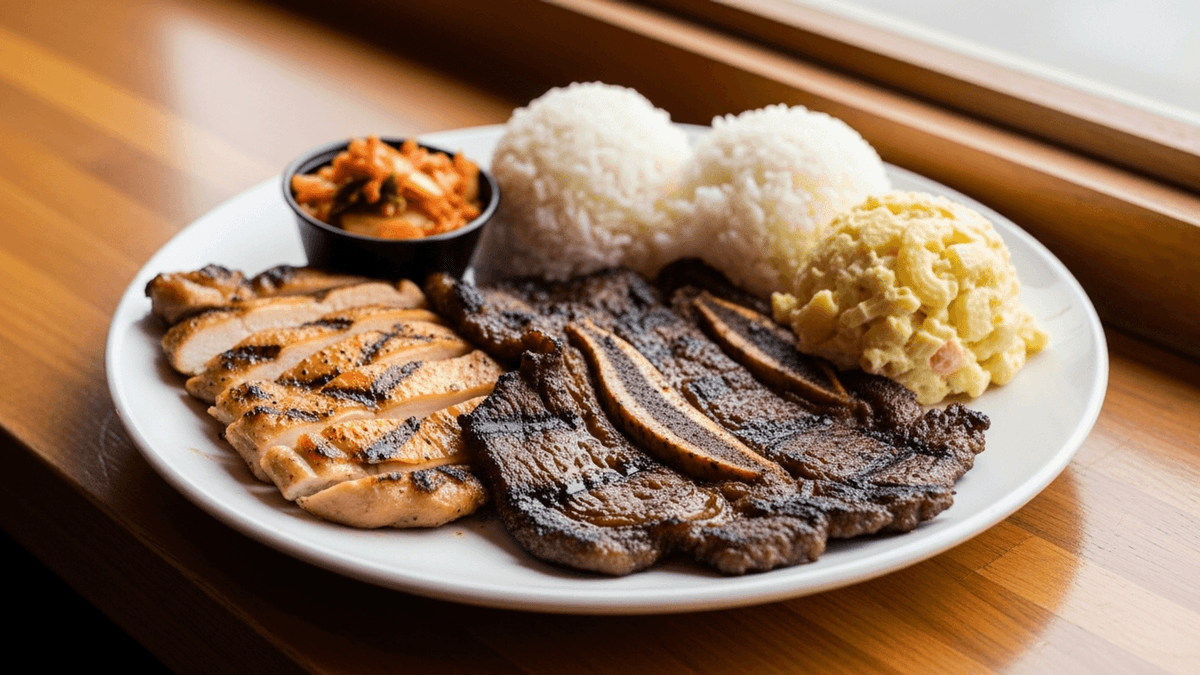
Whole or half chickens marinated in shoyu, brown sugar, ginger, garlic, and pineapple juice, then rotisseried over kiawe wood and basted while turning. "Huli" means "turn" in Hawaiian.
Right side
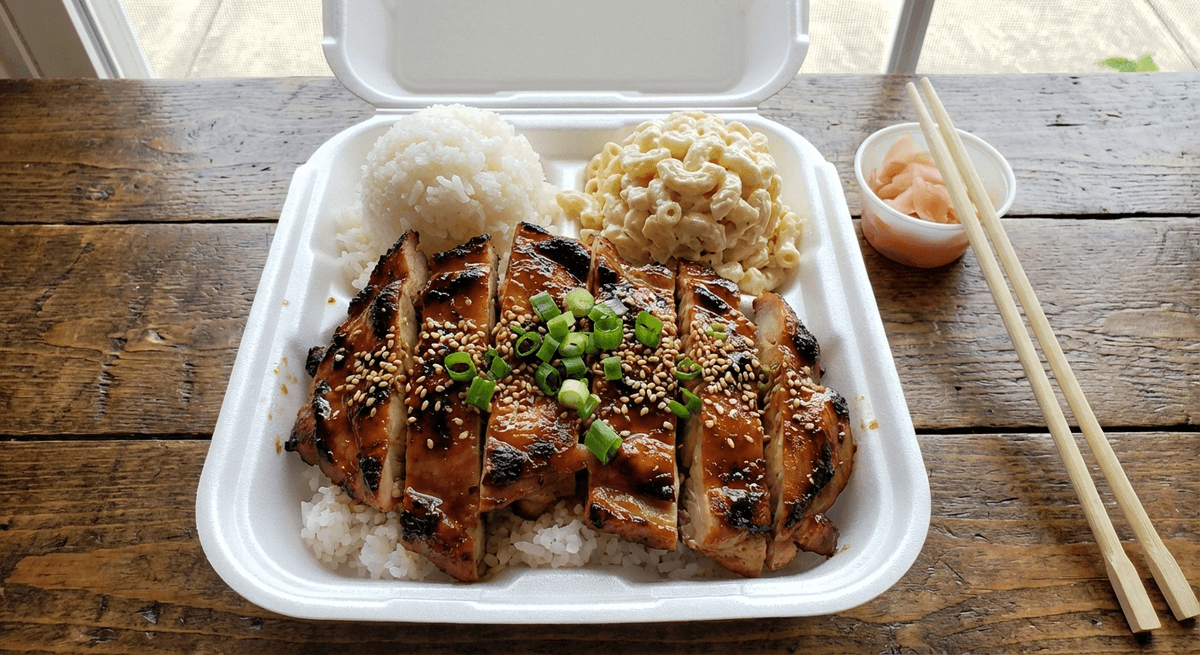
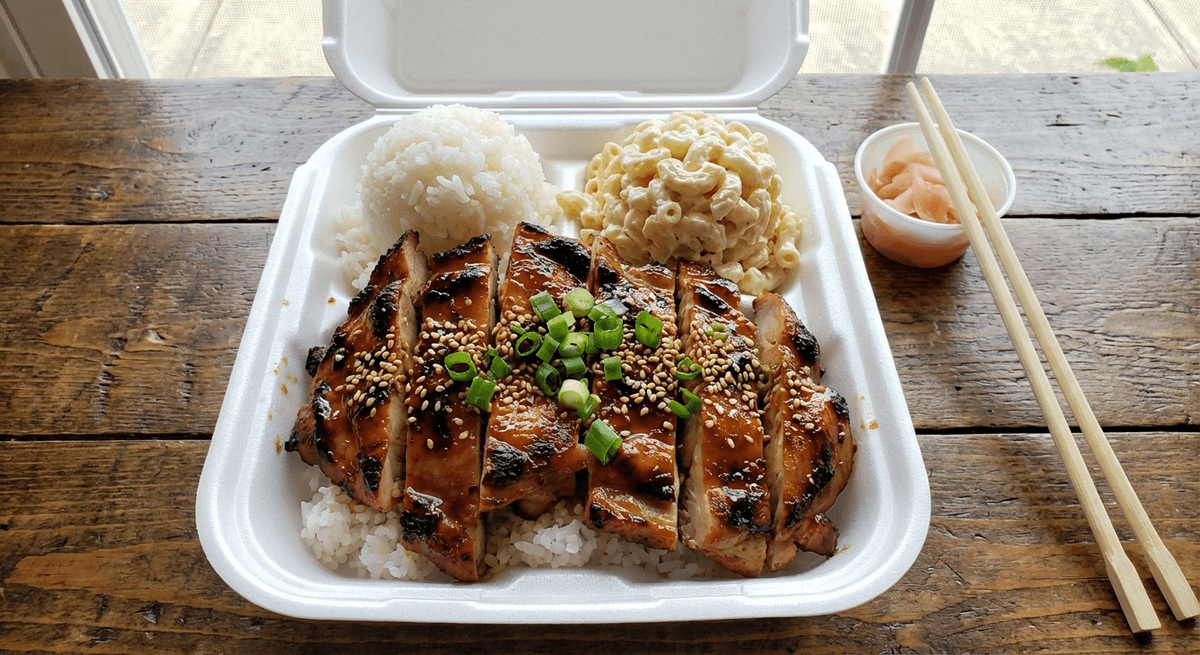
Teriyaki Chicken
Japan · traditional grilling-glazing technique
Boneless chicken thigh or breast cooked on a grill or pan, brushed with a reduced shoyu-mirin-sake-sugar glaze in the final minute, sliced and served over rice.
Huli huli chicken is a roadside event. The smell hits you a quarter-mile before the stand, kiawe smoke and pineapple-shoyu glaze and a man with tongs turning forty halved chickens at once on a rotating spit. Teriyaki chicken is a counter event — a single thigh on a hot pan, sauced at the finish, plated. The scale, the smoke, and the showmanship are different categories of food.
The marinade has more pineapple juice in it than most people realize, and that’s what makes huli huli huli huli. The bromelain in the pineapple tenderizes; the sugars in the juice caramelize against the kiawe smoke. Mainland teriyaki has no pineapple. Mainland teriyaki is mostly shoyu and mirin and sugar, brushed late. Same flavor family, different members.
DimensionHuli Huli ChickenTeriyaki ChickenCutWhole or halved bone-in chickenBoneless thigh or breast
MarinadeShoyu + brown sugar + ginger + garlic + pineapple juiceShoyu + mirin + sake + sugar
Marinade time4–12 hours15 min — 2 hours
Cook methodRotisserie over kiawe woodGrill or pan, glaze brushed late
SmokeKiawe (mesquite-family) wood smokeNone or charcoal
Cook time60–90 min on the rotisserie8–10 min total
Eaten withPlate lunch — rice + mac saladRice bowl — plain rice + steamed greens
Where you find itRoadside stand, fundraiser, parking lotCounter restaurant, food court, home grill