Before you read
Let the fire and glaze do their work.
Huli huli chicken earns its reputation when the glaze caramelizes without burning and the meat stays juicy under the skin. CurtisJ's advice is to keep turning, keep brushing, and let the smoke stay in the conversation.
If you’ve ever driven past a roadside stand in Hawaii and caught that unmistakable scent of sweet, smoky chicken turning over kiawe charcoal, you already know what huli huli chicken is all about. It’s one of those smells that stops you in your tracks — caramelized glaze dripping onto hot coals, smoke curling up through the trees, and a line of locals already forming before the first batch is even done.
Huli huli chicken isn’t just a recipe. It’s a whole experience. It’s fundraiser chicken. It’s weekend football party chicken. It’s the kind of food that brings people together around a grill and keeps them there until every last piece is gone.
What Is Huli Huli Chicken?
Huli huli chicken is Hawaii’s answer to rotisserie-style grilled chicken — whole or halved birds basted in a sweet and savory glaze, flipped repeatedly over an open flame until the skin is deeply caramelized and the meat is juicy all the way through. The word “huli” means “to turn” in Hawaiian, and that’s exactly what you do: flip that chicken again and again, basting it each time, building up layers of sticky, smoky glaze.
You’ll find it at church fundraisers, school events, and roadside stands all across the islands. Some places use massive custom-built grills that can cook dozens of chickens at once, flipping whole racks of birds in a single motion. It’s community food at its finest, the kind of cooking that takes patience, a little bit of sweat, and a whole lot of aloha.
The Origin Story: Ernest Morgado and the Birth of Huli Huli
The story of huli huli chicken goes back to 1955, when a local farmer named Ernest Morgado was grilling chicken for friends on his farm on Oahu. He’d developed a teriyaki-style sauce, a blend of soy sauce, ginger, brown sugar, and other ingredients, and as the chicken cooked, he kept flipping it and brushing on more glaze. His mother-in-law tasted it and reportedly said it was the best chicken she’d ever had.
Morgado eventually trademarked the name “Huli Huli” and began selling his sauce commercially. He also started cooking huli huli chicken at fundraising events across Hawaii, where it became a phenomenon. Over the decades, the recipe spread across the islands, and every family, every church group, every grill master developed their own version of the glaze. But the technique, the constant turning, the layered basting, that stayed the same.
What Makes Huli Huli Different from Teriyaki Chicken?
People from the mainland sometimes look at huli huli chicken and think it’s just teriyaki. And sure, there’s overlap — both use soy sauce, sugar, and ginger. But there are some key differences that set huli huli apart.
First, it’s all about the technique. Teriyaki chicken is often grilled or broiled with a quick glaze at the end. Huli huli chicken is basted and flipped repeatedly throughout the entire cooking process, sometimes for 45 minutes or more. Each flip adds another layer of glaze, and each layer caramelizes a little more on the grill. The result is a thicker, stickier, more complex coating than you’d get with a single brush of teriyaki.
Second, the glaze itself is a little different. Most huli huli glazes include ingredients like ketchup, pineapple juice, and chicken broth alongside the soy sauce and brown sugar. That gives it a slightly tangier, more rounded flavor — less purely sweet than teriyaki, with more depth.
And third, traditionally it’s cooked over kiawe charcoal: Hawaiian mesquite. Kiawe burns hot and clean, and it adds a subtle smoky sweetness that you just can’t replicate with gas. If you’ve ever tasted the difference between kiawe-grilled and gas-grilled anything, you know what I’m talking about.
Tips for Making Huli Huli Chicken at Home
You don’t need a massive roadside grill to make great huli huli chicken. Here’s how to get it right in your own backyard.
Butterfly Your Chicken
Spatchcocking (butterflying) the chicken is key. Remove the backbone with kitchen shears, then press the bird flat. This does two things: it gives you more surface area for the glaze to caramelize, and it helps the chicken cook more evenly. No more dried-out breast meat while you’re waiting for the thighs to finish.
Master the Basting Technique
The whole point of huli huli chicken is the layered glaze. Reserve half your glaze before marinating: that’s your basting sauce. Every time you flip the chicken (about every 10 minutes), brush on more glaze. The sugar in the sauce caramelizes each time, building up that signature sticky, slightly charred coating.
Charcoal vs. Gas
If you have a charcoal grill, use it. If you can get kiawe charcoal, even better. The smoky flavor makes a real difference. But don’t stress if all you have is gas — you’ll still get a delicious chicken. Just make sure you’re cooking over medium heat, not high. The sugar in the glaze will burn if the heat is too aggressive. You want a slow, steady caramelize, not a char.
Use a Thermometer
Don’t guess. Pull the chicken when the thickest part of the thigh hits 165°F. Then let it rest for 10 minutes before chopping. That rest time lets the juices redistribute, so every piece stays moist.
How to Serve Huli Huli Chicken
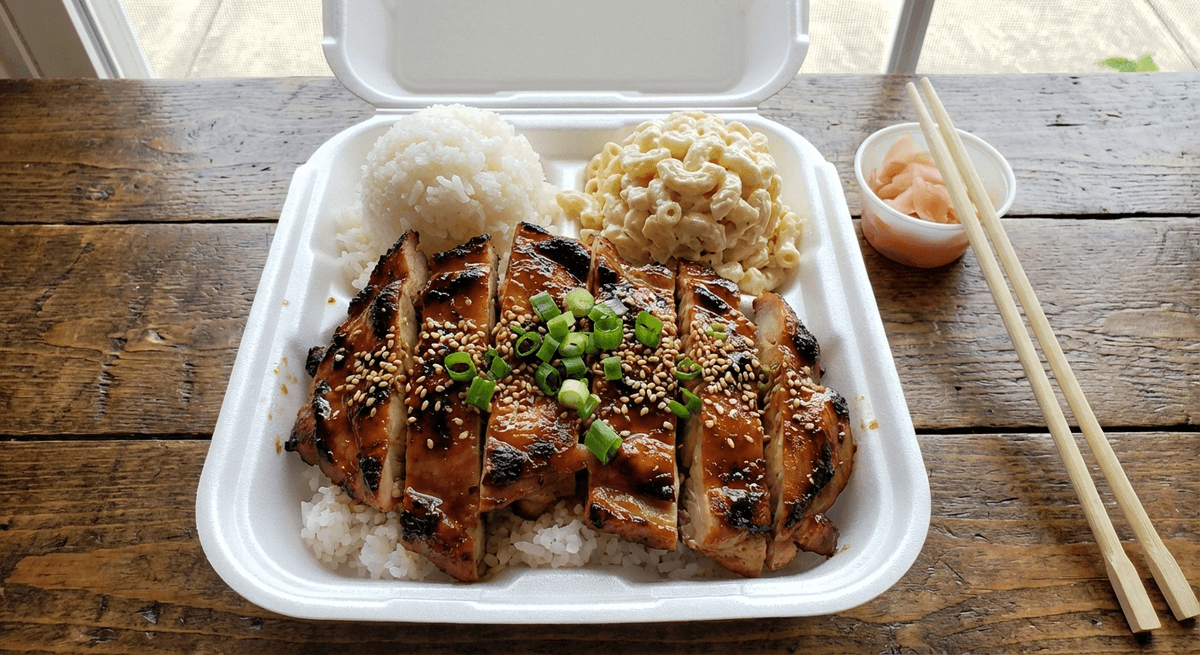
In Hawaii, huli huli chicken is almost always served as part of a plate lunch: and honestly, that’s the best way to do it. Chop the chicken into pieces, pile it over two scoops of white rice, and add a generous scoop of creamy mac salad on the side. That’s the classic setup.
Some folks like to drizzle a little extra glaze over the chopped chicken. Others keep it simple and let the grill work speak for itself. Either way, you might want to have some extra napkins on hand — this is sticky, messy, eat-with-your-hands kind of food, and that’s exactly how it should be.
For a bigger spread, throw together a simple cucumber namasu (vinegar salad), some steamed vegetables, or a side of kimchi. And if you’re really going all out, a cold beer or a glass of POG juice rounds out the meal perfectly.
Ready to Make It?
This recipe captures everything that makes huli huli chicken special, the sweet-savory glaze, the grilling technique, the layers of caramelized flavor. It takes a little time (you’ll want to marinate for at least 4 hours), but the actual cooking is straightforward. Just keep flipping, keep basting, and trust the process. Your backyard is about to smell like a Hawaiian roadside stand.