Before you cook
The mixed plate is a drive-in move, not a restaurant move.
Rainbow Drive-In, L&L, Zippy's — all the Hawaii drive-ins that defined the format built the mixed plate to solve the same problem: customers wanted kalbi and teriyaki chicken both. The two-protein plate is not a fancier plate lunch. It is the local answer to the question "which one?" The answer is both.
The single-protein plate lunch is the format that built Hawaii lunch culture. The mixed plate is the version you order when you want variety on one tray: two proteins, rice, mac salad, and maybe kim chi or a green salad, all for about a dollar more than the single-protein version. This guide walks through how to pick the two proteins, time them, and plate them so the home version reads as local instead of combo-restaurant.
For the cultural and structural background on the plate-lunch format itself, see the Hawaii plate lunch guide. For the single-protein at-home version, see how to build a plate lunch at home. This post assumes you are already comfortable with the rice-and-mac-salad half of the plate and you are ready to add a second protein.
The three classic mixed-plate combos
Teriyaki chicken + kalbi
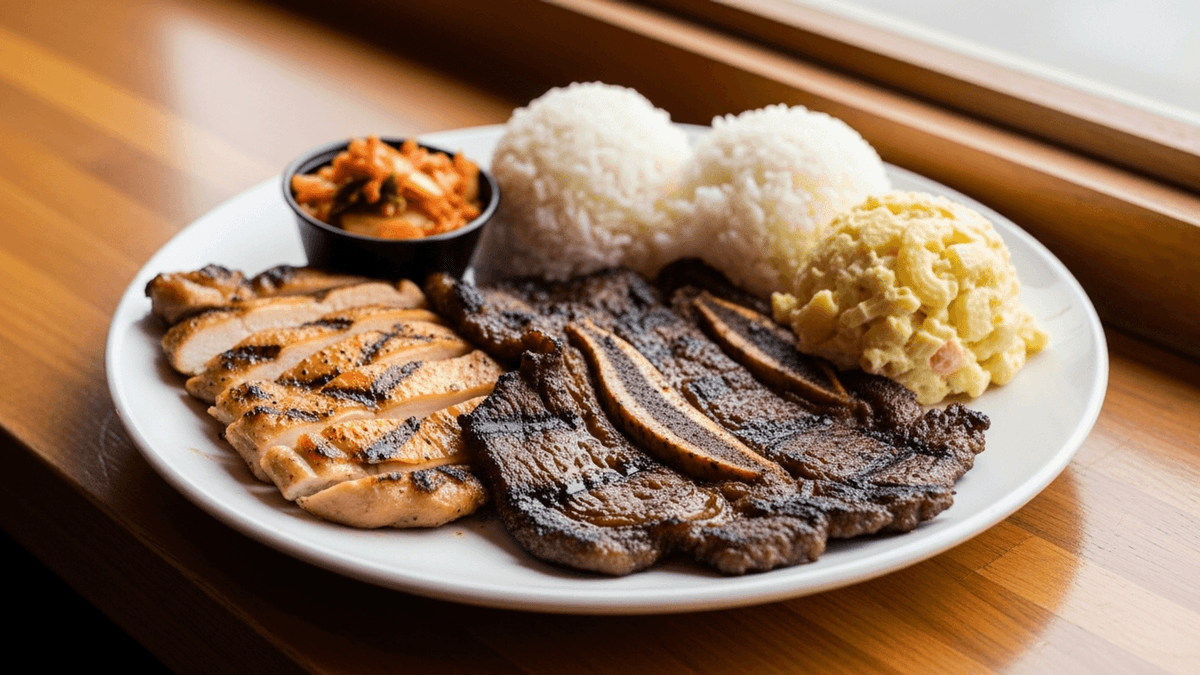
The most-ordered mixed plate at Hawaii drive-ins. Sweet-salty grilled chicken thighs and sesame-shoyu marinated short-rib kalbi. Both off the grill, both with visible char marks, both built on the same shoyu-sugar-garlic-ginger base marinade. The home version works because the marinade is shared — mix one batch, split it between chicken and kalbi, done.
See the kalbi recipe for the short-rib side. Teriyaki chicken uses the same marinade base with more sugar and brown sugar to get the glaze.
Kalua pork + shoyu chicken
The traditional Hawaii combo. Smoky shredded kalua pig alongside shoyu-braised chicken thighs. Both are slow, low-maintenance proteins — no grill required, both can live in a slow cooker or oven while the rest of the plate comes together. Good for a weeknight when you want less active cooking time.
See slow-cooker kalua pork for the pork side. Shoyu chicken uses bone-in thighs braised in shoyu, sugar, garlic, ginger, and water.
Chicken katsu + kalbi
The Japanese-Korean-Hawaiian mash-up. Panko-crusted fried chicken alongside grilled short ribs. More work than the other two (two different cooking methods: fry and grill), but it gives you the textural contrast that makes mixed plates worth ordering: crisp-shelled chicken next to charred marinated beef.
See the chicken katsu recipe. The kalbi grills fast while the katsu drains.
Other strong pairings worth knowing
- Teriyaki beef + teriyaki chicken: the double-teriyaki plate. Same marinade, two proteins, one grill. Simplest combo to pull off at home.
- Meat jun + kalbi: the Korean-Hawaiian drive-in special. Egg-battered beef next to grilled short ribs. Both proteins hit the pan or grill around the same time.
- Shoyu chicken + teriyaki chicken: all chicken, but two different preparations. The shoyu is braised and dark; the teriyaki is grilled and charred. Sounds redundant until you eat it, the textural contrast carries the plate.
- Chicken katsu + mahi mahi: the catch-of-the-day version. Fried panko chicken plus pan-seared or grilled white fish.
- Kalua pork + kalbi: a heavy plate for big appetites. Both proteins are pork/beef and richly seasoned; balance with a scoop of green salad to cut the fat.
How to time two proteins
The single biggest mistake home cooks make on a mixed plate: cooking both proteins at the same time in the same way. The trick is picking two proteins with different timing or different equipment, then staging them so they both land hot at the same moment.
The 45-minute weeknight timeline
Assuming both proteins are already marinated (the night before):
- 0:00: Start the rice cooker (40 minutes including rest).
- 0:05: Pull the mac salad from the fridge so it is not ice-cold when you plate.
- 0:10: Start the slow protein. For kalua, it has already been in the cooker since morning. For shoyu chicken, start the braise now — it needs 30 minutes. For katsu, start breading now.
- 0:30: Start the fast protein. Kalbi goes 4 minutes total on a hot grill. Teriyaki chicken takes 10-12 minutes total over medium-high heat. Meat jun takes 60 seconds per slice in a pan.
- 0:40: Rest both proteins 3 to 5 minutes before slicing. Let the rice finish its rest.
- 0:45: Plate: two scoops of rice on one side, mac salad scoop beside, two proteins fanned across the main compartment, kim chi in a small cluster at the edge.
The weekend-prep approach
If you are making mixed plates for 6 or more people or prepping for the week:
- Saturday morning: start the slow-cook protein (8-hour kalua, or 4-hour braised shoyu chicken).
- Saturday afternoon: make mac salad in a large batch, chill overnight.
- Sunday around lunch: rice cooker starts. Grill the fast protein (kalbi, teriyaki chicken, or meat jun) while the shredded slow protein warms in its own braising liquid.
- Plate and eat. Leftover slow protein keeps 4 days; leftover grilled meat keeps 3 days; leftover mac salad keeps 3 days.
Mac salad and rice on the mixed plate
Same rules as any plate lunch: medium-grain Calrose rice, two scoops shaped with an ice-cream-scoop-style dispenser. Soft-cooked mac salad with enough mayonnaise that the salad holds its shape but does not pour. The mixed-plate scale is usually a full cup of mac salad (slightly more than a single-protein plate) because there is more protein to balance.
See the Hawaiian mac salad recipe for the exact ratios. The mac has to be cold and the rice has to be warm — this contrast is non-negotiable on a real plate lunch.
What sits next to the two proteins
- Kim chi: especially important with kalbi. A small cluster at the edge of the plate.
- Green salad: L&L style: iceberg lettuce, grated carrot, a small splash of Kraft catalina. Cuts the richness on a heavy mixed plate.
- Shoyu on the table, not on the plate.
- Chili pepper water in a small bottle nearby. See the chili pepper water guide.
- Furikake on the rice if you want it, especially with the kalua pork combo.
Nothing else. No pickled cabbage, no sautéed greens, no garnishes you would see at a fancy restaurant. The mixed plate is a drive-in plate scaled up for home cooking.
Feeding a crowd
The mixed-plate format scales well for a backyard party or potluck. Build it as a buffet:
- Rice cooker with a scoop
- Large bowl of mac salad with a ladle
- Two or three warm proteins on platters, each with its own serving utensil
- Kim chi, shoyu, chili pepper water in small containers
- Stacked foam or ceramic plates
People build their own plate with whichever two proteins they want. This is the standard Hawaii-party format for 10 to 30 people. Any combination of the pairings above works; scale each protein to about 4 ounces per person and plan slightly more rice and mac than you think you need.
For the full history and cultural context of the plate-lunch format, see the plate lunch guide. For the simpler single-protein version before committing to mixed plates, see how to build a plate lunch at home.