Left side
Mochi
Japan / Hawaii · ancient · mochitsuki tradition
Sticky rice steamed and pounded (mochitsuki) until a smooth dough forms, then shaped into balls or filled with sweet bean paste. In Hawaii, butter mochi is the regional adaptation.
Hawaii / Japan vs China
Mochi and Chinese nian gao are both made from glutinous (sticky) rice, but the technique and the final dish are different culinary traditions.
UPDATED APR 2026
Left side
Japan / Hawaii · ancient · mochitsuki tradition
Sticky rice steamed and pounded (mochitsuki) until a smooth dough forms, then shaped into balls or filled with sweet bean paste. In Hawaii, butter mochi is the regional adaptation.
Right side
China · traditional Lunar New Year dessert
Sticky-rice flour mixed with brown sugar (or savory soy + meat), steamed in a tray, sliced into squares or pan-fried. Eaten for Lunar New Year as a wish for "rising year."
Both start with glutinous rice (sometimes called sweet rice or mochigome) and end up sticky and chewy. After that, the techniques diverge. Japanese mochi is pounded — a wooden mallet against a wooden mortar, pounding cooked rice grains into a single elastic dough. Chinese nian gao is mixed from rice flour and sugar, then steamed in a pan as a single block. The two traditions answer "what to do with sticky rice" in opposite ways.
Hawaii’s contribution is butter mochi — a Japanese-Hawaiian invention that uses glutinous-rice flour (mochiko) plus butter, eggs, sugar, and coconut milk, baked in a 9x13 pan. Butter mochi is closer to nian gao in technique (mix and bake/steam) than to traditional pounded mochi, but the flavor profile and texture (chewy + buttery + coconut) is its own thing. Hawaii’s mochi tradition is layered.
Pounded mochi is one tradition. Steamed nian gao is another. Hawaii’s butter mochi is a third — it borrowed technique from both and ended up its own dish.
You want the elastic, mortar-pounded Japanese tradition. Mochitsuki is an event, not a recipe. Hawaii’s butter mochi adapts it for a 9x13 pan.
You want the Chinese New Year tradition — a single brown-sugar cake, sliced and pan-fried, eaten as a Lunar New Year wish.
Read next
Recipes and guides on the CurtisJ side of the argument.
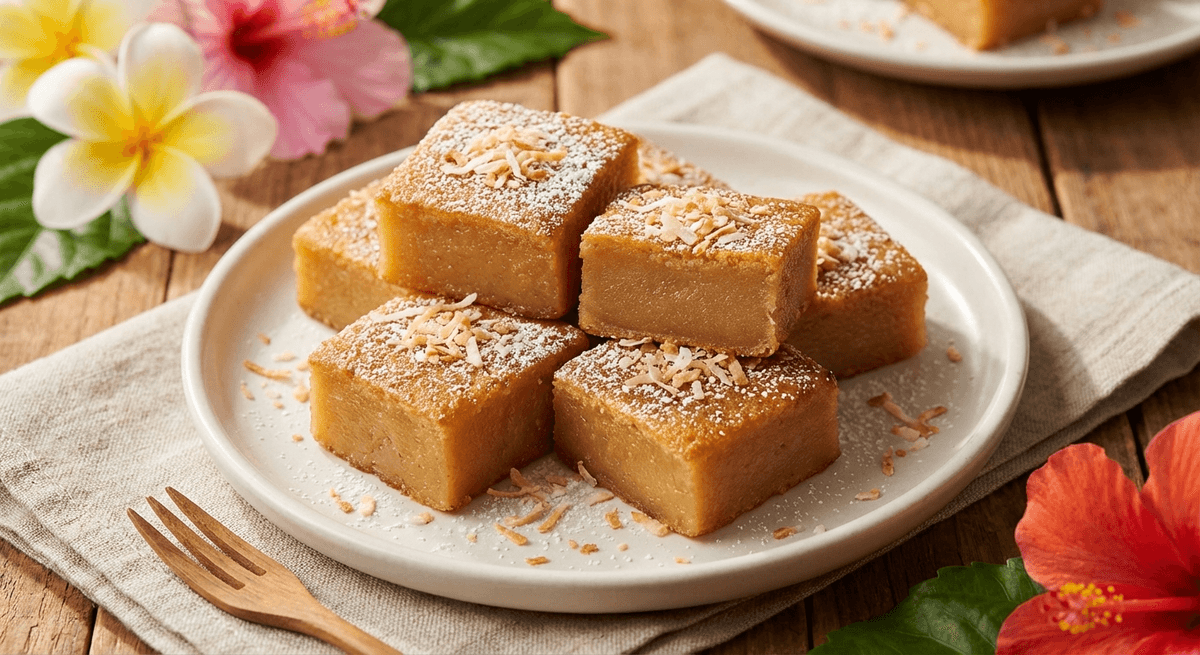
Hawaii’s most addictive dessert — crispy on top, impossibly chewy inside, flavored with coconut milk and vanilla. Butter mochi is the one-bowl, no-fail baked treat that d...

Mochi waffles take a butter-mochi batter and run it through a waffle iron. Shatter-crisp edges, springy chew inside. Eight ingredients, twenty minutes.

Pillowy-soft mochi wrapped around creamy ice cream in tropical Hawaiian flavors like haupia coconut, lilikoi, mango, and green tea. This Japanese-Hawaiian frozen treat be...