Pork Adobo – Filipino-Hawaiian Braised Perfection
Island Comfort

Pork Adobo – Filipino-Hawaiian Braised Perfection

February 3, 2026 by CurtisJ

Ask anyone in Hawaii about adobo and watch their eyes light up. This Filipino braised pork dish—tangy with vinegar, savory with soy sauce, and aromatic with garlic and bay leaves—has become as much a part of Hawaiian cuisine as any traditional island dish. That’s the beauty of Hawaii’s food culture: the best recipes from immigrant communities became everyone’s favorites.

My introduction to adobo came through my Filipino neighbors in Waipahu. Aunty would make a massive pot every Sunday, and the smell would drift across the yard—that unmistakable combination of vinegar, garlic, and peppercorns. She’d always send a plate over, and I’d eat it straight from the container before I even got back inside. Years later, I finally asked for her recipe.

What Is Adobo?

Adobo is often called the national dish of the Philippines, and every family has their own version. The basic components are:

  • Meat – Pork, chicken, or both (called “adobong baboy at manok”)
  • Vinegar – Provides the signature tanginess
  • Soy sauce – Adds depth and saltiness
  • Garlic – Lots of it
  • Bay leaves and peppercorns – Aromatic backbone

The magic happens when these simple ingredients simmer together, creating a sauce that’s simultaneously tangy, salty, garlicky, and deeply savory. If you love this pork version, be sure to try our Chicken Adobo — same soul, different protein, and just as addictive.

The Filipino-Hawaiian Connection

Filipino workers began arriving in Hawaii in the early 1900s to work on sugar plantations. They brought their food traditions, and adobo quickly became a local favorite. Today, you’ll find adobo at plate lunch spots, potlucks, and family gatherings across the islands. It’s a perfect example of how Hawaii’s food culture embraces and celebrates its diverse immigrant heritage.
Ingredients

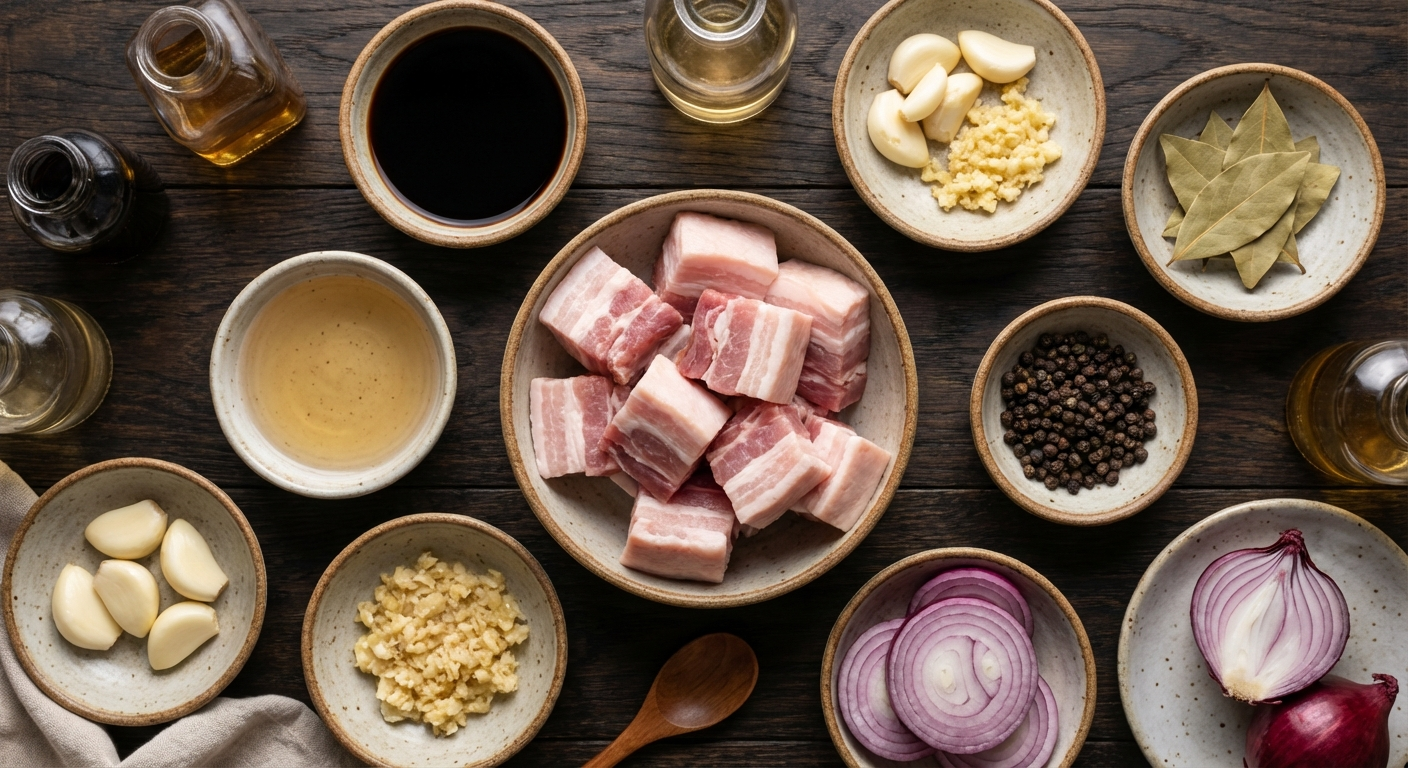
Overhead flat lay of Filipino-Hawaiian pork adobo ingredients - pork belly cubes, soy sauce, vinegar, whole garlic cloves, bay leaves, peppercorns, and onion arranged in small bowls
The adobo essentials — pork belly, soy sauce, vinegar, a whole head of garlic, bay leaves, and peppercorns. Simple ingredients, extraordinary flavor.
  • 2 lbs pork belly or pork shoulder, cut into 2-inch pieces
  • ½ cup soy sauce
  • ½ cup white vinegar (or cane vinegar for authenticity)
  • 1 cup water
  • 1 head garlic (about 10 cloves), crushed
  • 3 bay leaves
  • 1 tablespoon whole black peppercorns
  • 2 tablespoons vegetable oil
  • 1 tablespoon brown sugar (optional, for slight sweetness)
  • Hot white rice for serving

Instructions

  1. Combine the braising liquid: In a large bowl, mix soy sauce, vinegar, water, crushed garlic, bay leaves, and peppercorns.
  2. Marinate the pork: Add pork pieces to the braising liquid. Marinate for at least 30 minutes, or overnight in the refrigerator for deeper flavor.
  3. Braise the pork: Transfer everything to a large pot or Dutch oven. Bring to a boil over high heat, then reduce to a simmer. Cover and cook for 45 minutes to 1 hour, until pork is tender.
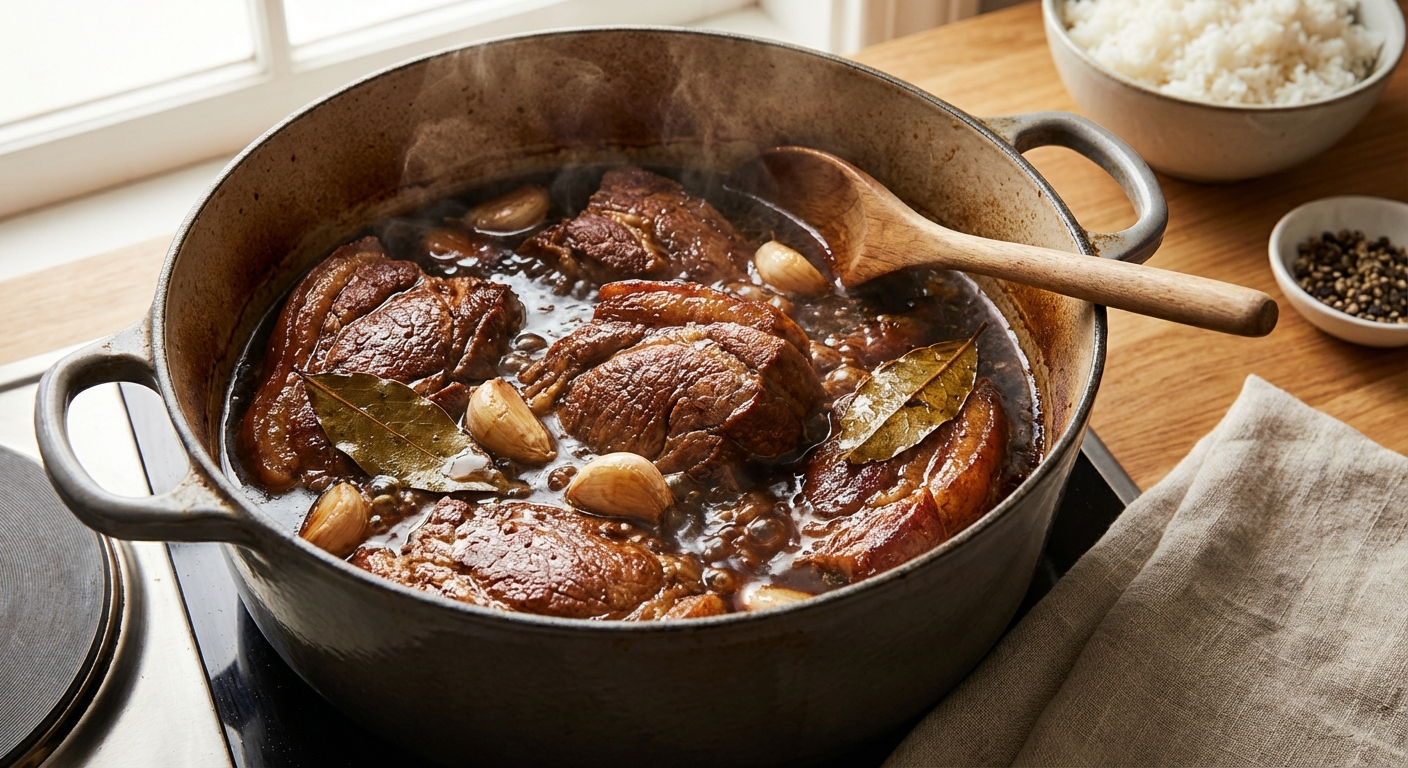
Pork adobo braising in a pot with pork pieces simmering in dark soy-vinegar sauce with whole garlic cloves and bay leaves
Pork adobo braising low and slow — the soy-vinegar sauce darkens and deepens as it simmers with garlic and bay leaves.
  1. Remove and brown: Take the pork pieces out of the liquid. Heat oil in a skillet over medium-high heat. Brown the pork on all sides, about 2-3 minutes per side, until crispy edges form.
  2. Reduce the sauce: While pork is browning, continue simmering the braising liquid until reduced by half. If using sugar, add it now and stir to dissolve.
  3. Combine and serve: Return the browned pork to the reduced sauce. Toss to coat. Serve over hot white rice with plenty of sauce spooned on top.
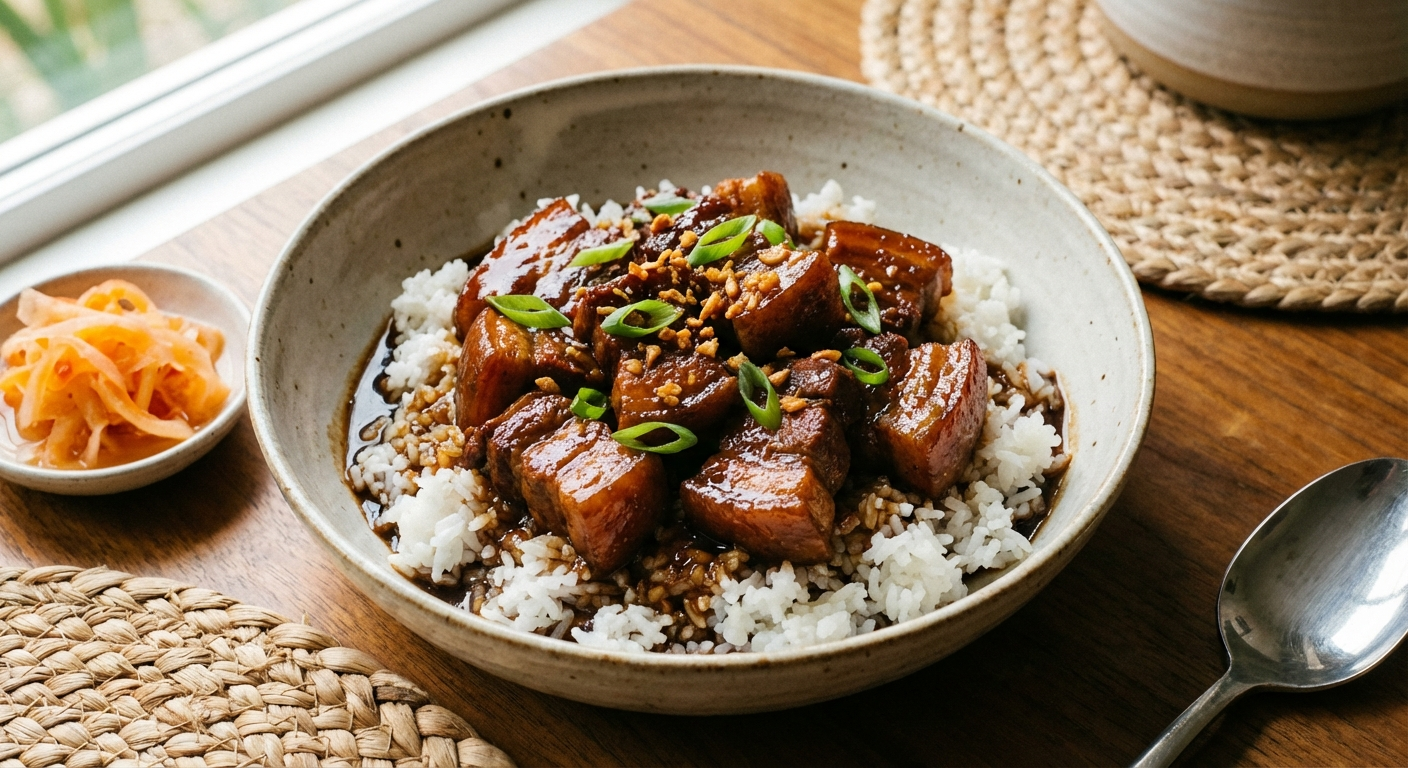
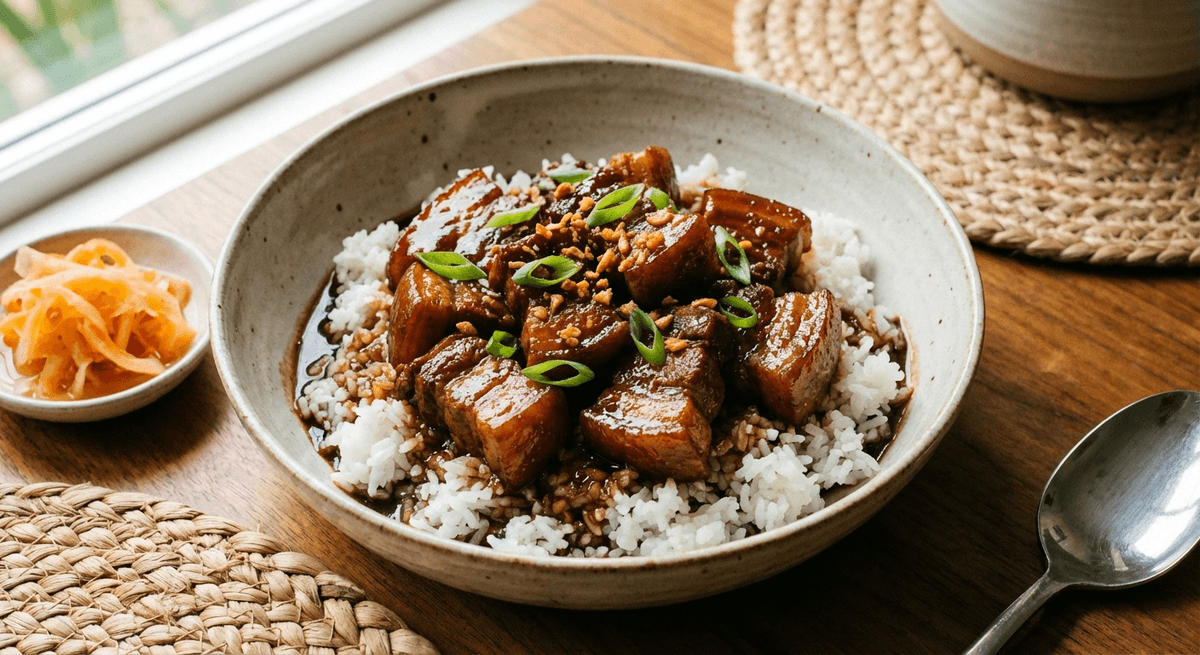
Pork adobo served over white rice in a bowl with tender pork pieces in glossy dark sauce garnished with green onions
The finished bowl — tender pork adobo in glossy dark sauce over white rice. Filipino-Hawaiian comfort food at its finest.

Tips for Perfect Adobo

  • Don’t skip the browning step – Those crispy edges add incredible texture
  • Use good vinegar – Cane vinegar or coconut vinegar is traditional, but white vinegar works
  • Let it rest – Adobo tastes even better the next day after the flavors meld
  • Adjust to taste – More vinegar for tangier, more soy for saltier

Variations

  • Chicken Adobo – Use bone-in chicken thighs, reduce cooking time to 30-35 minutes
  • Adobong Puti (White Adobo) – Omit soy sauce, use salt instead for a clearer sauce
  • Coconut Milk Adobo – Add ½ cup coconut milk at the end for a creamy version
  • Dry Adobo – Reduce sauce completely until it’s thick and clinging to the meat

Serving Suggestions

Adobo is traditionally served simply:

  • Over white rice – Essential for soaking up the sauce
  • With a fried egg – Breakfast adobo is a thing of beauty
  • Alongside vegetables – Sautéed greens or steamed bok choy

The beautiful thing about adobo is its simplicity. With just a handful of ingredients and a bit of patience, you create something extraordinary. This is comfort food that crosses cultural boundaries — Filipino at heart, but beloved by all of Hawaii. If you enjoy this kind of slow-braised dish, our Shoyu Chicken uses a similar technique with a Hawaiian twist.

More Island Comfort Recipes

Love slow-braised dishes? Try these other Hawaiian favorites:

Pork Adobo – Filipino-Hawaiian Braised Perfection

Servings
8217

Ingredients

Instructions

1

Combine the braising liquid: In a large bowl, mix soy sauce, vinegar, water, crushed garlic, bay leaves, and peppercorns.

2

Marinate the pork: Add pork pieces to the braising liquid. Marinate for at least 30 minutes, or overnight in the refrigerator for deeper flavor.

3

Braise the pork: Transfer everything to a large pot or Dutch oven. Bring to a boil over high heat, then reduce to a simmer. Cover and cook for 45 minutes to 1 hour, until pork is tender.

4

Remove and brown: Take the pork pieces out of the liquid. Heat oil in a skillet over medium-high heat. Brown the pork on all sides, about 2-3 minutes per side, until crispy edges form.

5

Reduce the sauce: While pork is browning, continue simmering the braising liquid until reduced by half. If using sugar, add it now and stir to dissolve.

6

Combine and serve: Return the browned pork to the reduced sauce. Toss to coat. Serve over hot white rice with plenty of sauce spooned on top.

Chef's Notes

- Don't skip the browning step - Those crispy edges add incredible texture - Use good vinegar - Cane vinegar or coconut vinegar is traditional, but white vinegar works - Let it rest - Adobo tastes even better the next day after the flavors meld - Adjust to taste - More vinegar for tangier, more soy for saltier