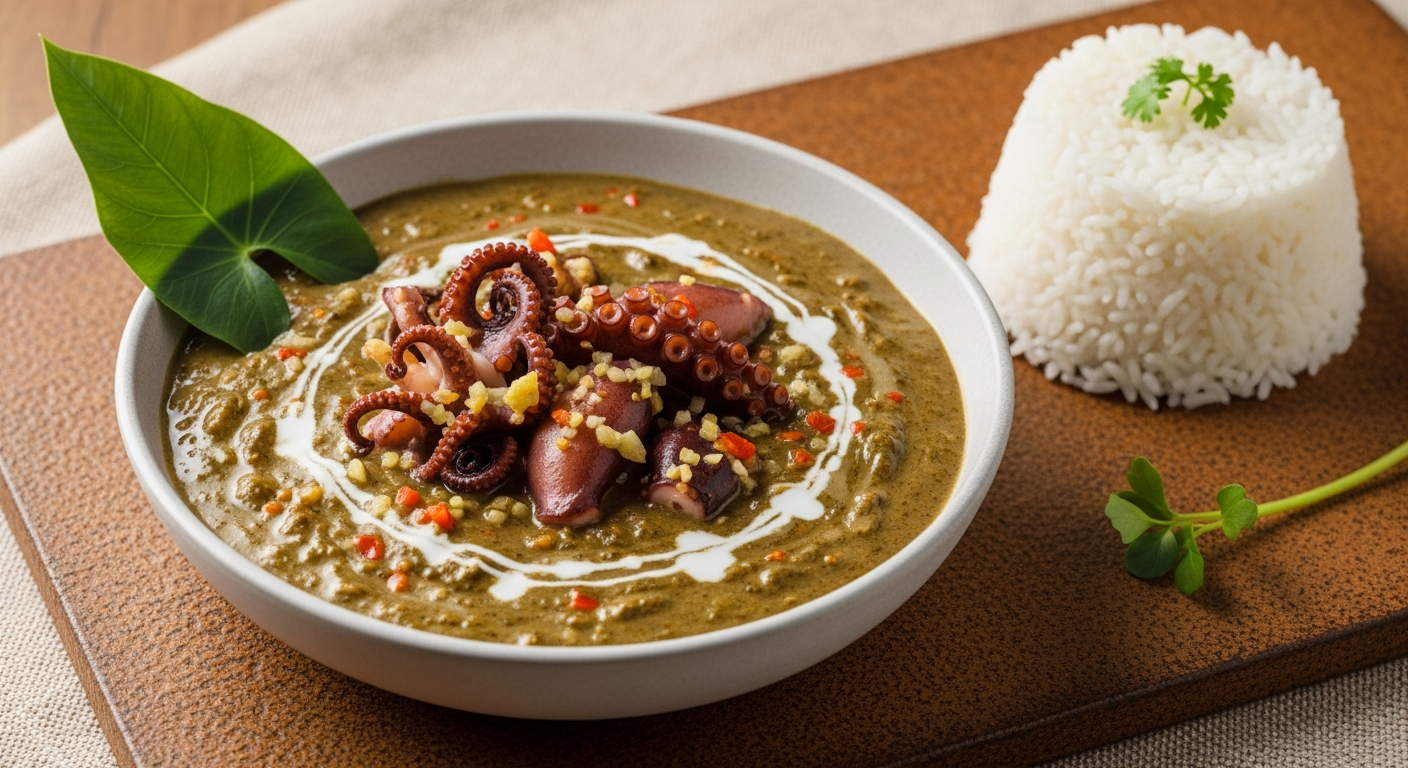
Squid Luau – Traditional Hawaiian Delicacy
Island Comfort

Squid Luau – Traditional Hawaiian Delicacy

February 8, 2026 by CurtisJ 2 hours 30 minutes Servings: 6

Some dishes take you back to a place. Squid luau takes me back to a feeling — the feeling of sitting on a lauhala mat at my aunty’s house in Waimanalo, paper plate bending under the weight of everything she put on it, the smell of ti leaves and smoke in the air. Squid luau was always there, right next to the laulau and the poi and the lomilomi salmon. It was one of those dishes I didn’t appreciate as a kid — too green, too unfamiliar, too different from the Spam musubi and plate lunches I wanted. But the first time I really tasted it, really let those flavors land, I understood why my aunty closed her eyes when she ate it. This is the taste of old Hawaii.

Squid luau — or he’e with luau leaves — is one of the most traditional dishes in Hawaiian cuisine. It predates the plantation era, predates contact with the Western world. This is food that connects directly to the land and sea, to the kalo (taro) that Hawaiians consider an ancestor, to the he’e (octopus or squid) that has been gathered from reef and shore for centuries. When you cook squid luau, you’re not just making dinner. You’re participating in a tradition that stretches back generations beyond counting.

I make squid luau for special occasions — family gatherings, holidays, any time I want to honor where I come from. It takes some patience and some ingredients that might require a trip to a specialty market, but every minute and every mile is worth it. This dish deserves your time and your respect, and it will reward both.

What Makes Squid Luau Special

Squid luau is unlike anything else in Hawaiian cuisine, or any cuisine for that matter. The combination of tender squid, silky cooked taro leaves, and rich coconut milk creates a dish that is simultaneously earthy, oceanic, and creamy. The luau leaves — the large, heart-shaped tops of the taro plant — cook down into something almost like spinach but with a deeper, more mineral flavor. They become soft and velvety, melding with the coconut milk into a thick, luxurious sauce that coats the tender pieces of squid.

What makes this dish truly special is its cultural weight. In Hawaiian cosmology, the taro plant is Haloa — the elder brother of the Hawaiian people. To cook with taro is to honor that relationship, to acknowledge the plant that sustained generations. Squid luau carries that significance in every bite, connecting the person eating it to the land, the sea, and the ancestors who first created this combination. It’s food with mana.

Ancient Roots and Living Tradition

Squid luau is a pre-contact Hawaiian dish, meaning it existed long before Captain Cook arrived in 1778. The ancient Hawaiians cultivated taro extensively — it was the staff of life, the most important crop in the islands. The leaves of the taro plant, called luau (which is also where the word for a Hawaiian feast comes from), were a valued food source cooked in various ways. Combined with he’e gathered from the nearshore waters and the rich milk pressed from mature coconuts, squid luau represents the abundance of traditional Hawaiian foodways.

One important thing to know about luau leaves: they contain calcium oxalate crystals, which cause an intense itching and burning sensation if the leaves aren’t cooked long enough. This is why traditional preparation calls for extended cooking — usually at least an hour, sometimes longer. The heat breaks down the crystals completely, transforming the leaves from something that would make your throat itch into something impossibly smooth and delicious. Don’t rush this step. The old-timers knew what they were doing, and patience is part of respecting this dish.

Today, squid luau remains a beloved fixture at luaus, family gatherings, and Hawaiian plate lunch counters across the islands. It sits proudly alongside other traditional dishes like laulau, poi, and kalua pig as a cornerstone of Hawaiian culinary identity.
Ingredients

Flat lay of squid luau ingredients including fresh squid, taro leaves, coconut milk, and Hawaiian sea salt arranged on a rustic wooden surface
Everything you need for squid luau: fresh squid, luau leaves, coconut milk, and Hawaiian sea salt

Main Ingredients

  • 2 pounds luau leaves (taro tops), stems removed, washed thoroughly
  • 1 pound cleaned squid (or octopus), cut into bite-sized pieces
  • 1 (13.5-ounce) can coconut milk (full-fat) — or use homemade coconut milk for the most authentic flavor
  • 1 cup water

Seasoning

  • 1 teaspoon Hawaiian sea salt (alaea salt), or to taste
  • 1 tablespoon butter (optional, for richness)
  • 1/2 teaspoon sugar (optional, to balance)

Instructions

Prepare the Luau Leaves

  1. Clean the leaves: Remove the thick stems from the luau leaves — they can be tough and fibrous. Wash the leaves thoroughly under cold running water to remove any dirt or debris. If the leaves are very large, tear them into smaller pieces, roughly 2-3 inches.
  2. Boil the leaves: Place the luau leaves in a large pot and add enough water to cover them. Bring to a boil over high heat, then reduce to a steady simmer. Cook the leaves for at least 1 hour, and up to 1 hour and 30 minutes. This is critical — the extended cooking breaks down the calcium oxalate crystals in the leaves. Undercooked luau leaves will cause an unpleasant itching sensation in your mouth and throat. Don’t rush this.
  3. Drain the leaves: Once the leaves are very tender and have turned a deep, dark green, drain them thoroughly in a colander. Press out as much excess water as you can using the back of a spoon or by squeezing gently with clean hands. Set aside.

Prepare the Squid

  1. Clean the squid: If your squid isn’t already cleaned, remove the head, innards, quill (the clear cartilage inside the body), and skin. Rinse the body tubes and tentacles under cold water. Cut the body into 1/2-inch rings and the tentacles into manageable pieces.
  2. Pre-cook the squid: Bring a small pot of salted water to a boil. Add the squid pieces and cook for 20-30 minutes until tender. Squid follows a strange rule — it’s either tender at 2 minutes or at 30 minutes, and everything in between is rubber. For squid luau, you want the long, slow cook to get it meltingly soft. Drain and set aside.

Bring It All Together

  1. Combine the coconut milk and leaves: In a large pot over medium heat, pour in the coconut milk and 1 cup of water. Stir to combine and bring to a gentle simmer. Add the drained, cooked luau leaves and stir until they’re fully incorporated into the coconut milk. The mixture should look thick, green, and creamy.
  2. Add the squid: Add the pre-cooked squid pieces to the pot. Stir gently to distribute the squid evenly through the luau leaves and coconut milk.
  3. Simmer together: Let everything simmer together on low heat for 20-30 minutes, stirring occasionally. This is where the flavors truly come together — the coconut milk absorbs the earthy flavor of the taro leaves, the squid releases its subtle ocean brininess, and everything melds into one cohesive, beautiful dish.
Squid luau simmering in a pot with taro leaves and creamy coconut milk, steam rising from the rich green and white mixture
Squid luau simmering together — the coconut milk, luau leaves, and squid melding into one rich, creamy dish
  1. Season and finish: Add the Hawaiian sea salt, butter if using, and sugar if the dish needs a touch of balance. Stir well and taste. The final dish should be rich, creamy, earthy, and slightly briny. Adjust salt to your preference.
  2. Serve warm: Ladle the squid luau into bowls and serve warm. It should be thick and stew-like, not soupy — the luau leaves and coconut milk create a naturally thick consistency.
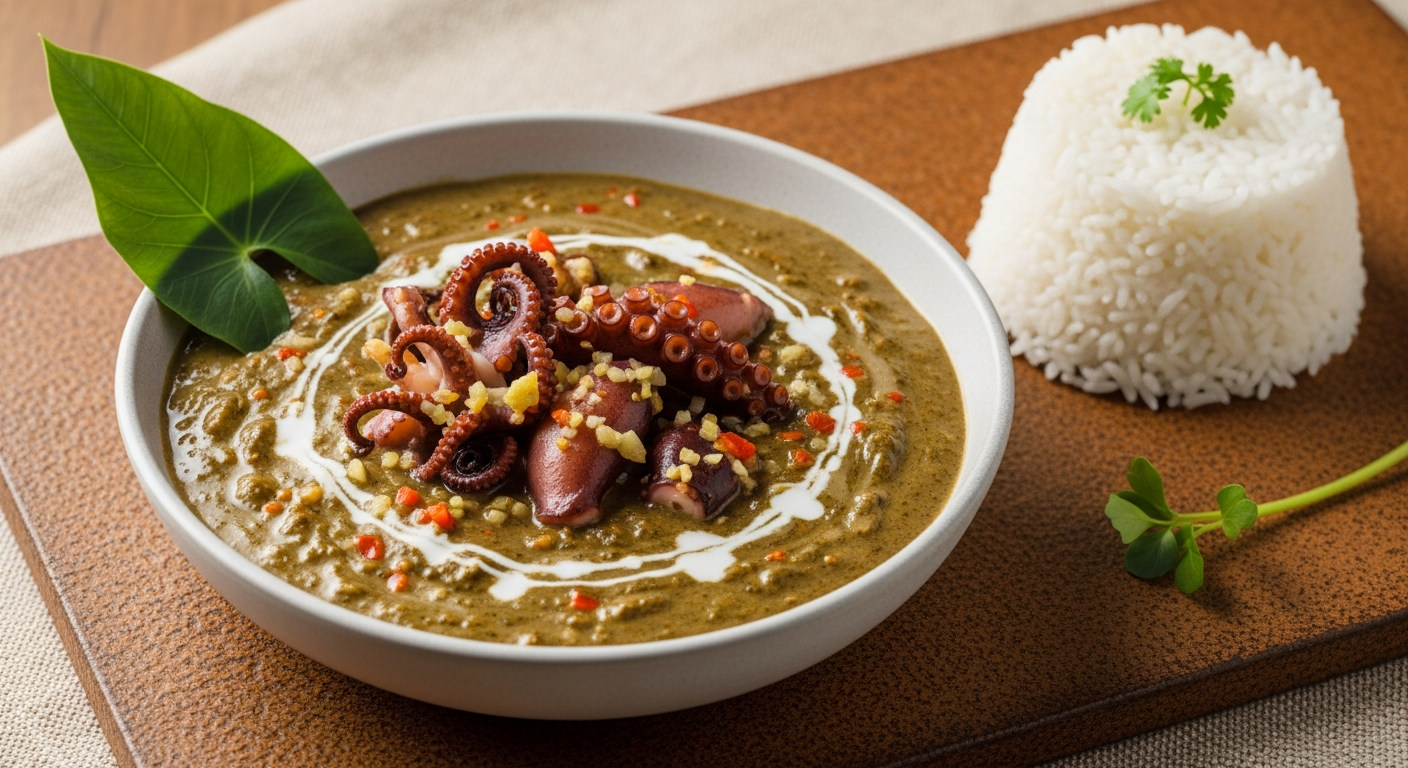
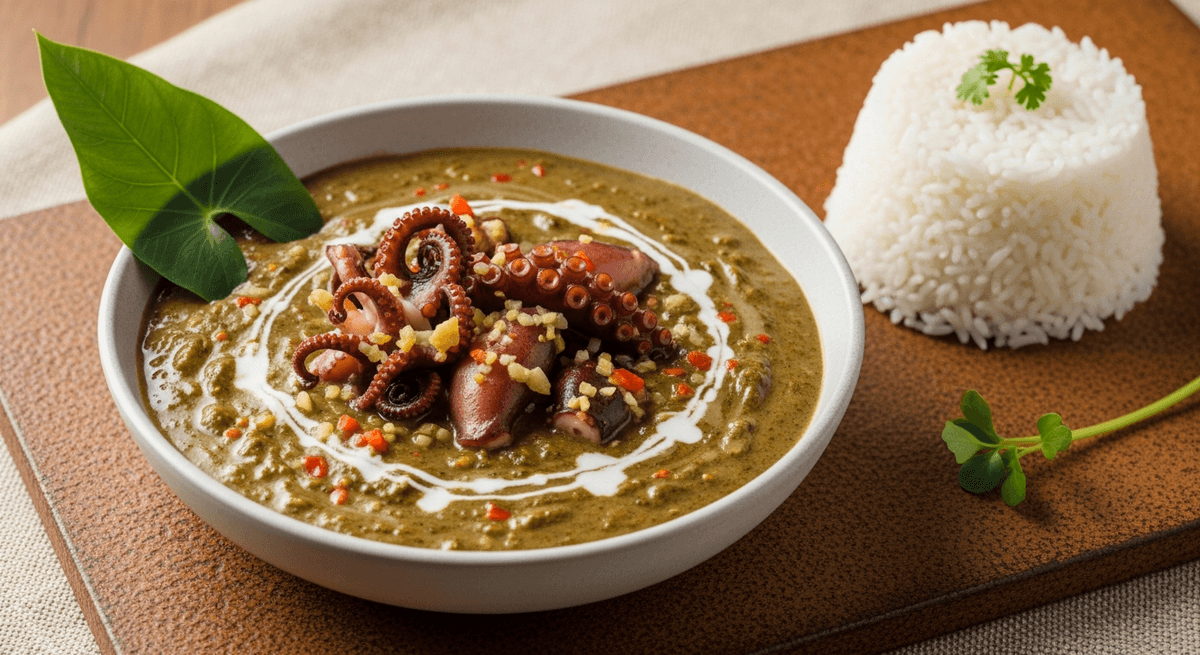
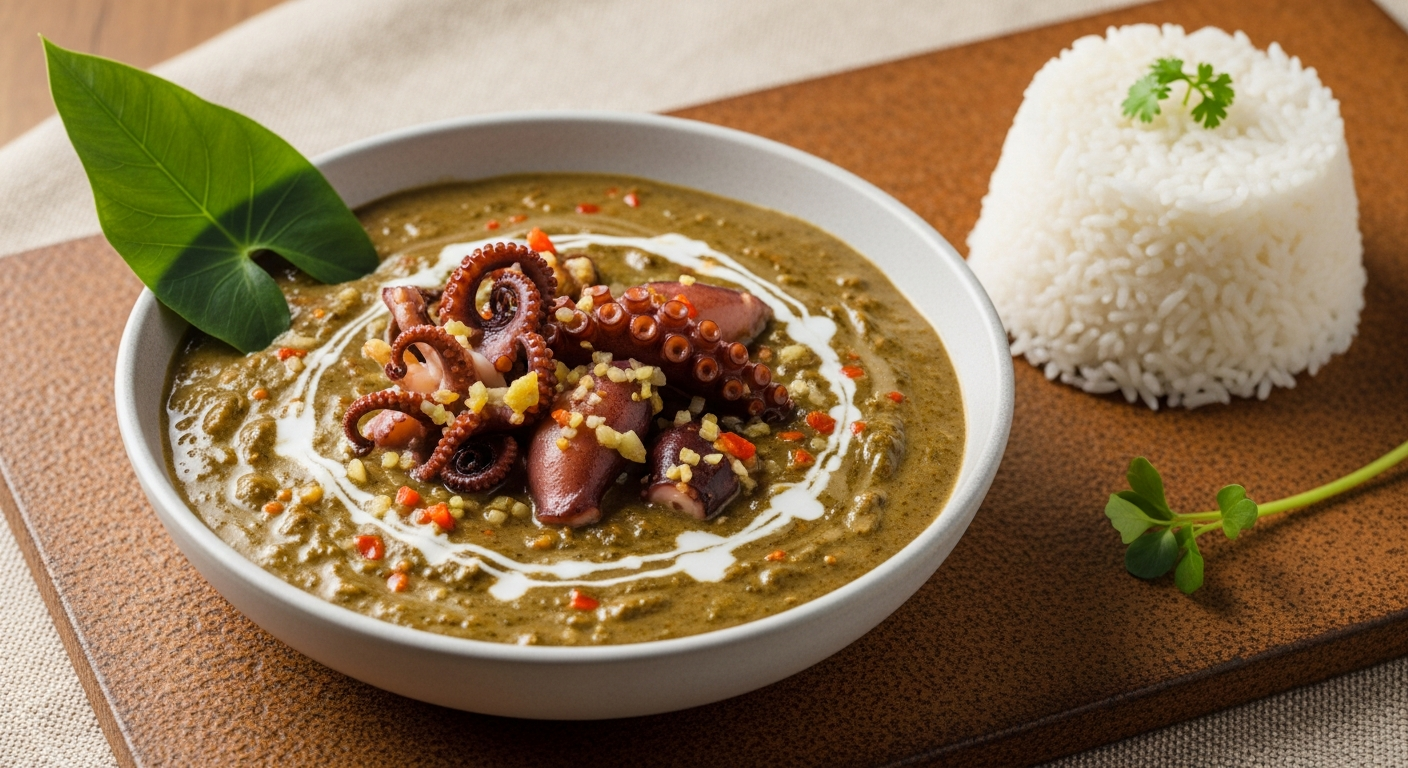
Finished squid luau served in a bowl with tender squid pieces in creamy coconut-taro leaf sauce alongside white rice
Squid luau plated and ready to serve — rich, creamy, and deeply satisfying

Tips

  • Never undercook the luau leaves: This cannot be stressed enough. Raw or undercooked taro leaves contain calcium oxalate, which causes severe itching and irritation in the mouth and throat. A full hour of boiling at minimum is essential. When in doubt, cook them longer. Properly cooked luau leaves are completely safe and absolutely delicious.
  • Use frozen luau leaves if fresh aren’t available: Fresh luau leaves can be hard to find outside of Hawaii. Frozen luau leaves, sometimes labeled “taro leaves,” are available at many Asian and Pacific Island grocery stores. They work beautifully and save you a step since they’re often partially pre-cooked.
  • Substitute spinach only as a last resort: If you absolutely cannot find luau leaves, baby spinach cooked down can approximate the texture, but the flavor will be different. It won’t be authentic squid luau, but it will give you an idea of the dish.
  • Use octopus for a more traditional version: While squid is most common today, traditional Hawaiian he’e preparations often used octopus. If you can find fresh or frozen octopus, try it — the texture is meatier and the flavor is wonderful. Cook it low and slow until tender.
  • Make your own coconut milk: For the most authentic flavor, use homemade coconut milk pressed from fresh mature coconuts. The difference in richness and flavor is significant. It’s worth the extra effort for a dish this special.

Serving Suggestions

Squid luau is traditionally served as part of a larger Hawaiian spread — alongside poi, laulau, kalua pig, lomilomi salmon, and haupia. It’s a luau dish in every sense of the word. Scoop it over a bed of steamed white rice and let the rich coconut sauce soak into the grains.

For a simpler weeknight meal, serve squid luau with rice and a side of poke or grilled fish. The creamy richness of the dish pairs beautifully with something bright and acidic — a simple cucumber namasu (vinegar salad) or even just some sliced tomatoes with Hawaiian salt. However you serve it, make sure to give this dish the reverence it deserves. It’s not just food. It’s culture on a plate.

More Traditional Hawaiian Recipes

If squid luau speaks to your soul, explore more of Hawaii’s traditional dishes:

Prep Time: 30 minutes
Cook Time: 2 hours
Total Time: 2 hours 30 minutes
Servings: 6

Squid Luau – Traditional Hawaiian Delicacy

Prep 30 minutes Cook Time: 2 hours Total Time: 2 hours 30 minutes Servings: 6
Cook 2 hours Total Time: 2 hours 30 minutes Servings: 6
Total 2 hours 30 minutes Servings: 6
Servings
6

Ingredients

Instructions

1

Clean the leaves: Remove the thick stems from the luau leaves - they can be tough and fibrous. Wash the leaves thoroughly under cold running water to remove any dirt or debris. If the leaves are very large, tear them into smaller pieces, roughly 2-3 inches.

2

Boil the leaves: Place the luau leaves in a large pot and add enough water to cover them. Bring to a boil over high heat, then reduce to a steady simmer. Cook the leaves for at least 1 hour, and up to 1 hour and 30 minutes. This is critical - the extended cooking breaks down the calcium oxalate crystals in the leaves. Undercooked luau leaves will cause an unpleasant itching sensation in your mouth and throat. Don't rush this.

3

Drain the leaves: Once the leaves are very tender and have turned a deep, dark green, drain them thoroughly in a colander. Press out as much excess water as you can using the back of a spoon or by squeezing gently with clean hands. Set aside.

4

Clean the squid: If your squid isn't already cleaned, remove the head, innards, quill (the clear cartilage inside the body), and skin. Rinse the body tubes and tentacles under cold water. Cut the body into 1/2-inch rings and the tentacles into manageable pieces.

5

Pre-cook the squid: Bring a small pot of salted water to a boil. Add the squid pieces and cook for 20-30 minutes until tender. Squid follows a strange rule - it's either tender at 2 minutes or at 30 minutes, and everything in between is rubber. For squid luau, you want the long, slow cook to get it meltingly soft. Drain and set aside.

6

Combine the coconut milk and leaves: In a large pot over medium heat, pour in the coconut milk and 1 cup of water. Stir to combine and bring to a gentle simmer. Add the drained, cooked luau leaves and stir until they're fully incorporated into the coconut milk. The mixture should look thick, green, and creamy.

7

Add the squid: Add the pre-cooked squid pieces to the pot. Stir gently to distribute the squid evenly through the luau leaves and coconut milk.

8

Simmer together: Let everything simmer together on low heat for 20-30 minutes, stirring occasionally. This is where the flavors truly come together - the coconut milk absorbs the earthy flavor of the taro leaves, the squid releases its subtle ocean brininess, and everything melds into one cohesive, beautiful dish.

9

Season and finish: Add the Hawaiian sea salt, butter if using, and sugar if the dish needs a touch of balance. Stir well and taste. The final dish should be rich, creamy, earthy, and slightly briny. Adjust salt to your preference.

10

Serve warm: Ladle the squid luau into bowls and serve warm. It should be thick and stew-like, not soupy - the luau leaves and coconut milk create a naturally thick consistency.

Chef's Notes

- Never undercook the luau leaves: This cannot be stressed enough. Raw or undercooked taro leaves contain calcium oxalate, which causes severe itching and irritation in the mouth and throat. A full hour of boiling at minimum is essential. When in doubt, cook them longer. Properly cooked luau leaves are completely safe and absolutely delicious. - Use frozen luau leaves if fresh aren't available: Fresh luau leaves can be hard to find outside of Hawaii. Frozen luau leaves, sometimes labeled "taro leaves," are available at many Asian and Pacific Island grocery stores. They work beautifully and save you a step since they're often partially pre-cooked. - Substitute spinach only as a last resort: If you absolutely cannot find luau leaves, baby spinach cooked down can approximate the texture, but the flavor will be different. It won't be authentic squid luau, but it will give you an idea of the dish. - Use octopus for a more traditional version: While squid is most common today, traditional Hawaiian he'e preparations often used octopus. If you can find fresh or frozen octopus, try it - the texture is meatier and the flavor is wonderful. Cook it low and slow until tender. - Make your own coconut milk: For the most authentic flavor, use homemade coconut milk pressed from fresh mature coconuts. The difference in richness and flavor is significant. It's worth the extra effort for a dish this special.